R.I.P. Douglas Factors?
By Deborah J. Hopkins, July 7, 2026
It’s rare we at FELTG comment on proposed regulations – after all, proposed regulations are regularly changed, sometimes significantly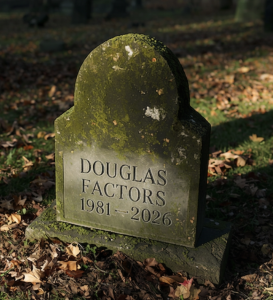 based on public comment, before becoming final. It’s usually not worth getting all spun up over something that’s only at the proposal stage.
That being said, OPM has recently published final regulations that look almost exactly like the proposed regulations, despite the vast majority of public comments being opposed to the potential changes. (One example, the brand-new post-appointment suitability removal determination, 5 CFR Part 731.)
I’m still reeling over a drastic change in last week’s joint proposed regulations from both OPM and MSPB: agencies should stop using the Douglas factors in determining the penalty in chapter 75 adverse actions.
For the uninitiated, the Douglas factors are, as FELTG founder Bill Wiley once put it, “the 12 employee-specific situational factors that agencies use to determine and defend a penalty selection in a misconduct removal appeal. Fail to evaluate the 12 factors the way that MSPB thinks they should be evaluated, and the Board will lower (mitigate) your removal to something less.”
Douglas is the most-cited case in MSPB history and provides a guide for supervisors to help determine the appropriateness of an adverse action by considering things like the nature and seriousness of the offense, the supervisor’s trust and confidence in the employee, and the notoriety of the misconduct. It also provides the agency with a defense as to the reasonableness of its penalty. In our training classes over the past 25 years, we have seen supervisors light up with understanding as we discuss the meaning of each factor and how it directly relates to penalty determination.
But according to the proposed regulations, “while Douglas intended flexibility, the evolution of practice has led to rigidity, formalism, and a risk of misplacing emphasis on a checklist of factors rather than the reasonableness inquiry.” In eliminating Douglas, the proposed regulations would require agencies to “assess the reasonableness of an agency’s penalty under a totality-of-the-circumstances standard, consistent with the statutory command that discipline be ‘for such cause as will promote the efficiency of the service.’”
Our concern at FELTG is that a totality-of-the-circumstances test could lead to arbitrary penalties, thus blurring the agency’s reasoning, or cause, required by the Civil Service Reform Act’s.
A somewhat recent case that comes to mind on the value of Douglas: Chin v. DOD/DTRA, 2022 MSPB 34. The employee, a GS-14 Security Specialist, was removed for stealing $5 worth of food from the agency’s cafeteria. The MSPB, after reviewing the Deciding Official’s Douglas factors assessment, determined that removal was too severe and mitigated to a 90-day suspension, in part because of the employee’s 30 years of discipline-free service, his outstanding performance record, and the de minimis nature of the theft. The Board’s reasons? All Douglas factors.
Without Douglas as a guide, will a totality-of-the-circumstances assessment actually help the Board appropriately consider and review a penalty for reasonableness? What will this mean for the weight of mitigating factors? Without a framework weighing both aggravating and mitigating factors, an agency could offer a lopsided statement of a case – and if the employee was not artfully represented in her response, the outcome could be devastating.
Fortunately, there are a few other proposed changes that don’t give us heartburn, including:
- Establishing a 30-calendar-day PIP as governmentwide standard
- Adopting the MSPB’s 2022 Singh USPS comparator analysis into regulation
- Amending regulatory language to clarify that progressive discipline is not required
Plus more. The public comment period is now open. Read the proposed regs for yourself or come to an upcoming class where we’ll discuss the very latest changes in the world of Federal employment law. [email protected]
Related training:
- Advanced MSPB Law: Navigating Complex Issues, Jul. 14-16, 2026
- Hearing Advocacy: Presenting Cases Before the MSPB and EEOC, Sept. 2-3, 2026
- UnCivil Servant: Holding Employees Accountable for Performance and Conduct, Sept. 9-10, 2026
- MSPB Law Week, Sept. 14-18, 2026
The information presented here is for informational purposes only and not for the purpose of providing legal advice. Contacting FELTG in any way/format does not create the existence of an attorney-client relationship. If you need legal advice, you should contact an attorney.