By Dan Gephart, June 6, 2022
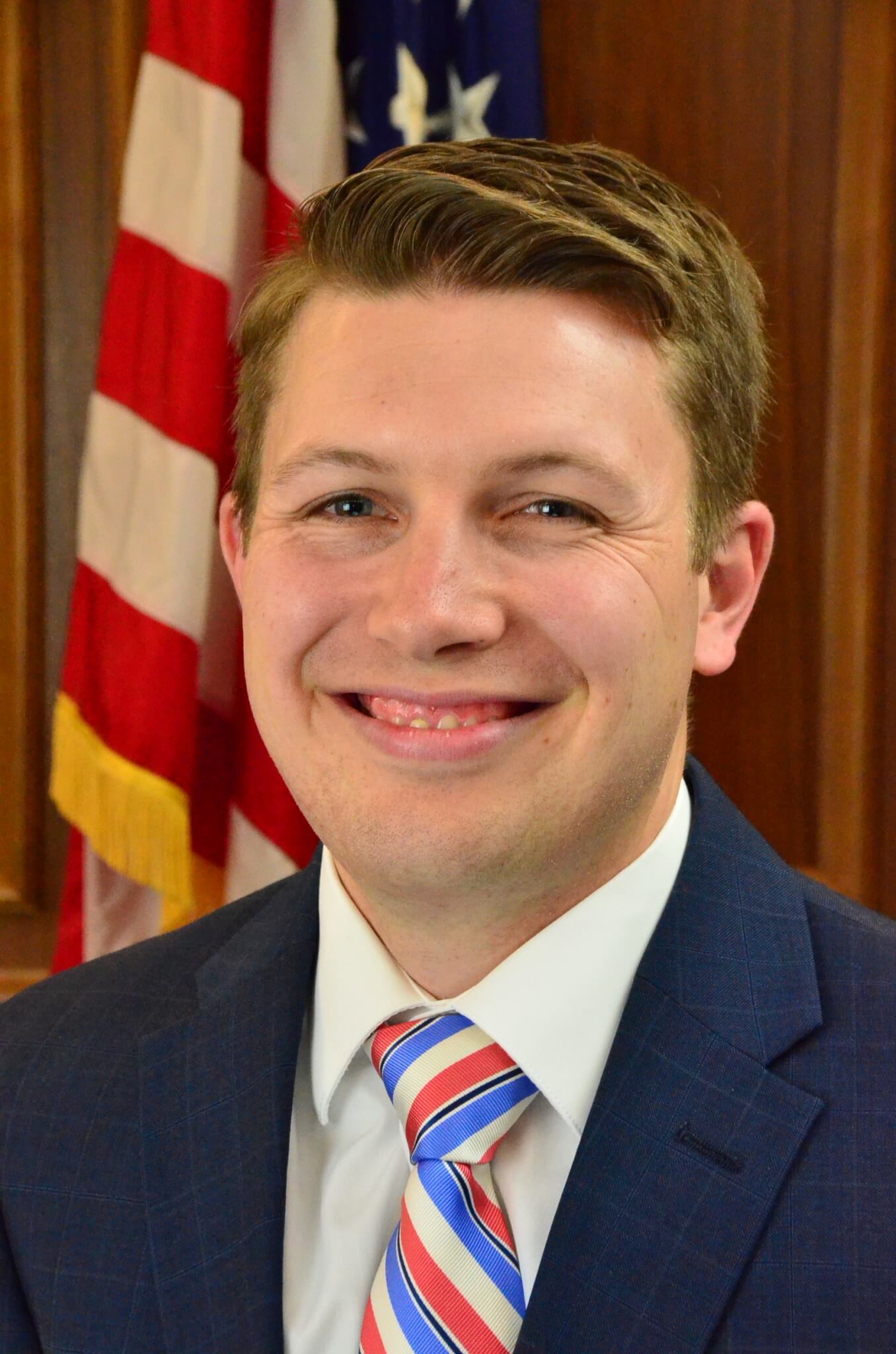
Tristan Leavitt, Member, Merit Systems Protection Board

When And Now a Word With … last talked with Tristan Leavitt, the word “corona” evoked visions of a weak mass-produced beer not a virus that would eventually take the lives of more than a million Americans. And the Merit Systems Protection Board was in the seventh month of sitting member-less, following the expiration of former Chair Mark Robbins’ term.

As then-General Counsel of the MSPB, Leavitt had assumed the responsibilities for the executive and administrative functions usually vested in the Chair. Over the next couple of years, Leavitt and a dedicated group of agency staff steered the MSPB through its most challenging period.

Three months ago, Leavitt and Raymond Limon were confirmed and sworn in as Members, ensuring a quorum for the first time in more than five years. And now, the backlog of Petitions for Review that we all watched steadily are being addressed. New MSPB Chair Cathy Harris was finally confirmed by the Senate late last month, so the MSPB is back at full strength for the first time in over half a decade.

Like Vice Chair Limon recently, Leavitt very graciously took time to answer our questions, giving us a peek into the new Board’s approach.

 DG: Are you satisfied with the current pace with which you and Acting Chair Limon are tackling the backlog of cases?

TL: I think we’ve made a decent start.  Both he and I have fantastic staff, and I’ve really appreciated how smoothly our two offices have been able to work together.  That said, no matter how fast we move, we recognize that the backlog represents over 3,000 appellants and their agencies awaiting finality, so I doubt we’ll ever shake the sense of urgency that we look for ways to be more efficient.

DG: It appears you are prioritizing whistleblower cases. Is that so and why?

TL: Way back in October 2019 I mentioned in this same forum that MSPB’s career staff had drawn up plans for dealing with the backlog.  Primarily, that consisted of identifying a “priority group” of 300 cases as a first group for an incoming Board to address.  The group included a mix of all types of cases: easy cases to help new Board members acclimatize, cases dismissed as settled, precedential cases on which a number of other cases hinge, extremely old cases, cases potentially involving large amounts of backpay, etc.  When Ray and I were confirmed, we adopted the recommendation of staff and began working through the priority group of cases.  Given that whistleblower reprisal allegations are raised in some 25 percent of all cases before the Board, it’s not surprising that the group has included a number of whistleblower cases, some of them precedential.

DG: Are you planning to prioritize any other types of cases? 

TL: Since the creation of the first priority group, MSPB staff have developed second and third priority groups that are also approximately 300 cases each.  Beyond those groups, we haven’t yet developed a comprehensive strategy for how we intend to deal with the rest of the approximately 2,700 cases in the backlog.  To some extent, I would say that’s because we’ve been in an acclimation period, particularly since Ray is new to MSPB, and to some extent it’s probably also because it’s unclear how close we might be to the confirmation of a third Board member. Nevertheless, by the time we’ve worked through the priority groups there will have to be decisions made about where to go next in the backlog, and I would imagine we’d be well equipped at that point to develop a strategy.

DG: You’ve decided to keep the non-precedential cases and while most are 1-2 pages, others are much longer. Can you explain your approach to NP cases? 

TL: As Ray noted here recently, MSPB staff have already drafted recommended decisions for approximately 3,400 of the 3,600-case backlog, and those were generally drafted under the procedures in use when last the Board had a quorum.  While Ray and I have exchanged proposed edits with one another in cases or sent a handful back to the career staff for particularly involved revisions, I think it’s fair to say that thus far we’ve mostly just worked with the case formats and lengths presented to us by the career staff.  As a general matter, I would say the most abbreviated non-precedential orders tend to come in cases where it seems very clear to us there is no jurisdiction or where the administrative judge adequately addressed in the initial decision all relevant issues.

DG: Why has the board talked about likely resuming reissuing short form decisions again?

TL: There has been discussion about how much time could be saved by reverting to true short form decisions, particularly for the types of cases I mentioned above that are only receiving abbreviated orders anyway.  On the other hand, drafting a very brief opinion doesn’t seem to be particularly arduous, especially since the shortest already tend to simply state the issue in question and articulate the Board’s standard for granting petitions for review.  As I mentioned before, there are a number of decisions to be made that we’ve postponed until we could get our feet wet by working through the priority groups, and my guess would be that this is one of those issues.  If we did decide to revert to short form decisions, I’d imagine it would be implemented with newer cases coming in for which recommended decisions haven’t yet been drafted.

DG: There was a lot of focus and attention on that backlog of cases, but how else has the presence of a quorum positively impacted the agency? 

TL: The restoration of a quorum is certainly beneficial to agency morale, as all of MSPB’s committed staff are eager to fulfill the full scope of the agency’s important mission.  The Office of Policy and Evaluation’s research agenda can now be finalized, and the full version of its studies issued moving forward.  MSPB can also update its regulations, which is long overdue in some instances.  Finally, while it only requires one Board member and not a full quorum, having gone from no Board members to two also reopens the door to issuing stays requested by the Office of Special Counsel in prohibited personnel practice cases.

DG: What is the status of the agency’s plans for returning employees to the physical workplace?

TL: I largely haven’t been involved on this topic since handing agency head responsibilities over to Ray. However, as far as I’m aware most employees have resumed reentering the workplace at least some days of the week.

Leavitt noted that even pre-pandemic, the MSPB had a relatively high telework rate compared to other agencies. [email protected]

[Editor’s note: How is the Board ruling in these decisions? Join FELTG President Deborah Hopkins for the two-hour virtual training Back on Board: Keeping up With the New MSPB on July 20, starting at 1 pm ET.]
By Dan Gephart, May 16, 2022

Have you ever had an employee challenge your order or refuse an assignment? Has an employee ever replied to an order with the question: What gives you the right to make me do this?

Regarding the latter, the answer is simple — 5 USC 301-302. Here’s what it says:

“The head of an Executive department or military department may prescribe regulations for the government of his department, the conduct of its employees, the distribution and performance of its business … and to [D]elegate to subordinate officials the authority vested in him … by law to take final action on matters pertaining to the employment, direction, and general administration of personnel under his agency.”

The willful and intentional refusal to obey an authorized order of a superior that the superior is entitled to have obeyed is called insubordination. With employees returning to the physical workplace and the vaccine mandate kicking back in at the end of the month, there’s a good chance you will come face-to-face with situations that look like insubordination in the upcoming weeks. For example, maybe you’ll have:

  • An employee who will not get vaccinated.
  • An employee who will not provide proof of vaccination.
  • An employee who won’t wear a mask where required, or won’t follow other safety protocols.

Or here’s another likely possibility: An employee wants to remain in telework status, and continues to stall the process, by not responding to questions.

These are all instances of misconduct. But is it insubordination? Knowing this in advance is critical to whether any action you take will succeed if challenged.

In a recent class of Insubordinate Employees? Don’t Mess With the Wrong Elements, FELTG President Deborah Hopkins explained what it takes for insubordinate charges to succeed, and she shared some alternative charges that may more appropriate. [Want to bring this 60-minute training to your agency? Contact me or send an email to [email protected].]

The important question you need to ask when faced with insubordinate-like actions is this: Is it a failure to comply or a refusal? When you charge an employee with insubordination, you must prove intent.

In the following two examples, one agency proved insubordination, and the other didn’t. This first decision is 20 years old, however, the topic is quite relevant.

Refusal to be Vaccinated

The Kilauea, a ship supplying ammunition to an aircraft carrier operating in the western Pacific Ocean, was headed toward Korea, a high-risk area for biological weapons. The Commander of the Military Sealift Command ordered that all members of the crew – civilian and military – receive vaccinations against anthrax.

Two Navy employees refused. The chief mate, their supervisor, ordered them to report to the Medical Services Officer to be vaccinated. Again, they refused to be vaccinated and the chief mate warned that they would be removed if they did not receive the vaccination. A week later, they were “signed off the ship.”

After investigating the employees’ claims that they were entitled to medical waivers, the agency removed both employees for “failure to obey a direct order to receive mandatory injections of an anthrax immunization vaccine.” The decision was later affirmed by the Board and the Federal Circuit, who found the removals neither excessive nor unauthorized.

“The misconduct constituted insubordination, which this court defines as a willful and intentional refusal to obey an authorized order of a superior officer, which the officer is entitled to have obeyed.”

A Change of Heart

Remember, intent is the key. The Navy employees refused to get vaccinated. And they followed through on their commitment. But what if they changed their minds? They certainly had plenty of opportunity to do so.

That wasn’t the case with the employee in Milner v. Department of Justice, 77 MSPR 37 (1997). The DOJ employee was being questioned as a witness in an investigation. She was ordered to turn over documents to the investigator. She initially refused, citing concerns about her colleague’s confidentiality. But she went home, gave it some more thought, and brought in the information the next day.

The agency wasn’t pleased with the delay and removed the employee for insubordination.

It didn’t hold up. The MSPB found the agency failed to prove a “willful and intentional refusal” because she ultimately complied. The agency could have charged the employee with something else, but they struck out with insubordination. [email protected]

By Dan Gephart, April 18, 2022

Ernest DuBester holds the Federal Labor-Management Relations statute close to his heart.


Literally.

During our recent conversation, the FLRA chairman pulled a mini printed version of the statute from the left breast pocket of his shirt several times to emphasize the points he was making. Those close to the chairman know he likes to carry that Pocket Statute with him everywhere he goes.

As Chairman DuBester’s nomination for another FLRA term remained stuck in committee, he took time to discuss the FLRA’s plans for returning to the workplace, the status of the Authority union, the legal issues that he’s most looking forward to addressing, and more.

[Editor’s note: Join FELTG for FLRA Law Week May 9-13 to get up to date on all things federal labor relations. Sessions will run from 12-4 pm each day. Early bird pricing ends this Friday, so register now.]

DG: What has been the biggest challenge the agency has faced during the pandemic? And what did you learn from it?

ED: The pandemic has had a huge effect on our society. And it has certainly had a big effect on the FLRA. From Day One, and it continues today, my focus has been on employee well-being, employee health and safety, but also combined with what I call the appropriate and requisite ability to run an agency that fulfills its mission. That has been the hard thing.

There were a lot of things that were not only my preference to do in person, but that I think are actually done better in person. (When the pandemic hit), they had to be done virtually or remotely. Converting to mostly an all-virtual workplace is huge.

For example: One of our responsibilities, which stopped for over three years during the Trump Administration, is that we handle unfair labor practice cases, and we have hearings. Those are run by our Regional Offices and Office of General Counsel personnel. We haven’t been able to do those in person.

Similarly, and related to that, our administrative law judges have the responsibility then with respect to unfair labor practices. They hold ULP hearings at a later stage. Those decisions may come up to me and my colleagues, the other members, on what I’ll call appeal.

The administrative law judges have had to move to virtual hearings. And that’s a big thing, not only practically and logistically. It really has a huge bearing on the way you relate, interact, and share information.

I’m all about effective communication. To me, it’s the secret of everything. It’s certainly the secret to effective management-labor relations, which are based on relationships and human behavior, in particular. There’s no doubt, and I’ll say this emphatically: The ability to communicate and solve problems and hopefully to address and resolve disputes more effectively requires effective communication. And you can’t do it as well on a computer, or telephone or email.

Our employees are dedicated employees. They have gotten, in some respects, accustomed to working remotely, and to some extent enjoy the benefits. We’re all human. We don’t like to commute to work. So, we’re going to have to practically work through how best to harmonize those kind of work/life issues for individuals, and that’s not just employees, but it’s managers and supervisors, too. And it’s leaders, too. What I call the practical dimensions of the job is about labor-management relations, and it requires human interaction to be most effective.

DG: What is the status of the union of Authority employees?

ED: When I was made Chair over a year ago, the first thing I did on Day One was to restore recognition of our in-house union. As you may know, the FLRA had recognized that union since the first year of its existence in 1979, through Republican and Democratic administrations alike, until the end of 2018.

We went through nearly 40 years having recognized the union, and then that was ended in 2018.

Just for context. That recognition initially back in 1979 had been done after seeking an opinion from the Department of Justice whether we could do that. Under our own statute, we’re one of the agencies exempt from coverage. We’re not covered by our own law, for practical reasons. But then the question is: Could we voluntarily recognize a union in-house? The answer came back in a very thoughtful and thorough memo from Justice that said, yes you could, with a couple caveats. For example, our employees couldn’t be represented by a union that had business before us.

Last year, I restored recognition. It was very important to our employees. Morale had already plummeted. From Day One, we’ve been in negotiation with our union, and discussing with them several aspects that involve the pandemic, wrapping up three different agreements:

1.    Telework.

2.    Remote work.

3.    And then have begun to consider the future and a re-entry plan as directed by OMB and OPM. We’ve been negotiating a re-entry plan which we’re about to finalize.

[Editor’s note: The FLRA’s telework Memorandum of Understanding allows employees in appropriate circumstances to work from somewhere other than their assigned FLRA office for up to 8 days per pay period. The remote work MOU allows employees, in appropriate circumstances, to work from somewhere other than their assigned FLRA office more than 8 days per pay period, and generally does not require them to come into their assigned FLRA office on a regular basis. This agreement is moving forward as a 24-month pilot program. The parties will evaluate the pilot and decide whether to continue it past 24 months.]

So that restoration of the union has led to the negotiation of these three agreements that are offshoots of the pandemic, giving our employees a voice. I anticipate that we’ll be returning to the office in a different way than existed the last two years, and in different ways than existed before the pandemic hit.

DG: When do you expect to return employees to the physical office?

ED: We agreed we wanted to see 14 straight days with a reduction in transmission rates recorded. We still have a couple regional offices located in areas where we haven’t nailed that down yet. Then we have a 30-day notice provision before we transition back. I guess somewhere around mid-May, we’ll be getting ready to transition.

DG: What are the most important legal areas you will look to reexamine if given the opportunity?

ED: If you followed us closely, we got into areas over my objections that were based on what are characterized as requests for policy guidance. It wasn’t a specific case or controversy between parties, it was just some entity requesting policy guidance in certain areas. Those entitles were varied, some were parties before us, but eventually some of them weren’t.

In my view, it’s somewhat analogous to rulemaking. It’s my view that those kinds of serious matters should be addressed and resolved by cases. But many were over my dissent, and I dissented substantively as well.

I think it’s important to say this to set the table. And I think it’s historically factual.

Three Federal agencies oversee three collective bargaining laws – the NLRB, the National Mediation Board, and we have the FLRA, which, as you know, has jurisdiction over approximately 2 million Federal employees. I’ve worked at all three agencies. Throughout its history, at the NLRB, you’ve seen a lot more political swings in their case law and decisions. It does change. Sometimes, it changes by administration. Certainly, long-standing precedents are overturned at certain points in time.

That hadn’t been true of the FLRA in the same way. With a couple of exceptions – and only a couple — we’d had a lot of long-standing precedents that have been in existence for decades. Then, in the last 5 years, while I’ve been in the minority, there has been a unique noteworthy change in our history. I don’t think you can deny, there’s been a very purposeful objective of overturning long-standing precedents that had continued through Republican and Democratic Administrations. To me, with all due respect because people are entitled to their opinion here, they also reflect an undermining of what I consider to be some of the key policy underpinnings that are reflected in this statute.

When this statute was enacted, it was discussed in the context of what is unique to the Federal sector, not just the public sector. Everybody says (the statute) was modeled on the National Labor Relations Act. It was, in some respects, but that is really misleading. It’s a much different statute in many ways, based on policy considerations in the Federal sector, and those have been violated in my opinion.

Here’s one good example: It’s important to every workplace in every sector, but there’s a unique importance of grievance arbitration in federal labor management relations. Why is that so? Because of a lot of other decisions that were made.

Number one is (Federal unions) don’t have the right to economic weapons. They don’t have the right to strike under our law. So, you need mechanisms to resolve disputes.

Grievance arbitration was made paramount. Every agreement must have a grievance arbitration provision. The definition of grievance is very broad in here. What I would say: The language of our statute makes clear and other decisions also made clear that arbitrators doing Federal sector work should be accorded the same deference we accord them when doing private sector work.

One of the FLRA’s most important responsibilities is we sit as the surrogate for the Federal courts in handling appeals or exceptions for grievance arbitration awards in the federal sector.

Arbitrators should be given that deference. Now I will say that that’s my very strong view, but like on everything, don’t take my word for it. I will tell you that the DC Circuit has come up, in a number of decisions, and overturned my colleagues, tracking my dissent.

In 2020, the DC Circuit overturned my colleagues and said, as I said to you today and throughout my professional life, the FLRA is required to apply the deferential standard of review used by the Federal courts in the private sector. That principle needs to be enshrined and re-established. It’s so central to the day-to-day workings of labor management relations at any agency over which we have jurisdiction.

If you look at the decisions that have discarded longstanding precedent. and they fall into different areas, the common theme there is that they’re restricting access to the rights provided here, or they’re limiting the scope of collective bargaining, one of the purposes of this law.

To me, it doesn’t just reflect what I would call a different view on policy, it reflects a disagreement with the law. One of the unique attributes of this statute and a striking contrast to the law in the private sector under NLRB is the narrow scope of bargaining. It’s already very narrow. You don’t bargain over anything under which there is a Federal law, like wages, salaries, fringe benefits. They are essential to most bargaining anywhere else.

And (the statute) is pro-management. To try to whittle it away, little by little, to me, is basically saying we don’t believe in the statute, so that’s my concern.

Beyond what I mentioned, it’s important to focus and highlight the underlying policy around grievance arbitration. So many areas need to be addressed. Just look where precedent has been overturned … Just speaking generally, and without prejudging how I would rule in any particular case, I think the precedent was probably for the most part well-founded and needs to be restored.

[email protected]

By Dan Gephart, April 11, 2022

Those who thought coming out of a pandemic would be all butterflies and moonbeams are instead finding it to be more giant spiders and snow squalls.

Perhaps the best example of the nation’s mood at this time may be the one everyone is tired of talking about — actor Will Smith marching onto stage at the Oscars and slapping presenter Chris Rock across the face. The act was shocking, aggressive, unexpected, and triggering for many.

Unfortunately, this head-scratching behavior has become all too common, and it’s an unwelcome addition to many workplaces. Just ask your Federal colleagues who work at airports or friends or family who work in retail and restaurants.

Oh, and if that’s not enough, there’s inflation, a rise in violent crime, a war playing out daily on TV, and a more-than-we’re-all-comfortable-with allotment of news articles about nuclear weapons. Recent polling by the American Psychological Association shows that as Americans are trying to come to grips with the strain of the prolonged pandemic, the number and types of serious stressors continues to increase, leading to more stress.

And by the way, this is the general mood at the exact moment that you’re wrapping up plans or, in some cases, actually implementing those plans, to bring employees back to the physical workplace for the first time since early 2020.

Shana Palmieri, LCSW will present the two-hour virtual training Navigating the Realities of Employee Stress, Anxiety and PTSD in the Post-pandemic Workplace on April 13, and I can’t think of a more timely and necessary training. If you’re reading this the morning the FELTG newsletter is sent out, here’s what you need to know: It starts at 1 pm ET today, so hurry and register. If you’re reading this later, email me ([email protected]) and find out how to bring this virtual event directly to supervisors at your agency.

Obviously, you need to be concerned about how all this stress will manifest itself in the workplace, and, believe me, it will. It could be something as minor as an employee being rude to a customer or coworker, or it could lead to harassment, bullying, or even violence. More often, as Shana Palmieri will point out, you’ll find employees who are:

  • Irritable
  • Fatigued
  • Feeling helpless
  • Struggling with self-esteem
  • Nervous
  • Having trouble concentrating

Here are a few tips for how to manage a stressed-out workplace:

Recognize what’s causing stress. We’ve pointed out some of the outside-of-work stressors, but the workplace has its share, too. Look up from your computer and watch your employees. Talk with them and, more importantly, listen. Once you identify possible stressors, determine what you can do to limit them.

Move quickly to provide accommodation. What you see as stress, could be anxiety, depression, or PTSD. You’re not your employee’s doctor, so you shouldn’t be diagnosing your employees. However, if an employee asks for simple work adjustments (a quiet space, flexible schedule, etc.), make those adjustments quickly and efficiently.

[Editor’s note: By most accounts, you are going to be inundated with reasonable accommodation requests for telework in the next few months. Be sure your accommodation procedures are well-oiled, and the supervisors know what to do. For guidance, join Ricky Rowe as he presents Telework as a Reasonable Accommodation When Employees Return to the Workplace, one of eleven sessions taking place April 26-29 during FELTG’s annual Emerging Issues in Federal Law.]

Identify clear goals. Failure to provide well-defined expectations could lead to more stress for many employees. Schedule regular meetings to discuss those expectations and the employee’s progress in reaching them.

Maintain a hostility- and discrimination-free workplace. This goes without saying. Workplace harassment has been on the rise, even though employees have been working at home. Put a stop to any discriminatory or harassing behavior as soon as you’re aware of it and be clear that it won’t be tolerated. This includes retaliation, or more specifically, COVID-related reprisal. FELTG President Deborah Hopkins will cover the Widening Net of Reprisal during FELTG’s Emerging Issues in Federal Employment Law event, and on May 4, during the first of a three-part webinar series Navigating the Return to the Post-pandemic Workplace.

Learn how to handle conflict. It’s inevitable. Yet so few supervisors are skilled or confident enough to truly manage conflict. FELTG’s simulation-based training Jumping In: Be Confident When Managing Conflict will help your supervisors to develop one of the most important managerial tools. Contact me for more information about how to bring this course to your agency.

Lead by example. Manage your own stress. Eat right, get sleep, breathe deeply, and exercise – all things you know should do. [email protected]

By Dan Gephart, March 21, 2022

It’s just four words, but we are so thankful that we won’t have to include them in any more presentations or articles about the Merit Systems Protection Board. I’m talking about, of course, “lack of a quorum.”

On March 1, the Senate confirmed Raymond Limon and Tristan Leavitt as members of the MSPB. And then on March 4, they were sworn in, officially ending the five-year-and-two-month stretch in which the Board did not have enough members to vote on any Petitions for Review (PFRs), among other stalled functions.

Member Leavitt had been serving as MSPB’s General Counsel since late 2018. In the absence of any Senate-confirmed Board members, he served as the agency’s acting chief executive and administrative officer starting in March 2019.

Vice Chair (and current Acting Chair) Limon is new to the Board, but he comes with a resume that seems particularly fitting for this position. He had an extensive career as a human resources professional, including stints as Deputy Assistant Secretary for Human Capital and Diversity and Chief Human Capital Officer at the Department of the Interior, as well as similar roles for the State Department and Corporation for National and Community Service. He also served as an attorney in the Office of Personnel Management’s Office of General Counsel.

Vice Chair Limon very graciously took some time to answer our questions last week and offered a glimpse into the Board’s approach to that huge backlog of PFRs.

DG: Tell us how you think your experience, particularly in HR at DOI, will help you as you transition to this new position?

RL: Thank you for this opportunity to share my excitement and acknowledge the deep appreciation I have in helping to lead this amazing agency. I am honored for this privilege and plan to contribute the best way I can to the Board’s mission. With that said, I do feel the numerous HR experiences gained over those years have prepared me for this position.

I have over 25 years as a federal career civil servant and 22 years as an executive promoting and defending the merit system principles through my management, policy and legal experiences at various title 5 and non-title 5 Executive branch agencies, while serving in small and large agencies. After practicing law in the private sector, I joined OPM’s Office of General Counsel where I litigated before the MSPB, EEOC, and FLRA and coordinated with OSC and DOJ, along with dozens of federal agency partners.

After enjoying success as a litigator, I accepted an executive position to lead OPM’s Office of Administrative Law Judges (OALJ). While managing OALJ, I oversaw the ALJ personnel system that involved the application, examination, selection, compensation, classification, movement, and oversight for all ALJ positions serving in over 30 agencies. After OPM went through a significant realignment in 2003 and the functions of OALJ were divided among three new OPM divisions, I became OPM’s Director of Compliance and led its merit system compliance reviews for all federal agencies across the nation.

In 2005 and based in part on my earlier experiences as a U.S. Peace Corps Volunteer serving in Honduras, I joined the Corporation for National and Community Service (CNCS). CNCS manages domestic national service portfolio that included AmeriCorps, VISTA, Senior Corps, and the National Civilian Community Corps (NCCC).

In this position, I became the first-ever Chief Human Capital Officer (CHCO) for CNCS and developed and implemented an HR system outside of Title V. While in that position, I was selected by the 100-plus small agency council members to lead the Small Agency HR Council, and in 2006, I represented all small agencies on the CHCO Council. In 2012, I left CNCS to join the State Department and continued serving on the CHCO Council as the Director, Office of the Civil Service HR Management. I had the privilege to work among dedicated civil and foreign service professionals and I was the executive sponsor that rolled out a first-ever developmental program that allowed civil and foreign service employees to go on short-term rotations between their respective personnel systems to close skills gaps, enhance mission knowledge and meet work surge demands. In 2015, I was offered the Deputy, CHCO position at the U.S. Department of the Interior and by 2017, I became the Deputy Assistant Secretary for Human Capital and Diversity and CHCO. Interior has an amazing workforce and operates in over 2,400 locations and almost every occupation covered under the federal inventory of positions (approximately 350) are also found within Interior.

In all these roles, I maintained a constant and valuable connection to the CHCO Council and have had the privilege to work on many issues facing the federal workforce over these years. Over these many years, I participated in a wide variety of partnership functions with the Board, whether attending training or conference panels with its representatives, participating in its surveys, or providing feedback on future studies and evaluations. I bring a wide variety of strategic, tactical, legal, and policy-setting experiences and executive leadership perspectives that will support me well as the Board’s Vice Chair and have developed a deep appreciation for its mission and the professionals that serve there.

DG: You are walking into an an unprecedented situation with more than 3,600 Petitions for Review waiting for you. Do you have a process to address those PFRs? What kind of cases are you prioritizing? Are you considering short-form opinions?

RL: The good news is that of those approximately 3,600 cases, career staff have drafted recommended decisions for about 3,400 of them. This includes updating recommended decisions, when appropriate, in cases in which statutes, regulations, and court precedent may have changed during the lack of quorum.

That said, there are various ways we as a Board could choose to approach the backlog. For example, we could implement a “first-in, first-out” approach, or we could prioritize certain categories of cases, such as precedential decisions, cases involving back pay, whistleblower appeals, or more straightforward cases such as settlements and withdrawals. We’re very cognizant that there’s no right answer here given what we’re facing with the backlog and the fact that the parties have been waiting a long time for a decision from the Board on their PFRs. However, during the lack of quorum, our legal offices collaborated to try and determine which cases were priorities from all perspectives, and so we’re initially taking a hybrid approach to incorporate various types of cases, and we’re prepared to adjust our approach as we move forward.

Similar to the most recent Board quorum, we are planning to issue both precedential and nonprecedential decisions, but the latter will be more tailored to a length that’s appropriate for the issues presented in each PFR, meaning that some nonprecedential decisions will be a few paragraphs while others could be several pages. Additionally, during the lack of quorum period, MSPB staff deployed enhancements to our current case processing systems to provide more flexible and efficient options for the Board as it tackles the backlog.

DG: Have you had an opportunity to address MSPB employees? What is your message to them?

RL: Yes, Member Tristan Leavitt and I had the opportunity to virtually address the entire agency during our swearing in. We both conveyed appreciation to the workforce and acknowledged the challenges and opportunities facing the Board today. I came to this position with high regard and respect for what the Board is tasked with and how it serves our nation by protecting our federal workforce. After my first week of briefings and personally meeting so many of the Board’s professionals, that respect has deepened immensely.

DG: Everyone focuses on the PFR backlog. What other functions are particularly challenging now due to the fact the Board lacked a quorum for so long?

RL: During the lack of a quorum, MSPB could not issue our traditional, fulsome studies with policy recommendations for the President and Congress. [Editor’s note: We discussed those reports with Jim Read, then-director of the agency’s Policy and Evaluation Office back in 2019.] We are looking to move out on that. Similarly, the quorum must also approve a new research agenda that has been prepared.

Notwithstanding the lack of a quorum, administrative judges and support staff continued the mission of the agency and acted with distinction during the pandemic to adjudicate thousands of cases. Similarly, the Offices of the Clerk, Appeals Counsel, and General Counsel made significant contributions to address the increasing backlog and expertly prepared the incoming Board members to take on this challenge. Over the months to come, we are looking to leverage technology to improve the user experience and improve our case management functions and continue to receive input from our stakeholders.

Our legal offices have also been working on updates to our regulations to account for changes in statute and case law, as well as our shift toward more electronic case processing. Updates to the regulations could not be issued while the Board lacked a quorum, but they will be among the new Board’s priorities. The appropriate notices will be posted to the Federal Register in the coming months.

[Editor’s note: With a new quorum now in place, it’s an important time to sharpen your MSPB skills and knowledge. Join us for MSPB Law Week Virtual Training March 28- April 1 or the Getting Back on Board: An MSPB Case Law Update webinar on April 20.]

[email protected]


By Dan Gephart, March 15, 2022

If you’ve been on email, text, or social media in the past couple of months, you’ve undoubtedly seen those ubiquitous green, yellow, and black squares. Maybe someone you know is obsessed with Wordle or, maybe you’re the one obsessed. Or, as it is in my family, everyone is obsessed.

Not familiar with Wordle? It’s a free daily Internet-based game where you get six guesses to figure out a five-letter word. On each turn, you guess a word. A space turns green if the letter is that exact location in the solution, yellow if the letter is in the word but in a different spot, and black if the letter is not in the word at all.

The rules of Wordle and the strategies developed to succeed at it can be applied to numerous situations, including those faced by Federal supervisors.

Your first move is important. Most Wordle players have a favorite first word. For some, it’s RATES, STARE, or another word with the common letters. Others prefer words like AUDIO or ADIEU so they can determine immediately which vowels are in the word.

Supervisors: First moves set the tone in the workplace, too. Your actions (or lack thereof) when first faced with an employee’s poor performance or misconduct send a strong message and set a precedent.

It’s not a secret that accountability is a huge problem in the Federal sector. Each year, the Federal Employee Viewpoint Survey asks employees whether they agree with this statement: In my work unit, steps are taken to deal with a poor performer who cannot or will not improve. Only 42 percent of employees agreed with this statement in the most recent FEVS. Granted, that percentage has risen in recent years. But it’s still a sad statement that 58 percent of employees think supervisors don’t do enough to hold unacceptable performers accountable.

The confidence in managers to take appropriate action on misconduct isn’t much higher. When those problems repeat themselves later (and oh yes, they will), you will curse yourself for not acting earlier.

At FELTG, we’ve heard dozens of stories about managers who overlooked misconduct for months then suddenly decide to address with a suspension or removal. Remember that thing called progressive discipline? If you fail to act on conduct or performance problems, those problems may have well never happened, and you’re starting from scratch.

Don’t let that happen to you. Join us on the afternoons of May 24-25 for our flagship program UnCivil Servant: Holding Employees Accountable for Performance and Conduct.

Old-fashioned pen and paper are still useful. I dislike staring at a phone screen for a long time. However, Wordle sometimes gets particularly challenging. So, I pull out a pen and paper to figure it out. Sometimes seeing the letters in a different format helps to jostle free some solutions.

Supervisors: Going old school will help you jostle free some memories. As FELTG President Deborah Hopkins has pointed out numerous times during sessions and on this website, the cheapest but most valuable investment you can make is the purchase of a notebook.

“It might seem obvious, yet many supervisors don’t take the time to make contemporaneous notes,” Deb wrote. “You might never need them, but you’ll be very glad you have them if the situation calls for evidence in addition to your testimony.”

Everyone plays by the same rules. Not only is there only one Wordle per day, but it’s also the same puzzle for everyone. This is a key to Wordle’s success.

Supervisors: It’s important that agency rules and expectations are shared clearly with everyone. Remember, it’s the agency’s burden when imposing discipline to prove not only that the rule exists, but that the employee knew (or should have known) the rule.

There are several ways to inform employees of a rule, such as bringing it up in a staff meeting, posting to a bulletin board, sending out an email, or covering it during a training session. Or a combination of these options, with the follow-up email ensuring it reaches all employees.

Watch your language. When the New York Times purchased Wordle recently, a newspaper representative promised few, if any, changes with one exception: The Times would be removing offensive words from the game. This includes curse words, as well as sexist and racist terms. For those who like to type the kind of five-letter NSFW terms that make middle schoolers giggle, there’s always Lewdle and Swerdle.

Supervisors: Unless you’re involved in a “robust” discussion with the union, you will be held accountable for your speech. Words matter. And we’re not talking swear words. Beware of biased language. That would be words or phrases that demean or exclude people because of age, sex, race, ethnicity, religion, disability, or other categories.

If you’re scoffing to yourself about “censorship” or “political correctness,” get yourself to one or more of FELTG’s Diversity, Equity, Inclusion, and Accessibility classes. There’s still time to register for today’s Nondiscriminatory Hiring in the Federal Workplace: Advancing Diversity, Equity, Inclusion, and Accessibility or Promoting Diversity, Enforcing Protections for LGBTQ Employees on June 9.

Don’t try something that you already know doesn’t work. The black squares in Wordle denote that the letter you selected is not in the word. So why use another word with that letter again?

Supervisors: The best thing about mistakes is that you learn from them. But, how many times have you found yourself about to follow the same darn process you followed unsuccessfully before?

Here’s an even safer option: Learn from other people’s mistakes. In FELTG training, we like to share mistakes supervisors have made either via our instructors’ own experiences or through legal cases. Perfect example: Reasonable Accommodation: The Mistakes Agencies Make, a 60-minute webinar held on April 21.

You don’t get do-overs. Wordle only offers one puzzle per day. If you fail to get the word in six tries, you feel awful and want to immediately try again. But you’re going to have to wait until the next day for your next chance.

Supervisors: Supervisors are, rightly so, held to a higher standard than line-level employees. It’s right there in the second Douglas factor, which suggests that, when disciplining, agencies consider: The employee’s job level and type of employment, including supervisory or fiduciary role, contacts with the public, and prominence of the position.

Here’s the thing: Unlike Wordle, you may not get another chance the next day. Remember your role, your agency mission and do the best that you can to adequately prepare to handle any challenges that come your way.

Despite being five letters, F-E-L-T-G is an acronym and so it wouldn’t be a solution for Wordle, but we can be a solution for your training needs. [email protected]

By Dan Gephart, February 22, 2022

What do you want first — the good news or the bad news? The Equal Employment Opportunity Commission’s recent report on older Federal workers offered a little bit of both. Let’s start with the good news. General job satisfaction, perceptions of workplace inclusion and fairness, as well as having your agency EEO Director report directly to the agency head, all lead to a decreased likelihood of having an age discrimination complaint, according to the report conducted by the EEOC’s Office of Federal Operations. Basically, the data is providing a clear path to limiting discrimination complaints at your agency. And following this path will improve your FEVS scores and make your workplace more desirable to current and future employees. Kind of a win-win-win-win.

And there’s more good news. Employees 40 years or older make up 72 percent of the Federal workforce. That’s a whopping 18 percent higher representation than 40-and-up employees in the overall civilian labor force (CLF). Also, the Federal cohort is more diverse than its private sector counterpart.

Now the bad news. The report found a a significant pay disparity between older men and older women in the Federal workforce. The EEOC also found a persistent pay gap between white and Asian Federal employees as compared to other groups of older Federal employees.

Mxolisi Siwatu, PhD, an EEOC Office of Federal Operations (OFO) social scientist research analyst, took time to answer our questions about the report.

DG: Why do you think the 40 and older cohort is better represented in the Federal workplace than the private sector? What do Federal employers do right?

MS: We argued that it is possible that the difference between the private sector and the public sector in EEO performance may be due to greater oversight. The Office of Federal Operations gained increased oversight responsibilities with the introduction of Management Directives 110 (2003), which provides guidance to federal agencies for how to process EEO complaints; and Management Directive 715 (2003), which provides guidance to agencies for how to maintain an EEO program. Also, OFO provides ongoing technical assistance to Federal agencies in support of these directives, which may also contribute. However, it must be noted that this is speculation on the part of the authors and no causal analyses were conducted in the current research.

DG: Men account for 57 percent of the Federal workforce 40 or older, while it is only 45 percent in the private sector. Is there an explanation for that wide gap, and what do you suggest that agencies do differently to narrow that gap?

MS: We did not speculate on why this gap was found. However, OFO conducts technical assistance visits regularly with each Federal agency. During these visits, their participation data are assessed in relation to the CLF. Recommendations are provided to Federal agencies to address any discrepancies observed and progress is monitored thereafter. So, if we note gender disparities, it is addressed with the specific agency.

DG: The report identifies the perception of fairness as a predictor of age discrimination complaints and shares six strategies to achieving that fairness based on research by Jennifer Lee and Ann Smith. What actions can EEO specialists and supervisors take to immediately improve the perception of fairness?

MS: Lee and Smith’s article was written primarily for private sector companies. Many of the strategies identified by Lee and Smith are already practiced in the Federal sector due to guidance derived from MD-110 and MD-715. To drill down to the office or supervisory level, agencies may engage in demonstrated commitment to EEO in a way that is visible and meaningful to their workforces as a way of improving perceptions of fairness.

[Editor’s note: The six strategies identified in the Lee and Smith research are: authorizing workers’ complaints by allowing third parties to advocate on the part of disadvantaged populations and employees; creating enhanced penalties for engaging in discrimination; mandating that employers disclose information to workers about their rights; having strong anti-retaliation laws; expanding liability by placing the burden of proof on the employer; making reporting of employer discrimination data to the public and governing bodies mandatory.]

OFO recommends activities that promote EEO awareness, anti-harassment education for staff and managers, timely complaint processing and resolutions, and having a reporting structure in which the EEO program director reports directly to the agency head. In addition, ongoing monitoring of diversity and inclusion at the agency with respect to hires, promotions, and separations is required. Ongoing commitment and proactive prevention efforts may help promote a climate of EEO among the workforce that encourages lawful treatment, but also confidence in reporting unlawful treatment when appropriate.

[Editor’s note: FELTG offers virtual training events that can help improve your agency’s efforts including:

DG: One of the main findings of the report is the importance of having EEO high up in the reporting structure, most effectively having the EEO Director report directly to the agency head. For those agencies where that’s not the current situation nor likely to be, what advice can you provide for EEO professionals and supervisors?

MS: OFO has been working to encourage all agencies to reorganize their EEO office so that the EEO Director reports directly to the agency head, as required by MD-110. As of FY2019, currently 61 percent of agencies have an EEO Director that reports directly to the agency head. OFO continues the goal of achieving 100 percent compliance among all agencies with this requirement as it remains one of the key priorities during technical assistance visits and audits.

Siwatu did not specifically say whether agencies are making progress on the hiring of a Chief Diversity Officer, as suggested in Executive Order 14035. However, he did say that the EEOC has been an “active participant in the implementation” of the EO and the goal is to have the CDO and EEO Director positions “complement one another to meet the Administration’s broad equity goals.” [email protected]

By Dan Gephart, February 15, 2022

Within 24 hours of receiving an unwelcome picture of a sexual nature from a coworker, EMT Andrea Vasquez was fired.

For sexual harassment.

How does something like that happen?

Vasquez v. Express Ambulance Service, 835 F.3d 267 (2d Cir. 2016) is a private sector case. And it’s a few years old now. Yet, it vividly illustrates what happens when an employer relies on evidence of questionable validity. Vasquez is also an example of lazy investigation and victim-blaming. It is one of many cases that will be discussed during  Workplace Investigations Week. The virtual training event runs from February 28-March 4, and will focus on employee misconduct, including workplace harassment.

Here are the details:

Ambulance dispatcher Tyrell Gray flirted regularly with Vasquez. This included touching her shoulders, putting his arm around her, and asking her out. Vasquez regularly rebuffed Gray’s advances. One night, Vasquez reminded Gray that she had a boyfriend. Gray told her that he “could make her leave her man” and promised to send her something during her shift.

Common parlance for what Gray sent Vasquez is as crude as the actual action – a naked picture that made famous people like Brett Favre and Anthony Weiner infamous. Gray captioned the photo with “Wat u think?”

When her shift ended, Vasquez reported the photo incident to her supervisor, who told her to file a complaint right away. Gray saw a visibly shaken Vasquez filling out paperwork and surmised that she was reporting him. He left the room and asked a coworker to lie to supervisors that Vasquez and Gray had a romantic relationship. The coworker declined, and Gray left the building.

Vasquez filed the report. An HR official and supervisor thanked her and assured her that they won’t tolerate this behavior and that they would “sort the situation out.” Vasquez offered to show them the phone messages, but they declined.

The employer’s response sounds reasonable so far, right? Not so fast.

Gray altered a text chain with another woman to make it look like he and Vasquez were having a romantic relationship, and then provided copies of that altered text chain to a supervisor to “prove” that he and Vasquez were dating.

By the time Vasquez was to meet with a committee that included a union rep, the HR official, and the owner of the company, Gray’s “evidence” had already been considered, and Vasquez was told that that she had been terminated for having an “inappropriate sexual relationship” with Gray.

The investigation was certainly prompt, though it was clearly far from effective. What can agencies learn from this debacle? Here are a few points to consider:

  • Gather sufficient evidence to establish uncontested facts in case. How was reviewing the alleged harasser’s text messages consider sufficient, while refusing to review the complainant’s phone?
  • Gather as much evidence as possible on contested facts so the fact finder can reasonably draw conclusions. Beyond looking only at the alleged harasser’s text chain, why was the coworker asked to lie not interviewed?
  • Consider the reliability of the evidence. The fact that the alleged harasser just happened to have photocopies of amorous email exchanges on the very morning that he’s accused of harassment should have been important to the fact finder in drawing conclusions.

And remember this: Failure to appropriately investigate claims of harassment will come back to bite you.

Vasquez filed a retaliation complaint. Although a district court granted Express Ambulance Service’s motion to dismiss, the Second Circuit Court of Appeals reversed that decision.

In its decision, the court wrote:

“Although Vasquez does not use the term “negligence” in her complaint, we conclude that she has pled facts from which a reasonable person could infer that Empress knew or should have known that Gray’s accusations were the product of retaliatory intent and thus should not have been trusted.”

What can be trusted is FELTG training. We hope to see you later this month at Workplace Investigations Week. [email protected]

By Dan Gephart, January 24, 2022

The FELTG mailbag has been overfilled of late with questions from readers preparing to take adverse actions against employees who failed to comply with President Biden’s vaccine mandate. Today we can answer all those questions with just five words:

Put those actions on hold.

Last week, a Federal judge in Texas issued a nationwide injunction [PDF] against the requirement that Federal employees be vaccinated against COVID-19, thus enjoining the defendants from “implementing or enforcing Executive Order 14043 until this case is resolved on the merits.”

Judge Jeffrey Brown of the Southern District of Texas wrote:

“The court notes at the outset that this case is not about whether folks should get vaccinated against COVID-19 — the court believes they should. It is not even about the federal government’s power, exercised properly, to mandate vaccination of its employees. It is instead about whether the President can, with the stroke of a pen and without the input of Congress, require millions of federal employees to undergo a medical procedure as a condition of their employment. That, under the current state of the law as just recently expressed by the Supreme Court, is a bridge too far.”

The Supreme Court struck down Biden’s similar mandate for private sector companies with more than 100 employees. The U.S. Postal Service was part of that mandate. It’s highly likely that this case – Feds for Medical Freedom v. Joseph R. Biden – will make its way to the Supreme Court, as well. Indeed, the Biden Administration has already appealed the ruling to the Fifth Circuit.

The decision came as agencies were preparing to move forward with adverse actions against Feds who, after counseling and education, still refused or failed to get vaccinated and did not request a legal exemption. The judge referred to this looming discipline in his decision as the “imminent harm” that required the injunction.

Despite this setback for the President, the vaccine mandate has already been considered a success by many. In a press briefing soon after news of the decision broke, White House Press Secretary Jen Psaki said that 98 percent of Federal workers are already vaccinated.

However, the decision leaves many of you hanging as you continue to deal with employees who outright refuse vaccination, as well as those who have requested exemptions to the mandate.

If you were in the middle of the reasonable accommodation process on mandate exceptions, you should, obviously, as we mentioned earlier, pause the process. However, make sure that you document that pause. If a higher court reinstates the mandate, it could lead to challenges on processing time, and you’ll need that documented legitimate reason for the delay.

You will also need to re-think your plans for returning employees en masse to the physical workplace to account for the return of unvaccinated employees while ensuring the safety of employees and customers.

While the Office of Personnel Management will not take action to implement or enforce the vaccine requirement, it announced that the Safer Federal Workforce Task Force guidance on protocols related to masking, distancing, travel, testing, and quarantine remains in effect. In addition, the Task Force released a four page Q & A with answers including what to do if agencies have already disciplined employees who failed to meet the vaccine mandate.

Keep an eye on FELTG’s website for updated guidance and news and join us on February 8 from 1 – 4:30 pm ET for Managing COVID-related EEO Challenges in the Federal Workplace. [email protected]

By Dan Gephart, January 11, 2022

Science fiction writer Arthur C. Clarke once said: “Trying to predict the future is a discouraging, hazardous occupation.” It’s hard to argue against the Space Odyssey series author when you read what people once predicted the workplace of the 2000s would look like.

  • Fifteen-hour workweeks?
  • Seven weeks of vacation?
  • The disappearance of the letters c, x, and q?

It’s hard to pick the prediction that’s most ridiculous.

Yet, Clarke himself made some amazingly prescient prognostications (watch the YouTube video) back in 1964, when he suggested (again, he did this nearly 60 years ago) that remote work and instantaneous communication would be the norm.

Well, welcome to 2020s, Ghost of Sir Arthur C. Clarke. Your predictions were right on the money. As we ease our way cautiously into 2022, we look at what today’s workplace experts are predicting for this year and the challenges this new workplace will create.

Hybrid workplaces

Every workplace expert agrees: Remote work is here to stay. In its workplace re-entry guidance last summer, OPM suggested that agencies “take this opportunity to adjust their telework policies to reflect a new understanding about how telework has worked at their agencies.”

That doesn’t mean you need to turn off the lights and lock the office doors behind you. The physical workspace won’t disappear any time soon. The word of 2022 will be … say it with me: hybrid.

Ultimately, however, the performance success of a hybrid work environment will come down to managers and supervisors. Based on anecdotal evidence over the past year, there are quite a few Federal supervisors out there who aren’t yet up to this challenge.

As the hybrid model becomes entrenched, supervisors need to avoid what workplace experts call the “two-tiered workforce.” That means ensuring equity between employees who report to the office and those who work remotely, sharing consistent messaging, and holding all employees equally accountable for performance and conduct, regardless of where they physically work.

FELTG can help you with that. We can bring courses directly to your team with guidance on improving your management and communication skills, providing employee feedback, setting expectations, and taking the appropriate action for performance and conduct deficiencies. Or you can join FELTG President Deborah Hopkins on February 9-10 for UnCivil Servant: Holding Employees Accountable for Performance and Conduct.

Office space

As employers across America move to a hybrid environment, you will soon start hearing (that is, if you haven’t already) about physical changes to the workplace. With less need for face-to-face time, some private sector companies are already re-designing their workspaces. This could mean fewer offices, as workplace experts predict more “we spaces” and fewer “me spaces.”

That won’t be an easy transition in the Federal government. Labor battles have been literally fought over inches of office space.

It’s not a particularly easy time for unions and management, dealing with whiplash of extreme labor relations positioning. Rebuilding management-labor relationships will be key in the upcoming year. Get yourself prepared for this year by attending Navigating Federal Labor Relations in 2022 tomorrow (January 13) from 1-3 pm ET.

The ‘Great Resignation’

In, perhaps, the most surprising trend to come out of the pandemic, a record number (millions per month) of employees voluntarily left their jobs in the past year. Well, it was surprising to many people, but not Texas A&M Professor Anthony Klotz, who not only predicted it two years ago, but actually coined the term “Great Resignation.”

So far, the “Great Resignation” hasn’t hit the Federal government. But experts predict the trend will continue, and Feds are certainly not immune. Now is the time to look over your most recent FEVS results.

What are you doing right by employees? What kind of workplace culture have you created in your unit? Will you continue to make telework an option once the pandemic ends? Do your employees feel like they have a good work/life balance? Do your supervisors hold employees accountable for performance and conduct?

These are all factors determining whether your best employees will soon be putting your agency’s name under Recent Employment on their CVs.

But let’s flip this around. Let’s think about this trend as the “Great Opportunity.” There is a lot of talent out there that is now available and there is still a lot that a Federal job can offer. But you need to know where to find the talent, and it’s not always is the same places. “Go to where the candidates are,” FELTG Instructor Marcus Hill said last year. Consider social media, online forums, and visiting colleges and universities that aren’t usually on your list.

Just because we know what the near future holds doesn’t make it any easier. Good luck this year with all your efforts in making your portion of the Federal workplace a model employer. [email protected]