By Frank Ferreri, November 13, 2023

When the Americans with Disabilities Act Amendments Act and its implementing regulations, which apply to Federal employers via Section 504 of the Rehabilitation Act, took effect in the late ’00s and early ’10s, a big piece of the new legislation was its explicit extension to cover intermittent, episodic impairments.

29 CFR 1630.2(j)(1)(vii) directs that “an impairment that is episodic or in remission is a disability if it would substantially limit a major life activity when active.”

Yet, as in the case of Dovie W. v. Department of the Army, EEOC App. No. 2022001188 (Sept. 7, 2023) shows, while it’s not always clear to employers what is required to accommodate an employee whose impairment is subject to flare-ups, the process doesn’t differ much from other reasonable accommodation requests.

Facts of the Case
In Dovie W. the complainant, a Material Handler for the Army had on-and-off “gastrointestinal issues” and migraines, for which she sought the accommodations of:

  1. Use of a chair
  2. Lifting restrictions
  3. Permanent reassignment to the Defense Reutilization and Marketing Office

When the complainant got a migraine during work, she would take additional breaks, inject medication, and sit down for 30 minutes while the medication took effect. The GI flare-ups occurred several times per day, and symptoms included dizziness and nausea. The complainant’s conditions could be triggered or exacerbated by stress.

After investigating, the agency provided the complainant with a copy of the report of the investigation and notice of her right to request a Final Agency Decision (FAD) or a hearing before an EEOC Administrative Judge (AJ). She eventually opted for a FAD, which the agency issued, finding that she failed to establish discrimination.

The complainant appealed, and the EEOC vacated the FAD, so the agency issued another FAD that also concluded the complainant failed to establish discrimination, prompting another appeal to the EEOC, the subject of the case at issue here.

EEOC’s Analysis

Under 29 CFR 1630.2(o) and 29 CFR 1630.2(p), an agency must make reasonable accommodations for the known physical and mental limitations of a qualified individual with a disability unless it can show that an accommodation would cause an undue hardship. As defined in a 2002 EEOC enforcement guidance, a “reasonable accommodation” is an adjustment at work for a reason related to a medical condition. The commission addressed the complainant’s three requests separately, as follows:

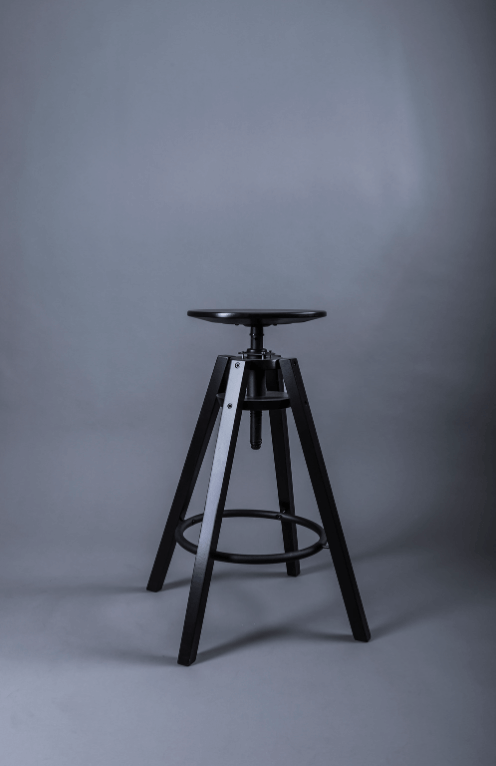
Use of a chair: The complainant asked for a chair and was provided with a barstool. EEOC determined that she received a reasonable accommodation in the eyes of the law, even if it wasn’t her accommodation of choice.

“Complainant was not denied a reasonable accommodation,” as even her appellate brief indicated that she “was requesting something to sit on as her accommodation and would have been fine with a barstool,” the EEOC explained.

How did it end up being a stool instead of a chair, anyway?

“Management and coworker testimony reflects that barstools were available at the workstations where Complainant was assigned, and that Complainant frequently sat on a barstool while she worked,” the commission wrote.

Lifting restriction: The complainant ran into more difficulties on the issue of lifting restrictions. She said she could lift up to 45 pounds without assistance, but her FMLA paperwork said she topped out at 15 pounds.

The crux of her failure-to-accommodate charge was that her supervisor denied her request by reassigning her to a role she didn’t want.

The EEOC noted that the complainant’s “difficulties lifting were obvious, as multiple witnesses [testified] that she regularly asked for assistance lifting items that were under 45 pounds,” the EEOC wrote. “For example, Supervisor claimed that most of the things she requested help lifting ‘weighed about as much as an average trash bag.’”

What ultimately halted the complainant’s claim regarding lifting restrictions is that her needs on the job were met.

“Significantly, Complainant does not allege that once she was moved, she was denied assistance or that the coworkers assisting her at other lines did not provide an effective accommodation,” the EEOC wrote.

Permanent assignment to DRMO: Although the complainant expressed displeasure at being reassigned from DRMO, she did not provide evidence that she notified management she wanted to remain in DRMO as a reasonable accommodation. Additionally, the EEOC noted the complainant did not make clear that she preferred the DRMO assignment due to her medical condition, since placement there was not “obvious or referenced” in her FMLA paperwork. Instead, the agency provided her with an accommodation consistent with the FMLA documents by permitting her to take breaks and sit down as needed.

“Complainant does not dispute that she was provided with a stool to sit on and assistance lifting at the three lines where she was reassigned, nor has she argued that these accommodations were not effective,” the EEOC reasoned. Thus, the EEOC affirmed the agency’s final decision dismissing the complaint. So, what’s the lesson here?

The agency didn’t get tripped up by the episodic nature of the impairment. Instead, it was able to show the EEOC:

  1. It engaged in a good-faith interactive process by working with information the complainant provided the agency, to come up with accommodations.
  2. It remembered an accommodation doesn’t have to be what the employee prefers, to be effective.
  3. It focused on essential functions. The EEOC did not expect the agency to change the essential functions of the complainant’s job by reassigning her to a line she preferred.

The following are examples of common episodic impairments, but these aren’t the only ones:

  1. Epilepsy
  2. Multiple sclerosis
  3. Cancer
  4. Hypertension
  5. Diabetes
  6. Asthma
  7. Major depressive disorder
  8. Bipolar disorder
  9. Schizophrenia

It’s also worth emphasizing that “episodic” can include large gaps of time between flare-ups. As anyone who has battled cancer or witnessed a loved one do so knows, that disease has a nasty habit of coming in and out of remission without regard to timelines or schedules, sometimes many years apart. [email protected]

By Dan Gephart, November 13, 2023

I used to be skeptical when people talked about generational differences in the workplace. I thought it was an over-generalization. I’ve since gained an appreciation for the data and how it can improve everything from performance feedback to workplace logistics.

The American workplace is going through a generational shift. Millennials (born 1980-1994) are now the largest generational workgroup, followed closely by Gen X (1965-1979) and Baby Boomers (1946-1964). In the Federal workplace, Gen X still holds an edge, but the percentage of Millennials continues to grow. Understanding the differences between these groups is as important as ever.

Oh, and look out: Gen Z (1995-2009) is expected to make up more than a quarter of the overall workplace within two years.

But that’s not all. An understanding of generational differences is important to address the following workplace situations.

  • Remember that “OK, Boomer” slam? Do you still joke about everybody-gets-a-trophy Millennials? Luckily, the rancor of a few years ago has died down. Unfortunately, a lot of inter-generational mistrust continues to exist in the workplace.
  • Major workplace change (offices to cubicles, cubicles to open spaces, open spaces to remote work) has often been mired in generational conflict. Understanding generational needs will help your agency in its current transition to a permanent hybrid workforce.
  • And, finally, there’s the performance As a group, Federal supervisors have gotten better at performance feedback. But too many supervisors still struggle.

There is no one way to provide employee feedback. It depends on the relationship between the employee and the rater, according to FELTG Instructor Susan Schneider. She offered this overview:

  • “Generally, Gen Zs prefer feedback delivered in a variety of ways,” Susan said. “Gen Zs, like Boomers, prefer direct and actionable feedback. Ideally, the feedback is tailored to their individual needs.”
  • Millennials prefer timely, specific, continuous feedback given in a collaborative and supportive way.
  • Gen Xers prefer regular direct and honest feedback. “For both Gen Xers and Gen Zs, keeping their individual needs and goals in mind is the best approach,” she said.
  • Boomers are geared to formal feedback sessions like most Federal organizations’ annual or half-yearly sessions. Specific and actionable feedback is ideal.

Those differences are well-researched, with the general conclusion that Millennials need “frequent, VERY frequent, feedback.” Should supervisors really consider a person’s generation before sharing feedback?

“Perhaps, as a start,” Susan said. “Management starts with communication. Well, management IS communication. So, yes, communicate differently if personally and organizationally possible.”

Susan has taken a particular interest in the fast-growing Gen Z.

“Gen Zs flourish in diverse workplaces,” she said. “They are practical, and, of course, digitally fluent. Gen Zs want a culturally competent manager, stability, competitive wages, and mentorship. Their communication style is face-to-face and video chats with friends.

“When I think about our Gen Zs onboarding during COVID, I’m concerned. How can their co-workers, including managers, provide (or simulate) face-to-face communication? I have anecdotal evidence; a mentor/protégée pair told me they met in person outside during COVID.”

Back to my original skepticism of the topic. I asked Susan how she’d respond to someone saying generational differences are over-generalizations or worse stereotypes.

Generation is one way to understand peoples’ life experiences and what makes each of us who we are,” Susan told me. “Aspects of a person, such as life stage (such as becoming a parent) or military service, first-generation college, living abroad, first language learned, or where we grew up are all within us. Learn about people and accept that human beings are formed by many influences. Respect personal boundaries, and don’t accept your first impression as fact.”

“Diversity of thought is a huge asset for an organization.” [email protected]

By Deborah J. Hopkins, November 13, 2023

It’s the time of year when initial Federal Employee Viewpoint Survey (FEVS) results are released. Like many of you, I found some interesting numbers in the 2023 report. One topic with very favorable scores involved items related to employee views of their immediate supervisors. Take a look at a few items with high scores:

  • I am held accountable for the quality of work I produce: 86 percent.
  • I know what my work unit’s goals are: 84 percent.
  • Supervisors in my unit support employee development: 78 percent.
  • My supervisor supports my need to balance work and other life issues: 84 percent.
  • My supervisor listens to what I have to say: 82 percent.
  • My supervisor treats me with respect: 86 percent.
  • My supervisor holds me accountable for achieving results: 87 percent.

Until the 2022 FEVS, an item that appeared on every FEVS for as long as I can remember was “In my work unit, steps are taken to deal with a poor performer who cannot or will not improve.” That number usually wavered between 27 and 42 percent. The question hasn’t been on the last two FEVS so it’s hard to capture the difference between how employees feel about their supervisor holding them accountable, and their supervisor holding coworkers accountable.

One item we at FELTG found troubling:

  • In my work unit, differences in performance are recognized in a meaningful way: 45 percent.

This item reminds me of what FELTG Instructor Ann Boehm says in her class on Boosting Employee Morale: 10 Dos and Don’ts for Federal Managers: “Take care of the good ones!”

We’ll share more on the 2023 FEVS in upcoming articles and in our 2024 training classes, which are now open for registration. [email protected]

OPM Deputy Director Rob Shriver took time to talk with FELTG this month about the proposed rule that could make it very difficult for future administrations to revive Schedule F. Read more.

While there’s no clear connection between the term “master bedroom” and slavery, the subtext is enough that the real estate industry largely moved to stop using it. Here’s why.

By Deborah J. Hopkins, October 16, 2023

The Merit Systems Protection Board has taken a several-week break from issuing decisions while it updates its e-Appeal online system. The system was scheduled to come back online this week.

In the meantime, I wanted to highlight an interesting recent case involving a supervisor who was demoted for conduct unbecoming, but who the Board reinstated because the supervisor’s impatient and unprofessional demeanor did not rise to the level of actionable misconduct. Glass v. Treasury, NY-0752-19-0200-I-1 (Aug. 16, 2023)(NP) [PDF].

The appellant, a supervisory national bank examiner, was demoted based on five specifications of conduct unbecoming a supervisor.  According to the case, the misconduct involved the supervisor’s interactions with four subordinates and the specifications all related “to the manner in which the appellant dealt with these individuals regarding work-related matters.” Id. at ¶7. The administrative judge (AJ) agreed with the agency and upheld all five specifications and the demotion.

The Board, however, disagreed. Among the relevant details:

Specification 1: The appellant addressed one of his subordinates in a scolding manner, told him his work-related project explanations were “not a good excuse,” and told the subordinate that he was ill-prepared for a meeting. In addition, he called the subordinate a liar during a performance review.

According to the Board, “It is the job of a supervisor to address the performance of his subordinates and the making of inaccurate or false statements about a work-related matter is serious. Although the appellant’s language may have been direct or indelicate, that does not make his conduct actionable.” Id. at ¶9.
Specification 2: The appellant was having a discussion with another of his direct reports and was trying to clarify how many work items were pending. When the direct report did not understand the appellant’s question, “the appellant held up one finger from each hand in her face and said, loudly enough so that others could hear, words to the effect of ‘Here’s one finger and here’s one finger. How many fingers?’” in front of several other staff members. Id. at ¶10.

The AJ found this behavior disrespectful and inappropriate because the direct report felt intimidated and embarrassed. The Board disagreed and said the appellant was asking for information about a work-related matter, which is a supervisor’s responsibility, and even if the statement was exaggerated and made the subordinate feel uncomfortable, it did not rise to the level of actionable misconduct.

Specification 3: This specification involved the same direct report from Specification 2, above. In this instance the direct report asked the appellant a question about a work-related matter and the appellant responded, “We have talked about this five times!” Id. at ¶12.The AJ found that the appellant’s obvious annoyance and anger was not tactful and was unbecoming a supervisor, but the Board disagreed because the conversation was about “a work-related matter and his response to her was in the context of his supervisory role…To the extent that the appellant’s response reflected that he was frustrated by the question, it does not amount to actionable misconduct.” Id. at ¶13.

Specification 4: The appellant asked a different subordinate to schedule a meeting to include him and two other agency officials, and after the subordinate made several attempts to confirm the appellant’s attendance, he replied, “I told you this three times. We have to go over this again?” Id. at ¶14. As in Specification 3, the Board held that the discussion was work-related and the appellant was acting within the scope of his responsibilities, and even if he appeared annoyed and made his subordinate feel belittled, it did not rise to the level of actionable misconduct.

Specification 5: In an email exchange between the appellant and one of his direct reports, he told her to “submit her questions either to him or another named individual, and to ‘PLEASE stop emailing’” another agency employee. Id. at ¶16. The AJ found the tone of the email unprofessional, but the Board disagreed. It held a supervisor has authority and responsibility to “direct who should be provided certain information and to whom questions should be addressed. Putting a written word in all capital letters is generally intended to draw the reader’s attention to it.” Id. at ¶17. Although the subordinate testified she felt “beaten up” by the email, according to the Board “those feelings cannot serve to turn the appellant’s email into actionable misconduct.” Id.

If you are surprised by this outcome, let me draw your attention to a footnote where the Board explained, “We do not suggest that a supervisor’s conduct may never be actionable and therefore supportive of discipline, but only that the appellant’s conduct in this case does not rise to that level.” Id. at p. 7. For more on advanced topics such as these join us for the all-new program Advanced MSPB Law: Navigating Complex Issues, October 31 – November 2. [email protected]

By Ann Boehm, October 16, 2023

While teaching a recent class about hostile work environment, a participant asked me if an offensive bumper sticker on a co-worker’s car could create a hostile work environment.

Hmmmm. Interesting question.

Let’s work through this, shall we?

First, what is a hostile work environment? To establish a hostile work environment, an employee has to show that: “(1) he belongs to the statutorily protected class; (2) he was subjected to unwelcome conduct related to his membership in that class; (3) the harassment complained of was based on [the protected status]; (4) the harassment had the purpose or effect of unreasonably interfering with his work performance and/or creating an intimidating, hostile, or offensive work environment; and (5) there is a basis for imputing liability to the employer.” Xavier P. v. Patrick R. Donahue, Postmaster General, EEOC Appeal No. 0120132144 (Nov. 1, 2013).

[Editor’s note: Hostile work environment is one of the challenging topics that will be covered during Advanced EEO: Navigating Complex Issues on Nov. 15-16 from 1-4:30 pm ET each day. Register now for one or both days of training.]

Next, is a picture or symbol something that can create a hostile work environment? According to the above-cited Xavier P. case, the answer to that question is most certainly, “yes.”  What created the HWE in that case? “Caucasian employees in [the employee’s] work area wore t-shirts featuring the Confederate flag several times a month, and management took no action despite receiving complaints about it.” Id. The union president informed the postmaster that some employees found the t-shirts offensive and asked management to take action to prohibit the t-shirts in the workplace. The postmaster had a subordinate supervisor tell employees “not to wear revealing clothing or clothing with ‘political’ messages.” Id.  The employees “were never instructed not to wear or display images of the Confederate flag.” Id.

The EEOC concluded the t-shirts subjected the employee to unlawful racial harassment. It also found the agency liable for not taking appropriate corrective action to stop the harassment.  If wearing a Confederate flag t-shirt in the workplace constitutes racial harassment, could that carry over into the parking lot? I think so, but I did not find much guidance in case law on bumper stickers. I did find one EEOC “bumper sticker” case. Lockwood v. John E. Potter, Postmaster General, EEOC Appeal No. 0120101633 (2010). The employee did not claim HWE, only discrimination based on race and sex after seeing a bumper sticker in the office trash can that said, “When All Else Fails Blame The White Male.”

The bumper sticker was removed from the trash can, and it eventually was placed on the complainant’s personal vehicle – but not while the car was parked on agency property. (Can we all agree that the facts of this case are just plain weird? Who puts a bumper sticker, particularly one that could be offensive, on someone else’s personal vehicle?)  The EEOC found no discrimination because the complainant “failed to show how the alleged incidents resulted in a personal harm or loss regarding a term, condition, or privilege of his employment.” Id.

So, what about an offensive bumper sticker on a personal vehicle parked on agency property? Sorry to do this. I have to give a lawyerly answer here.  It depends. The EEOC told us that a Confederate flag in the workplace was racial harassment. Logically, that could cross over into an agency parking lot. Things that could impact on creating a hostile work environment: location of the parking lot (do people have to pass the car?; is it a small parking lot with few cars or large parking garage with many floors?); whether certain employees have assigned parking spaces (the union president or senior officials – knowing who is displaying the bumper sticker could make a difference); and the particular symbol on the bumper sticker (Confederate flag; sexually suggestive pictures or phrases).  Would a bumper sticker of a skeleton hand extending a middle finger create a hostile work environment? (Yep, I drove onto a government facility behind that one.) Offensive, perhaps. Hostile work environment, probably not. Hard to say that one is tied to any particular protected status. What’s an agency to do?  Employees have a right not to be subjected to a hostile work environment. Offensive symbols or pictures can create a hostile work environment.

There is the potential for a bumper sticker to create a hostile work environment. It all comes down to a fair analysis of the totality of the circumstances in light of the legal standard.  The big takeaway from all of this – take a complaint about an offensive bumper sticker seriously.  Instead of telling you that’s Good News, like I usually do with this article, I’m just going to say: Good luck out there! [email protected]

By Dan Gephart, October 16, 2023

Sen. Joni Ernst is clearly not a fan of remote work. She recently accused Federal teleworkers of “fraud.” Dig beyond the headline and you’ll see many of Ernst’s claims were based on outdated reports. But she may have been onto something when she asked how many Feds were still getting location-based pay and Washington, D.C., wages while teleworking from elsewhere.

We now know of at least one remote worker whose actions fit that description. And while those actions were not outright fraudulent, they did show a lack of candor, according to a recent initial decision by a Merit Systems Protection Board administrative judge (AJ).  In Atterole v. VA, PH-0714-23-0184-I-1 (Sept. 7, 2023)(ID), the Veterans Benefits Administration removed the appellant for failure to follow the agency’s telework policy and lack of candor.

The appellant’s duty station was Baltimore. In the early days of the pandemic, she (like most of her Federal colleagues) was granted 100 percent telework. In December 2020, citing the deaths of her mother and brother-in-law, she requested to work from Port Charlotte, Fla. She said she’d work in Florida from Jan. 4 through March 4, 2021, and return sooner if needed.

The VA Telework policy did not require employees to change their duty station when they are working outside of their geographic region for fewer than six months and their absence is related to medical or other personal reasons. However, the employee was still working and living in Florida seven months later.

She failed to provide a Baltimore address to leadership and didn’t update her telework agreement – violations of agency policy.

Meanwhile, the VBA, concerned about allegations that employees were living in states other than their duty station of record and improperly receiving locality pay, appointed an investigatory board. And the employee’s sworn testimony before that board made matters worse.

At first, the appellant invoked her Fifth Amendment right, then stated that she had “permission to be in a different state but that’s all I’m going to say on the matter.” She also told investigators that “there was no expiration, [that she was] waiting on stuff to handle some personal matters …,” before testifying that other people on the staff were working from different locations than their geographical region. When asked to identify those people, she admitted that she knew of no one else beyond herself.

The AJ noted that while lack of candor doesn’t require intent to deceive, an “element of deception must be demonstrated,” and, in this case, the appellant knowingly gave “evasive and incomplete answers … with the intent to mislead the agency.”

The employee countered that the agency failed to reasonably accommodate her disability and retaliated against her for that activity. Her request to work from home 100 percent of the time was denied. However, the agency granted her numerous accommodations including a light above her desk, a space heater, stand-up desk, ergonomic chair, designated parking space and, in the event her office temperature couldn’t be regulated, the option to work from home temporarily. When the pandemic hit, she was granted 100 percent telework.

The AJ found the employee’s “vague assertions” failed to show by a preponderance of evidence that the EEO activity was either a motivating factor in or a but-for cause of her removal. The AJ concluded that the deciding official properly considered the relevant Douglas factors and found removal to be an appropriate and reasonable penalty. [email protected]

By Frank Ferreri, October 17, 2023

Although the Rehabilitation Act just turned 50, and the ADA is in its 30-something stage of life, employers – Federal and otherwise – continue to struggle with accommodations, particularly for employees whose disabilities aren’t visible.

A couple of weeks back, Fortune ran a story reporting that only 41 percent of neurodivergent employees said they received a workplace accommodation, with another 6.5 percent saying they were denied accommodations after requesting them.

In the context of Federal employment, the recent case of Harp v. Garland, 2023 WL 6380019 (W.D. Okla. September 29, 2023), provides an example of an agency failing to follow the law on accommodating an employee with an invisible disability.

According to a Department of Justice employee, the agency violated Section 501 of the Rehabilitation Act when it denied her request for a reasonable accommodation.

The employee alleged she asked the agency for two hours off work each week to attend therapy for her mental health condition. In response, the agency contended that the employee was able to perform the essential functions of her job without an accommodation.

At trial, the jury returned a verdict in the employee’s favor and awarded her compensatory damages of $250,000.

The DOJ entered a Post-Trial Motion for Judgment as a Matter of Law (Note: Under the Federal Rules of Civil Procedure, a party can file this kind of motion within 28 days after entry of judgment, and a court may: 1) allow judgment on the verdict; 2) order a new trial; or 3) direct the entry of judgment as a matter of law.)

To show that an agency came up short in its accommodation responsibilities under the Rehab Act, an employee must show:

  • She had a disability.
  • She was an otherwise qualified individual.
  • She requested a plausibly reasonable accommodation from the agency for her disability.
  • The agency failed to provide her with her requested accommodation or any other reasonable accommodation.

Although it noted the employee performed her job duties “adequately” immediately following the denial of her request for an accommodation, in upholding the trial court’s ruling in the employee’s favor, the District Court highlighted that:

  • The employee testified that in the absence of her treatment, her mental state deteriorated to the point that she was unable to work.
  • The employee testified that she believed the denial of her requests to attend her counseling sessions caused her to be unable to work and that, if she had been able to continue her treatment, her mental condition would have improved.

“Viewing this evidence in the light most favorable to [the employee,] a reasonable jury could have concluded that allowing [the employee] to take leave to attend counseling sessions was an accommodation that would have enabled [the employee] to perform the essential functions of her job,” the District Court wrote.

So, what can an agency learn from a case like this? It’s no secret there has been a mental health crisis in workplaces across the country for a while and that since the pandemic, the numbers have shown it’s not going away anytime soon.

Rather than end up in court or dealing with the EEOC, a better strategy might be to hone in on the tips FELTG Training Director Dan Gephart offered in the thick of the pandemic:

  • Develop clear expectations and agreed upon solutions to meet the goals and expectations of the job.
  • Communicate in a clear and concise manner, especially the policies and procedures that may impact their performance.
  • Provide respectful, but direct feedback. Also, ask the employee how they prefer to receive the feedback.
  • Avoid judgments or assumptions.
  • Avoid using language that promotes stigma.

Also, as this case illustrates, just because the employee can get a job done “adequately” doesn’t end the story.

The employee’s condition deteriorated without the accommodation, something that most employers would be sensitive to regarding a visible, physical impairment.

It sounds basic, but it’s worth remembering that the law doesn’t make a difference between physical or mental disabilities when it comes to employers’ accommodation duties.

If an employee needs time off to attend mental health counseling sessions, there’s a good case that it will be a request for reasonable accommodation under the Rehabilitation Act, and an agency would make a smart bet to treat it as such. [email protected]

In recent years, employees have been more open about their faith in the workplace, much of this trend fueled by a number of religious-themed Supreme Court decisions. We’re taking a deeper look.