By Dan Gephart, July 15, 2020

If your favorite summer conference is not being held on-site, and you still have training funds, we hope you’ll register for Federal Workplace 2020: Accountability, Challenges, and Trends During the COVID-19 Pandemic. Here are 10 reasons why:

  1. It’s hard to believe, but some virtual conferences require attendees to register for the full event even if you’re only planning on attending a few sessions. This doesn’t seem like a wise way to spend your agency’s money.  Federal Workplace 2020: Accountability, Challenges, and Trends During the COVID-19 Pandemicallows you to register and pay for only the sessions you want to attend.
  2. And, speaking of sessions, we have some timely sessions from which to choose. All are updated with the latest information and guidance, especially as they apply to the current pandemic. There are sessions on performance and conduct challenges during a pandemic, EEO trends in the COVID-19 world, the latest on sexual orientation and transgender discrimination, and much more.
  3. We also have sessions on the perennially challenging topics like mixed cases, reasonable accommodations, the intersection of the ADA and FMLA, performance feedback, and much more.
  4. If you’re going to a virtual training, you’d expect the event to be live, right? Beware: Some virtual training conferences are presenting recorded sessions. That idea doesn’t fly with us here at FELTG Headquarters. All of our sessions will be presented live, which means you’ll have opportunities to ask questions of the instructors, and get immediate answers.
  5. Speaking of instructors, your favorite FELTG presenters, such as FELTG President Deborah Hopkins, Barbara Haga, Katherine Atkinson, Dwight Lewis, Bob Woods, and Ann Boehm (just to name a few) will be a part of the event.
  6. We make it easy for EEO counselors and investigators to get their 8 hours of annual refresher credits.
  7. No, we didn’t forget about you attorneys out there. This event offers many chances to earn CLE credits, including two hours of Ethics.
  8. Federal Workplace 2020: Accountability, Challenges, and Trends During the COVID-19 Pandemichas something for everyone, whether you’re a supervisor, HR professional, EEO practitioner, union representative, or attorney.
  9. This isn’t our first rodeo. Since we launched the FELTG Virtual Training Institute earlier this year, we’ve produced several multi-day virtual training events.
  10. If for some reason you can’t attend this session, we have plenty of other upcoming, more specific events before the end of the fiscal year, including EEOC Law Week and MSPB Law Week. Check out the FELTG Virtual Training Institute for more details.

By Meghan Droste, July 15, 2020

In last month’s Tips From the Other Side, I covered the factors the Commission uses to determine how long is too long to providing a reasonable accommodation. (Quick recap: It depends, but you should move as quickly as possible. The Commission will look at who caused the delay and what the Agency did in the meantime, so ensure you have clear documentation of the steps the Agency took to provide the accommodation and provide interim accommodations when possible.)

Here’s a follow up question for you: How long is too long in the time of COVID? Or put more precisely, do agencies get a free pass on processing requests for accommodations that are only needed in the office while everyone is working from home? In its COVID-related guidance, the Commission has said no, that’s not quite how it works. Agencies are allowed to prioritize requests for accommodations employees need right now as they telework or for those employees who have continued to work in agency facilities throughout the pandemic. But that does not mean you should just stick all other requests in a drawer until sometime when employees are back at their (office) desks.

The Commission recommends that employers still engage in the interactive process during the pandemic and gather all of the necessary information to process the request. Agencies should, of course, keep in mind that employees may need a lot more time than usual to obtain medical documentation, as doctors may be overwhelmed with other appointments and employees who cannot meet virtually with care providers may have limitations on seeing a provider in person.  Agencies should also use this time to start making arrangements for approved accommodations, such as ordering any necessary equipment as delivery times may be extended due to the pandemic.

For those employees who need accommodations right now — whether for working from home or for those employees at or returning to the worksite — the Commission also recommends considering temporary or interim accommodations without undergoing the interactive process so as to provide accommodations as quickly as possible during this unusual and difficult time. If your agency chooses to do provide these types of accommodations, the Commission recognizes that it may be appropriate to put an end date on the accommodation, such as a specific date or when an employee returns to the office. Once you reach that point, or ideally as you are coming up to the end date, you can check in with the employee about any ongoing or new needs for accommodations and engage in the more traditional interactive process at that time.

The Commission’s COVID-related guidance is available here. I encourage you to read it along with the Commission’s other pandemic-related resources. [email protected]


By Barbara Haga, July 15, 2020

We’ve previously talked about issues related to employees who report to work with symptoms and what to do about taking temperatures when employees are reporting to the worksite. What other issues could present once more and more employees are returning to work? This month, we look at wearing masks and cleaning workspaces.

Wearing Masks

Masks are a hot button issue. I do not understand it, but I have seen enough to accept it is real.  Forbes published an interesting article in May on the top reasons why people don’t want to wear them. The article explains it covers everything from claiming individual rights are being abridged to it’s not cool or for those who worry about it, not masculine.

Regardless, the OSHA guidance recommends that employers encourage workers to wear face coverings at work. The CDC guidance updated in May 2020 advises employers to encourage employees to wear cloth face coverings in the workplace, if appropriate.

When are masks not feasible? According to the CDC, it includes situations such as the following:

  • Working with people who are deaf or hard of hearing who rely on lipreading.
  • People with intellectual and developmental disabilities, mental health conditions or other sensory sensitivities.
  • Younger children older than 2 (e.g., preschool or early elementary aged).
  • People engaged in high intensity activities, like running.
  • People engaged in activities that may cause the cloth face covering to become wet, such as swimming.
  • People who work in a setting where cloth face coverings may increase the risk of heat-related illness or cause safety concerns (for instance, straps getting caught in machinery, chemicals accumulating in mask, etc.).

Clearly, these are not typical issues in many Federal workplaces. The question will be whether masks are encouraged or required, and, if required, what happens when employees refuse to comply.

As noted last month, several unions have posted information about concerns regarding reopening and what they see as requirements for a safe return to the workplace. AFGE’s “10 Principles on Return to Worksites” notes:

“Protections must be put in place by the agency: temperature taking at the door/masks and appropriate PPE/hand sanitizer/soap/tissues, proper distancing, dividers, regular disinfecting, air circulation, etc.”

The Federal Workers Alliance,  which includes a long list of unions, including NAGE, IAFF, IAMAW, PASS, POPA, SEIU and IFPTE, demands that “[A]ll individuals present in the worksite should be expected to wear masks to reduce the possible spread of COVID-19 through respiratory droplets.” NTEU’s press release discussed whether agencies were providing hand sanitizer, disinfectant wipes and masks, but noted employee should be able to bring their own masks.

As discussed in my May column on taking temperatures, if the agency sets a mandatory requirement and is faced with employees who refuse to comply, then disciplinary action should ensue. The charge would likely be failure to follow instructions or some variation of that. Since the employee won’t be allowed in the workplace without the mask, he or she would have to be sent home on admin leave just like any other situation where you have an employee who reports not ready, willing, or able to perform work. The admin leave would extend until you could get your notice of proposed action completed. At that point, the employee could be on notice leave while waiting for the reply and decision.

The local union is not in a great position to argue against wearing masks if the national union is advocating their use. I suppose it is possible that an employee might have some medical reason (which would need to be supported with medical documentation) as to why he or she cannot wear a mask. That could create a question regarding accommodation if that underlying medical condition would rise to the level of a disability.

Or, perhaps the employee will agree to wear the mask after:

  • Receiving a proposed action
  • Or after the discipline is effected.

Cleaning Workspaces

The CDC guidance on reopening addresses the need for cleaning, stating that reducing the risk of exposure to COVID-19 by cleaning and disinfection is an important part of reopening that will require careful planning. What’s in that plan? What new requirements are going to be necessary to keep workspaces as free from the virus as possible? Are there going to be issues with obtaining compliance with these reopening requirements? Could be.

The information issued by the unions may offer a clue. AFGE talked about protections that needed to be put in place by the agency, which included “regular disinfecting.”

The NTEU press release noted: “Employees remain anxious about the risks posed by taking public transportation, being in enclosed facilities with hundreds of coworkers and whether their work stations will be consistently and properly cleaned and disinfected.”

The Federal Workers Alliance post included a requirement to “assign and ensure that all shared/common areas and equipment are sanitized at regular intervals by personnel qualified and trained in disinfection of COVID-19” in their list of required agency actions. These postings seem to indicate that the expectation is that cleaning of individual workspaces is not being done by employees but by someone else.

Is it reasonable to expect there are agency personnel or contractors available with the necessary time, products, and training to do all of this? This may be within the realm of existing contracts and resources for some agencies.

It seems likely to me some agencies will need employees to take care of some of this. That means cleaning of individual keyboards, desk, phones, etc. It could extend to common areas such as counters in break areas, refrigerator doors, coffee pots, and door handles. Copiers, faxes, hole punches, and commonly used staplers might also make the list.

Encouraging voluntary compliance with these kinds of tasks is probably the easiest approach. Perhaps employees in the unit could draw up a rotational schedule for the tasks covering common areas. An employee might volunteer to do the cleaning.  But, I believe it would be naïve to think that there won’t be some who say “that’s not in my p.d.” Bottom line: If it is a requirement, not complying would be a failure to follow instructions, although perhaps not at the same level as with the masks.

These are actions that have likely not been carried out before. However, as has become painfully apparent, it’s a brand new world.

By Dan Gephart, July 15, 2020

Essential can be a loaded word. Any discussion on whether something is essential – whether it’s workers, food, or art – will likely not lead to consensus. Would you have considered GrubHub drivers “essential” workers at this time last year? Probably not. Despite the authoritative nature of the word itself, essential is subjective in most cases.

But when it comes to reasonable accommodation for a disability and an employee’s job functions, essential is not a word to be played with loosely.

In order to be a “qualified individual with a disability,” an employee must meet the basic job qualifications and be able to perform the essential functions of the job with or without reasonable accommodation. When you actually identify the essential functions of a job, you might find that they’re not always what you may think they are. As you go through this process, it’s important that you analyze each function and avoid rash decisions.

Consider the following:

The time spent on the function may not be as important as the consequences. Here’s an example: A firefighter may not regularly have to carry an unconscious adult out of a burning building. However, the consequence of failing to require the firefighter to be able to perform this function would be serious.

Outcomes are more important than how the function is usually performed. Essential functions are the fundamental duties of a job — the outcomes that must be achieved by someone in that position, not the means by which those outcomes are achieved. There are plenty of EEOC cases where agencies felt an employee was not qualified because of a lifting restriction, only to find out there are a lot of ways to move items. In Small v. U.S. Postal Serv., EEOC Appeal No. 0720100031 (Apr. 5, 2012), a push cart was just as effective as a satchel for a letter carrier with a lifting restriction.

The written job description isn’t the be-all and end-all. Just because a function is in the job description doesn’t necessarily mean it’s essential. Sometimes the position description includes functions the employee never actually performs, while functions that are essential have become part of the job over time. Focus on whether you actually require the employee in the position to perform the functions that you claim are essential. You’d be surprised to find out how many functions are listed in the job description that the employee has never actually done and will never need to do. The written job description can be evidence of an essential function – but it’s not the be all-end all.

And here is the best example, why you shouldn’t rush to make a decision.

Attendance is not an essential function. In Cottrell v. USPS, EEOC Appeal No. 07A00004 (2001), an employee with ADD couldn’t be in the workplace certain days of the week due to his disability. However, there was a reasonable accommodation that allowed the employee to complete essential functions.

In many jobs, of course, attendance seems to be essential. But in the federal government, poor attendance is looked at as a potential undue hardship, not as an essential function.

Here are some other considerations, per 29 CFR § 1630.2(n)(2), as you determine the essential functions of a position:

  • The reason the job exists is to perform that function.
  • A limited number of employees available to perform the function/
  • The function is highly specialized such that incumbent is hired based on expertise or ability to perform that function.

If you’re looking for training on reasonable accommodation, FELTG has plenty of options. Reasonable Accommodation in 75 Minutes, which will be presented by former EEOC Dallas Region Chief Judge Dwight Lewis, will be one of 14 sessions we’re offering during our conference-like event Federal Workplace 2020: Accountability, Challenges, and Trends during the COVID-19 Pandemic.

Also, you can register now for the Reasonable Accommodation in the Federal Workplace webinar series, which begins on July 30. You can register for any or all of the five 60-minute webinar events.

The bottom line: Take requests for reasonable accommodation seriously. There may be times when you’ll find an employee is not qualified for the position with or without a reasonable accommodation. But if you take an open-minded, creative and analytic approach to reasonable accommodation requests, you’ll find that in almost all cases you’ll find an effective solution. [email protected]

By Deborah Hopkins, June 23, 2020

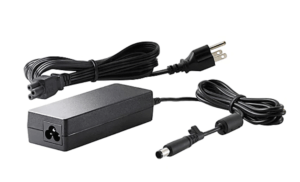
Last week, we published an article about an employee who left his laptop charger in the office at the beginning of the COVID-19 pandemic. The employee claimed he worked 40 hours a week for eight weeks, even though he later admitted he had done no work during that time. I characterized it as an open-and-shut case. It wasn’t seen that way by a number of you in FELTG Nation.
If you haven’t read the article, or didn’t read it closely, I urge you to take a look before you continue reading this article.

Many of our readers had comments, and some strong feelings, about the matter. Most of the feedback fell into three areas:

  1. The potential existence of a backup charger or at-home computer alternative.
  2. The investigation of IT records to see if the employee was working through some other mechanism.
  3. The issue with supervisor not tracking the employee’s [lack of] work product.

Below are some of the comments we received in each category, followed by an official FELTG response:

The Forgotten Charger

FELTG reader comments:

  • Some years back I was sent out of state on a business trip and forgot my charger. I…drove over to a Best Buy, and got a new power cord. Problem solved in about one hour. In today’s COVID world, I’d probably buy one from Amazon. But just because the employee forgot his power cord isn’t evidence the employee wasn’t working. How about checking on his output??
  • Perhaps the employee simply opted to buy another charger or had a reasonable substitute already at their home – they are readily available.
  • In reply, the employee will obviously claim he had another charger cable at home (and he could’ve purchased on Amazon).
  • I have a docking station, monitor, and mouse of my own for my home office.
  • Does the agency allow the employee to work on his own personal device from home?
  • Most likely there was a back-up charger. I have been telecommuting for 4 months and my charger burnt out twice. I was out of commission for a week.
  • Admittedly I did this and worked on my desktop for all of quarantine.

Official FELTG response: All excellent points, and details you would absolutely want to find out during your management inquiry or misconduct investigation. If the employee was allowed to use a personal device, or bought a backup charger, or had a docking station for his laptop at home, then as long as he was working the 40 hours a week he claimed, we don’t have misconduct.

The employee’s misconduct was lying on his time card – not leaving his charger at work. If you look closely at the article’s application of the five elements of discipline, you’ll see the employee was charged with the time and attendance violation, not leaving the charger in the office. A disciplinary charge of “leaving your laptop charger at the agency” may not rise to the level of misconduct, especially if it was accidental.

IT Records

FELTG reader comments:

  • Most agencies can see if the network was accessed or logged into.
  • The one thing I may do is have IT perform an evaluation of his computer usage as further confirmation that he hasn’t logged on and worked.
  • The IT people should be able to audit access to the [employee’s work] files, if nothing else.

Official FELTG response: In some cases, you would want to pull IT records to verify if the employee was working at all. Let’s modify the hypothetical a bit and say the employee was working on a personal device through the agency’s VPN, and claimed 40 hours of work a week, but the supervisor suspects he was working less. A search of IT records could show the amount of time the employee was on the VPN to give the agency a better idea of how much potential time theft was involved. Other considerations, such as whether the employee does work that does not require computer or VPN use, would also be relevant.

But in the original hypothetical, the employee admitted he did not work at all. Yet, he claimed 40 hours a week. That admission is preponderant evidence, so the agency could propose discipline based on that evidence alone. Yes, the IT records would provide additional evidence, but they wouldn’t be required because the burden of proof in discipline cases is only preponderant evidence – or substantial evidence, at the VA.

Supervisor Oversight

FELTG reader comments:

  • The burning question in my mind is how could the supervisor not know there was a problem; when you send people home to work, it doesn’t mean you don’t keep tabs on what they’re doing daily. Why wasn’t the supervisor communicating on at least a weekly basis and asking for accountability, not just of this employee but every employee?
  • Simplest way to check up is to ask to see work product if you doubt. Why are they having to use “inference” of a power cord sitting at the office rather than checking with IT for emails, and checking other systems for evidence of work? Seems to me the supervisor needs at least a counseling for failing to do his job as well!
  • Should we also address the supervisor who failed to see no work from this employee for months?
  • There should have been ways for management to create check points/milestones or activity goals to ensure this person was working.
  • If I was the said employee’s supervisor, I would be a little concerned about my own “failure to supervise” allegation.

Official FELTG response: Right on! This hypothetical supervisor failed to monitor the employee’s work, because no work product in eight weeks is unacceptable in any government job. As the previous article alluded, we could write another article entirely on the supervisor’s potential performance and misconduct issues.

Thanks, as always, for your responses. We loving hear from you, and enjoy the conversations. For a more in-depth discussion on related topics, be sure to join us July 1 (that’s next week!) for the 75-minute webinar Performance and Conduct Problems During the COVID-19 Pandemic: Holding Remote Employees Accountable. [email protected]

By Ann Boehm, June 17, 2020

I just can’t write Good News this month. There’s too much bad news. Too much happening that doesn’t make sense. Months of dealing with COVID-19, and now George Floyd.

I’m not a good enough writer to express proper thoughts on the George Floyd tragedy. But I do know this: Don’t let bad employees keep their jobs! We teach it. Heck, let’s be honest – we preach it. And yet somehow, bad employees keep their jobs.

My Federal law enforcement friends, now is the time for you to take more seriously than ever issues of misconduct and poor performance by law enforcement officers. There are so many good law enforcement officers. We don’t need the bad ones. They can end up hurting people. They can end up killing people.

And this guidance applies to all Federal employees. Every Federal employee is working on behalf of the American public. You all have important missions. It’s pretty obvious from the news that the American people care a lot about the work of the Department of Health and Human Services, particularly the Centers for Disease Control and Prevention, the Food and Drug Administration, and the National Institutes of Health. It’s easy to dismiss the impact of a weak employee until there is a crisis. If there are bad employees, they can harm the public not just in the United States, but the world.

Is avoiding a personnel lawsuit really worth that? Take the right steps. The law allows (and, in fact, obligates) you to remove poor performers. The law allows you to utilize progressive discipline and remove an employee who continually engages in misconduct. And if a single instance of misconduct is bad enough, you don’t even have to use progressive discipline. Yes, you can fire a Federal employee.

We can help you handle misconduct cases so that you win the lawsuit. We can help you remove the poor performer and win the lawsuit. Where we can’t help you is when the bad officer harms an individual, and the public trust. We can’t help you after the bad scientist misses crucial research data and an opportunity to properly manage a pandemic.

If you lose an MSPB case or EEOC case when you remove a bad apple, then let the media know. Let the MSPB or EEOC defend the decision. But don’t avoid removing a bad employee just because you might lose a case. It will be much worse if the media ends up reporting that an employee who harmed a citizen had multiple instances of misconduct and stayed on the job. Or that the employee who mishandled review of a COVID-19 vaccine was a chronically poor performer.

I would also like to think now is the time for the unions to take a good look at how they address performance and misconduct cases. Of course employees have rights, but a bad employee is a bad employee. Remember that a bargaining unit is made up of many, many good employees, and too often the focus is on the bad ones. Figure out a way to protect good employees without over defending the bad.

So that’s my challenge. It’s a good time to assess performance and misconduct. Do the right thing. Please don’t make the news because of a bad employee. Make the news for doing what your mission requires you to do for the American people. I know you can do it! [email protected]

By Deoborah Hopkins, June 17, 2020

Here’s a timely hypothetical that recently came across the FELTG desk:

Dear FELTG,

My agency sent all employees home to telework starting at the beginning of April. Hypothetically, the agency learned that an employee left his computer power cord in the office before he started teleworking, but he has been submitting 40 hours a week on his time sheets for the past two months. His computer charge lasts approximately 6 hours, and the employee’s work tasks requires use of the computer all day, every day.

I’ve been advised that investigating this misconduct would be too difficult because there wouldn’t be witnesses to attest the employee wasn’t working, and that our agency can’t discipline the employee anyway because of the current situation with the pandemic. Do you have any thoughts on this?

And our FELTG response.

Thanks for the note, FELTG reader. This one seems so easy to me. The employee is claiming pay for a large amount time when he did not work (approximately 320 hours), which is an egregious act of misconduct.

As members of FELTG Nation know, in order to discipline a Federal employee for misconduct, the agency must follow the five elements of discipline.

1 – Is there a rule? Yes, of course. Federal employees can’t lie on their time cards. It violates Federal statute to do so. See, e.g., 18 U.S.C. § 641; 18 U.S.C. § 287; 18 U.S.C. § 1001; 31 U.S.C. § 3729.

2 – Does the employee know the rule? Yes, every Federal employee receives training on how the time and attendance system works and is told their input must accurately reflect their schedule. In addition, most employees are subject to some version of the following when filling out their time and attendance records: “I certify that the time worked and leave taken as recorded on this form is true and correct to the best of my knowledge.” Moreover, the employee must click “Affirm” to validate, or sign their name if they submit a paper time and attendance form.

3 – Do you have proof the employee broke the rule? The standard here is preponderant evidence (or substantial evidence, if you’re covered by the new VA law). The employee has been at home for two months and has admitted he has not had a power cord for the laptop the entire time, and has done no work, yet he has submitted for full pay every day. Is this preponderant evidence? Sure it is. Your evidence is the employee’s admission. Remember, preponderant evidence – more likely than not – is all you need, and the employee’s admission meets that standard. There is also presumably evidence he is not working because no work has been submitted during this time. (There’s also a supervisory issue here, because a supervisor should be aware if an employee has not turned in any work in two months. But that’s another article.)

4 – Justify your penalty. Most agencies are required to justify a penalty by using the Douglas factors. A good starting point is to add up the amount of money the employee claimed and was paid, for time not actually worked. That amount, whatever it comes to, is an egregious misuse of taxpayer dollars. You can also address the loss of trust and confidence in the employee, plus any other Douglas factors that aggravate the penalty such as past discipline, employee performance, and rehabilitation potential. The COVID-19 pandemic might be a mitigating factor for some employee misconduct (for example, an employee did not log on to a web meeting because they were taking care of a child who was sick with the coronavirus and had a 103-degree fever), but in this hypothetical case a pandemic does not forgive, or even mitigate, two months of serious ongoing misconduct.

5 – Provide due process. You’ll complete these steps:

  • A proposal letter containing the charge(s) and penalty
  • The employee can respond to the charge(s)
  • An impartial decision

As far as the charge is concerned, in addition to the falsification/claiming time not worked/whatever you call the misconduct here, there could easily be another charge for the employee not alerting the supervisor that he left his laptop charger in the office and had no way of doing his work. Your agency telework policy likely mentions a process employees should follow if they have technical issues while on telework, and at the very least you can justify that the employee should have known that when he was on telework he was expected to work, and that if there were problems, he should alert the agency as soon as possible.

This scenario is not uncommon, unfortunately, and we will be addressing similar challenges on July 1 during the webinar Performance and Conduct Problems During a Pandemic: Holding Remote Employees Accountable. [email protected]

By Meghan Droste, June 17, 2020

No matter where you live, there likely have been protests in or near your city or town in the past two weeks addressing ongoing issues with policing and racial justice. In DC, we have seen large numbers of people brave the current health risks to stand together in support of Black lives. In my opinion, it has been profoundly moving to see such a call to action, even in this uncertain time.

While I won’t use this space to engage in a discussion of these pressing issues, it is important to recognize that race discrimination continues be an issue in the workplace, including in the Federal government. Here are just a few of the decisions from the past two years finding evidence of race discrimination:

Glenna D. v. Department of the Air Force, EEOC App. No. 0720180026 (June 6, 2019): The complainant, who is Black, was the only employee assigned to a lead position at a lower grade (GS-12 instead of GS-13) “and not coincidentally, [was] also the only employee who was not Caucasian.” The Commission upheld the administrative judge’s finding that the agency discriminated against the complainant on the basis of race.

Sol W. v. Department of Defense, EEOC App. No. 0720180018 (August 15, 2018): The agency removed the complainant, who is Black, during his probationary period after he reported misconduct by a white coworker. The Commission reversed the agency’s rejection of the administrative judge’s finding of race discrimination.

Tona C. v. Department of Veterans Affairs, EEOC App. No. 0120151847 (April 4, 2018): The complainant’s supervisor repeatedly referred to the complainant and other Black employees as “ninjas,” telling the complainant, “Ninjas is a term I use for [n-word] who do not deserve a desk job.  A ninja is supposed to be pushing brooms and cleaning toilets.”  The Commission reversed the administrative judge’s grant of summary judgment in the agency’s favor.

Minnie M. v. Department of Veterans Affairs, EEOC App. No. 0120140003 (March 20, 2018): The agency selected three white employees to remain on a more prestigious team while reassigning all of the Black and Asian employees to a less prestigious team. The Commission reversed the administrative judge’s summary judgment, finding there was enough evidence to proceed to a hearing.

Elmer C. v. Department of Transportation, EEOC App. No. 0120150721 (February 15, 2018): The complainant learned during the EEO process that a memo ranking candidates for a position he applied to included the notation “black” next to his name, with no other similar notations for any other candidates.  The Commission found the administrative judge improperly failed to consider this evidence of racial bias when issuing a decision in the agency’s favor without a hearing.

Because of the recent deaths of George Floyd, Breonna Taylor, and Ahmaud Arbery, and, I imagine, in part because there are still complaints like the above, the Commission issued a resolution on June 9, 2020 confirming that it “cannot be silent about things that matter” and stating clearly that “Black lives matter.”  The Commission also resolved to “redouble [its] efforts to address institutionalized racism, advance justice, and foster equality of opportunity in the workplace.”  I encourage you all to read the full resolution, which is available here. [email protected]

By Barbara Haga, June 17, 2020

Last month’s column addressed what to do if an employee who was reporting to your workplace refused to have his or her temperature checked. Guidance has been issued from CDC and EEOC on the topic of temperature-taking in the workplace. In the General Business Frequently Asked Questions in the section entitled “Reducing the Spread of COVID-19 in Workplaces” (updated May 3, 2020), the CDC describes use of such screenings to limit the spread of the virus. In Section B.7  of the EEOC guidelines entitled, Pandemic Preparedness in the Workplace and the Americans with Disabilities Act (dated March 21, 2020), the EEOC stated temperatures could be taken.

So, where is OPM in all of this? Very little has been published on this point on the OPM site. The Employee Relations guidance does not mention taking temperatures. OPM directs agencies to the CDC website for medical-related issues. OPM does include a short statement related to medical on the page entitled “Pandemic Information Agency Preparation.”  OPM’s paragraph is entitled “Medical Evaluation Program Guidance,” and it states, “Agencies may establish periodic examination or immunization programs to safeguard the health of employees whose work may subject them or others to significant health or safety risks due to occupational or environmental exposure or demands.  The new programs are established through written policies or directives. (5 CFR 339.205)”

Interestingly, OPM does not include taking temperatures in their return to work plan found here. So, what is an agency to do? Is there authority to take temperatures? We all know that the OPM regulations in 5 CFR 339 establish limitations on when agencies can conduct physical and psychiatric examinations. We usually address these regulations related to a specific individual when there is a question about whether he or she is able to perform the essential functions of his or her job. At FELTG, we have written many times about the dangers of not complying with those regulations and what happens when the MSPB gets a case where an agency has directed an examination that does not comply with those regulations. See Doe v. Pension Benefit Guaranty Corporation, 117 MSPR 579 (2012) and Georgia Harris v. Department of the Air Force, 62 MSPR 524 (1994), dismissed without opinion, 39 F.3d 1195, (Fed. Cir. 1994). In both cases, the employees were directed to undergo psychiatric examinations which were found to have been unenforceable.

However, as noted above, the OPM regulations cover other situations where agencies may need to obtain medical information. The actual text of the regulation is as follows:

Agencies may establish periodic medical examinations, medical surveillance, or immunization programs by written policies or directives to safeguard the health of employees whose work may expose them or others to significant health or safety risks due to occupational or environmental exposure or demands. The need for a medical evaluation program must be clearly supported by the nature of the work. The specific positions covered must be identified and the applicants or incumbents notified in writing of the reasons for including the positions in the program.

Surveillance Programs

What would such surveillance programs typically cover? Normally such a program would apply to certain categories of employees, such as employees working in a certain area of the world, or certain types of jobs, such as nuclear workers. For example, DoD 6055.05-M, May 2, 2007 (updated August 31, 2018) entitled “Occupational Medical Examinations and Surveillance Manual” contains 82 pages of guidance regarding such screenings. The manual establishes requirements for examinations for exposure to chemicals such as benzene and cadmium and also sets requirements for evaluation for exposure to asbestos and noise, as well as for respirator use. There are specific requirements for jobs such as firefighters, police officers, and commercial drivers. The Department of State has established protocols for medical clearances for individuals in overseas government positions here.

COVID-19

Where does that leave us with COVID-19? This is a significant health risk that could occur in your facility. Infection is a risk for everyone in the workplace, although some job categories could clearly be a greater risk because of contact with patients in a medical setting, dealing with inmates, interacting with the public, etc. Because it is communicable, it affects not just the employee, but also the members of each employee’s household. New infections contribute to community spread, which these months of closure and social distancing were aimed at limiting. Could an agency check temperatures to limit the risk of exposure in the workplace? It would seem to me that the regulation provides for such measures.

What would need to be in place? The regulations require the need for the program to be clearly supported by the nature of the work. I would take the position that this use of temperature screening would apply to all jobs because there is a risk of spread of the virus in the workplace, whether that workplace is a hospital or an administrative office. The regulations also say that specific positions covered must be identified and employees notified in writing of the reasons for including the positions in the program. Therefore, my recommendation would be to send a notice to all employees advising them of the requirement and explaining why it is necessary, outlining your procedures for completing it, assuring them that the results will be confidential, etc.

What to Expect from the Workforce

Obviously, temperature checks are not a perfect measure. Some infected individuals may not have a fever. However, temperature checks are taking place in a lot of places these days. I fully expect to have my temperature taken when I go back to the gym and when I go to the airport again. If you are testing temperatures at your building and I am asked to come on-site to do training, then I will have a temperature check, too! There has not been a major revolt that I have heard of so far. However, that does not mean that there might not be one.

As you communicate with your unions, you might anticipate resistance from some groups. However, AFGE and NTEU have included temperature checks on their lists of what needs to be in place to return to work. In an article posted on the NTEU site dated June 4, 2020, the NTEU President suggested the Federal government could do more to protect workers by broadening testing capabilities and screening employees upon their arrival at the work site. AFGE has a return to work checklist, which includes 10 principles. Sixth on the list includes temperature checks upon arrival.

Alternatively, Fedsmill reported that the Federal Workers Alliance – representing 24 unions that form, in their words, “the core of the Federal employee labor movement” – listed their demands for returning employees to the workplace. (NAGE, POPA, IAMAW, and IFPTE are in this group). There are 11 demands, including requiring the wearing of masks, providing PPE for employees, on-demand testing by the “most reliable tests,” “immediate and thorough” reporting to employees that a person suspected of having the virus was in the workplace, etc. Checking temperatures is an obvious omission on this list.  Repeating what I said last month: None of us have experience with a situation like this. Please keep sharing your questions/issues. We can get through this more successfully if we put our heads together!

[Editor’s note: The EEOC has also released guidance on taking temperatures. We’ll discuss that during the virtual training EEO Challenges in a COVID-19 World: Returning to Work During a Pandemic on June 30.]

By Meghan Droste, June 17, 2020

How long is too long to wait? As with so many things that we do in the practice of law, the answer is: It depends. If we’re talking about morning caffeine, an hour might be too long for many of us. If we’re talking about seeing the new TV show that everyone is watching, a day or two might be too long, depending on how good your friends are with not spoiling things. And if we’re contemplating when to get a haircut, well, these days, a month or two might be OK. Context, and what we need, is really key in determining how long is too long.

Continuing our discussion of reasonable accommodation issues from last month, let’s figure out how long is too long to wait to provide an accommodation. Just like the above examples, context matters, and will determine whether there will be a finding that an agency is liable for a failure to accommodate because it waited to provide an accommodation.

The Commission considers five factors in deciding whether there was an improper delay: 1) the reason for the delay; 2) the length of the delay; 3) how much the employee and the agency each contributed to the delay; 4) what the agency was doing during the delay; and 5) whether the accommodation was simple or complex to provide.  See Ruben T. v. Dep’t of Justice, EEOC App. No. 0120171405 (March 22, 2019).

So how long is too long? Two months can be too long when the accommodation is relatively straightforward. See Aldo B. v. Dep’t of Health & Human Servs., EEOC App. No. 0120172838 (February 21, 2019) (two-month delay in providing sign language interpreters). But three months can be OK if the agency has to order special equipment and the delay is because of the manufacturer and not because of the agency. See EEOC Enforcement Guidance on Reasonable Accommodation and Undue Hardship under the ADA, No. 915.002 (October 17, 2002) at Q. 10.

The key is to work as quickly as possible and to maintain good documentation of what the agency is doing to provide the accommodation. Not only will this help if there is litigation, but it will also help to ensure that you are accommodating employees in ways that let them perform their jobs as soon as possible. That will be a win for everyone involved. [email protected]