By Dan Gephart, May 20, 2020

While the nation’s slow re-opening is being welcomed by struggling small businesses and Americans eager for a return to normalcy, it is also being met with hesitation and fear by many employees who will soon be making their way back to the workplaces they last occupied several weeks ago.

They are not the only ones who are hesitant. You probably are too. And you should be. Bringing teleworkers back to the physical workplace amid a pandemic will not be easy. Agency HR/EEO professionals, attorneys, supervisors, and managers play important roles in ensuring that their agencies follow the appropriate guidelines, comply with laws involving leave and reasonable accommodation, and meet their burden for providing a safe workspace.

Last month, we looked at the rise in virus-related discrimination and harassment against Asian Americans and Pacific Islanders. That is an ongoing problem, as EEOC Chair Janet Dhillon alluded to in a recent message sharing her concerns about race and national origin discrimination.

“Amidst the challenges we are all facing during these uncertain times, the anti-discrimination laws the EEOC enforces are as vital as ever,” Dhillon wrote. “The EEOC is rising to the challenges before us, continuing our mission of advancing equal employment in the workplace and enforcing our anti-discrimination laws.  The EEOC urges employers and employees to be mindful of instances of harassment, intimidation, or discrimination in the workplace and to take action to prevent or correct this behavior.  Our collective efforts to create respectful workplaces for all our nation’s workers, even during these trying times, will enable us to emerge from this crisis stronger and more united.”

If you caught Katherine Atkinson’s insightful and engaging virtual training EEO Challenges in the COVID-19 World last week, you are now aware of the numerous EEO challenges you’ll soon face, if you haven’t already. (If you missed the training, no worries: Katie will be presenting it again on June 30. Register here. And then scoot on over to here to register for Federal Workplace Challenges in a COVID-19 World on June 10, where we’ll cover leave, whistleblowing, mental health crises, reasonable accommodation, and much more.)

This month, we offer three bits of advice as you prepare for the eventual return of employees, the first two of which will be covered extensively in EEO Challenges in the COVID-19 World on June 30.

Beware of the potential liability of making age a factor in employment decisions.

The evidence is clear, and it’s been repeated ad nauseum by everyone from the CDC to the President to your neighbor: The older population, specifically those 65 years old or older, are at a heightened risk for contracting the coronavirus.

So what do you do with that information? Here’s what you can do: Recognize the risks to all of your employees, particularly those most vulnerable, as you facilitate the safe and healthy return to the workplace.

Here’s what you can’t do: Take an employment action against an employee because of his/her age and not for a legitimate, nondiscriminatory reason. Avoid any statements or actions that indicate an age-related bias.

Does that mean you can’t forbid your older employees from returning to the physical workplace? This is where the waters get murky. Such a decision appears discriminatory on its face, but there may be some legal wiggle room because of the importance of health and safety of workers and the fact that this virus disproportionately impacts older individuals. Your best bet is to stay current with guidance out of the EEOC, CDC, White House, OPM, and OMB.

Meanwhile, keep an eye out that you, supervisors, or coworkers do not create a hostile work environment for employees based on their age, or their perceived vulnerability.

Brush up on the Americans with Disabilities Act, and include COVID-19 in your analysis.

As Katie explains during the virtual training EEO Challenges in the COVID-19 World, the ADA is relevant to the current pandemic in at least three significant ways.

  1. It regulates employers’ inquiries and medical examinations for all applicants and employees, including those who do not have ADA disabilities. In pre-pandemic times, it would have been unlawful for agencies to take employees’ temperatures at work. Not now, though. Not only can agencies take employees’ temperatures, but they can also administer COVID-19 tests, because COVID-19 is currently a direct threat.
  2. It prohibits covered employers from discriminating against individuals with disabilities or excluding individuals with disabilities from the workplace for health or safety reasons unless they pose a direct threat. And since March 2020, a significant risk of substantial harm would be posed by having someone with COVID-19, or symptoms of it, present in the workplace.  The most recent CDC and public health authorities’ assessment provides the objective evidence needed to deem COVID-19 a direct threat.
  3. It requires reasonable accommodations for qualified individuals with disabilities during a pandemic. Employees with COVID-19 are not entitled to reasonable accommodation solely by virtue of having the disease. Does that mean you should dismiss the thought of accommodating an employee recovering from COVID-19 or at risk for COVID-19? Consider an employee with an underlying respiratory condition: You should follow the usual analysis for determining if the employee is a qualified individual with a disability.

Effectively communicate changes and policies with your employees.

Do you remember labor-management partnerships? Regardless of your opinion on this Clinton-era concept, you have to admit: A strong working relationship between unions and management would be especially helpful these days.

Some of the changes to the physical workplace over the next year could be substantial, particularly until a vaccine arrives on the scene. Tightly filled open workspaces are likely a thing of the past. Some private-sector employees are installing clear acrylic safety shields (think sneeze guards) between employee cubicles. We can likely expect more environment-altering innovations.

How will that play out in the federal workspace? Agencies and unions have waged battles over inches of space in an office. Think of how these new workplace layouts and innovations will go over with union reps. And what will bargaining unit employees think of new restrictions such as mask requirements or enforced social distancing requirements? How can any of the sudden and dramatic workplace changes be implemented in a way that makes everyone comfortable and limits labor clashes?

Few contracts address any of the specific changes we’re going to see implemented. However, as FELTG instructor Joe Schimansky reminded me last week, most contracts include the statutory right for agencies to take whatever actions may be necessary to carry out their missions during emergencies. Joe will undoubtedly be covering these challenges when he presents FLRA Law Week with fellow FELTG instructor Ann Boehm August 3-7.

We’re entering uncharted waters, and there’s only one thing we know for certain: Effective communication is the starting point. As always, FELTG has you covered: Join Dr. Anthony Marchese on August 19-20, 2020 for the virtual training program Effectively Managing and Communicating With Federal Employees. Good luck out there. [email protected]

Monthly Observations, Guidance, Tools, and Tips to Make Your Job Easier

Right now, an unprecedented number of federal employees are teleworking as the COVID-19 pandemic continues to spread across the globe. Supervisors are understandably overwhelmed, especially as they work to fulfill their agency’s mission while also modifying their management approach to lead remote teams.

Supervisors may feel suspicious of employees who are teleworking, and may assume their employees aren’t doing their jobs. But in reality, if your employee is a good employee in the office, they will probably be a good employee while they’re working from home as well. Sure, some people are not cut out for telework, but most people are doing what they can right now.

Instead of micromanaging your employees, FELTG suggests you trust them, unless and until they give you a reason not to. Yes, there may be employees you have to watch more closely during this time, but if most of your employees are performing their work acceptably, then take the pressure off yourself to feel the need to manage their every move. They’ll appreciate it, and so will you.

By Meghan Droste, May 20, 2020

As we continue into what feels like the third year of quarantine (but is really just getting to the end of month two, at least in the Washington, DC area), I have a bold prediction for my fellow employment law practitioners: I expect we are going to see an increase in requests for accommodations in the coming months, if you haven’t already. (I know, I know, this isn’t exactly groundbreaking, but I’m sticking to it.) In anticipation of this, it is a good time to go over some of the basics for accommodations.

The first, and possibly most important, is to remember that if an employee is entitled to an accommodation, the agency must provide an effective accommodation.  While it is often said that an employee is not entitled to the accommodation of his or her choice, the same is true in a way for agencies — an agency cannot simply offer an accommodation and call it a day. It has an obligation to ensure that the accommodation it provides actually helps the employee perform the essential functions of the position at issue, and if it doesn’t, it needs to find a new accommodation.  Without providing an effective accommodation, the agency has not provided a reasonable accommodation.

The Commission’s recent decision in Kristopher M. v. Department of the Treasury, EEOC App. No. 2019001911 (March 3, 2020), provides a good example of this.  In this case, the complainant experienced paralysis in one arm and, therefore, requested dictation software to assist with performing his duties. The agency agreed to install Dragon software on his computer and provide training.  At this point — before the complainant had the training or attempted to use the software — the reasonable accommodation coordinator considered the case closed. She testified at hearing that simply providing the software, regardless of whether it functioned properly, was sufficient to meet the agency’s obligations. Unfortunately for this complainant, the software was not compatible with several programs he needed to use and he spent two years trying to find a way to make it work.  His efforts to make the accommodation actually effective took significant time away from his work. Also, working without an effective accommodation caused pain in his other arm.

Unsurprisingly, the Commission upheld the administrative judge’s decision that the agency had failed to accommodate the complainant during the time that the software did not work. This resulted in the agency having to pay damages, but it also kept an employee from successfully performing his job. If the agency had stayed on top of the request and worked more diligently to address the software issues, it could have avoided the judgment against it, but more importantly it could have had a productive employee focused on his work and not the failure to provide accommodations. So, as you encounter the increase in requests for accommodations, be sure to slow down and make sure the accommodations you provide are effective before considering a request closed and moving on to the next one. [email protected]

Note: For more on this, join FELTG June 16-17 for the virtual training event Reasonable Accommodation Spotlight: Challenges and Trends in Federal Agencies.

By Dan Gephart, May 20, 2020

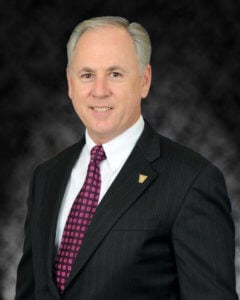
We are thrilled to announce the newest addition to our FELTG Faculty – Bob Woods (pictured at right). As a former federal conference program chair, I had the opportunity to work with Bob in recent years. He’s smart, engaging, approachable, and cares about the federal workforce. In other words, he fits right in with the rest of FELTG’s instructors.

If you have seen Bob present or if you’ve worked for the Department of the Navy, then you already know this about Bob. If not, you’ll get to see and hear him in action soon. Bob will be one of the presenters during the FELTG Virtual Training Institute’s Taking Defensible Disciplinary Actions on June 1-3, 2020 and EEOC Law Week August 10-14, 2020.

Most recently Bob served as the Principal Deputy Assistant Secretary (Manpower and Reserve Affairs) for the Department of the Navy. He  was the principal advisor to the Assistant Secretary in executing responsibilities for the overall supervision and oversight of manpower and reserve component affairs of the Navy, including the development of programs and policy related to military personnel (active, reserve, retired), their family members, and the civilian workforce; the tracking of the contractor workforce; and, the oversight of Human Resources systems within the Department.

Previously, Bob served as  Assistant General Counsel (M&RA) where he was legal advisor to the Secretariat for matters concerning military and civilian personnel policy. He also coordinated the efforts of Navy attorneys worldwide in administrative and federal court employment litigation. He was appointed Special Counsel Litigation where he was responsible for the most important litigation matters under the cognizance of the General Counsel. His pre-Navy career included stints with the General Services Administration and the Department of Commerce, where he handled labor and employment litigation.

Bob retired from the U.S. Air Force in 1998 after more than 20 years of active duty.

We had to put an end to the FELTG Faculty initiation process a few years ago, so instead, we’re submitting Bob to an And Now a Word With … interview.

DG: What’s the best advice you’ve received that had the most impact on your federal career?

BW: I’d have to say that in addition to “follow the golden rule,” the best advice I received was the tried and true (for the most part) “bloom where you’re planted.” About 98 percent of the time, I was “planted” in places where I could bloom and thrive. In those cases, I found that putting in the work and being a generally cheerful and helpful colleague enabled me to be recognized for my potential and helped me get the assignments and jobs that I wanted and that helped me progress. I learned that I was/am responsible for myself and that I can choose to be sunny (or gloomy). Learn your craft, be inclusive, take on the tough assignments, be timely, be collegial and you’re likely to be successful. In those very few cases where I was “planted” in less than “fertile soil,” I made an effort to improve the conditions by doing those things (hard work, cheerful colleague, etc.) that helped me thrive. Sometimes however, no matter what you do, you can’t fix toxic conditions and you have to find a way to move on.

DG: What’s the federal employment law-related myth that you think is most prevalent government-wide?

BW: I think the most prevalent federal employment law-related myth I’ve encountered is that you can’t fire a civilian. In my experience, many supervisors suffer poor-performing or toxic employees for far too long. These employees make up a very small fraction of the civilian workforce, but account for a disproportionate amount of grief. In my opinion, the tools available to deal with poor performers are sadly underutilized, despite the fact that they are fairly straight forward and relatively easy to use.

DG: How can that be fixed?

BW: This is clearly a leadership issue. Some supervisors would rather put up with the poor performer than use these tools. This is probably because they either don’t understand how to use these tools or they’re afraid of having to defend against the employee’s complaint or appeal (or a combination of the two). To fix this problem, supervisors need to be taught how to use the tools, provided good support from their leaders, HR and Legal teams, and held accountable themselves by their supervisors to do the right thing.

DG: What’s your favorite part of teaching/presenting?

BW: I enjoy the fact that I’m able to share what I know with the audience and I enjoy interacting with them. Federal employment law can be a complicated topic and I enjoy breaking it down for folks to be able to better understand and use these tools.

[email protected]

By Deborah J. Hopkins, May 14, 2020

These past several weeks have been challenging for all of us. Many of you in the FELTG Nation, and some of us in the FELTG family, have lost loved ones to COVID-19. There’s a lot of uncertainty about what the future holds, as some states begin to re-open while others remain on lockdown. Will things ever return to some semblance of normal? And if so, when?

We don’t have answers to those difficult questions, but we’ve been working hard to adapt as developments have changed almost daily. So out of an abundance of caution – and to allow you time to plan and prepare for the training you still need – we’ll be holding our open enrollment classes virtually through August. Since a number of your agencies aren’t allowing travel until who knows when, we want to make sure you have an opportunity to attend the full spectrum of live, instructor-led FELTG classes.

Here’s the breakdown:

Virtual Training

From half-day spotlight sessions to week-long seminars, and everything in between, the FELTG Virtual Training Institute has classes on topics including reasonable accommodation, performance, discipline and misconduct, leadership, dealing with union issues, leave abuse, understanding employees with PTSD, conducting harassment investigations, and more. Check out the upcoming schedule, which includes favorites such as Advanced Employee Relations, Developing and Defending Discipline, EEOC Law Week, Absence, Leave Abuse & Medical Issues Week, FLRA Law Week, and more.

Webinars

Some of FELTG’s most popular webinar series – including supervisory tools, EEO refresher training and Reasonable Accommodation in the Federal Workplace – are open for registration now. Plus, we have group discounts for employees who are teleworking due to the pandemic.

Onsite Training

When it comes to onsite training, we can bring you any of our classes virtually – or we’ll be happy to have an instructor come to you, if your agency has the space to provide enough social distance for the students and the instructors to gather while following CDC guidelines.

SPECIAL EVENT: FELTG Forum

Federal Workplace 2020: Accountability, Challenges, and Trends

The pandemic is making the possibility of attending summer federal conferences less likely each day. That’s why we’re launching the virtual training event Federal Workplace 2020: Accountability, Challenges, and Trends with 14 different live instructor-led sessions, July 27-31. You can attend as many sessions as you want, from one to all, or anything in between. Earn 8 EEO refresher hours. Earn CLE and Ethics credits. Learn the latest about how to handle the challenges facing federal agencies in 2020.

Because this is a virtual forum, you can attend from wherever you’re working – home or agency office, with no need to get on a plane. Check out the agenda below.

See below for the upcoming schedule of events, or visit www.feltg.com/events to see all the options on the calendar, by date.

We’ll continue to adjust our plans and approach as necessary, until this disease is under control, until it’s eradicated, or until there’s a vaccine. In the meantime, we hope you and your loved ones stay safe and healthy.

Take care,

Deb

Deborah J. Hopkins, FELTG President

By Deborah Hopkins, May 5, 2020

One of the most intensely debated topics in the EEO realm for years, has been the proper role of agency defense counsel in agency EEO investigations. Indeed, we’ve written articles in this newsletter about the topic. One of the more recent, hotly discussed cases was the July 2018 issuance of Josefina L. v. SSA, EEOC Appeal No. 0120161760. In this case, the Commission determined “… that Agency counsel impermissibly interfered with the investigation … We determine that OGC’s actions undermined the integrity of the EEO process by eroding the necessary separation of the investigative process from the Agency’s defensive functions.”

Despite all the discussion about Josefina L., we didn’t really learn anything new or significant from the case. The Commission has previously held that an agency representative “should not have a role in shaping the testimony of the witnesses or the evidence gathered by the EEO Investigator.” See Tammy S. v. Dep’t of Defense, EEOC Appeal No. 0120084008 (June 6, 2014), recon. denied, EEOC Request No. 0520140438 (June 4, 2015). Josefina L. brought the debate to the front burner, yet again, and the SSA was slapped with a mild sanction, despite EEOC’s chiding in the case.

One of the problems we’ve had with understanding the EEOC’s position over the years is the weak sanctions they’ve issued when they found agency defense counsel to have crossed the line. Time and again, they issued decisions where the words seemed to say “I’m really mad,” and the actions seemed to say “But I’m not really that mad.”

Interference in the EEO process is one thing – and it’s a problem. But there is no law or regulation that specifically prohibits every single agency attorney from providing advice to supervisors during EEO proceedings, so long as the involvement does not impact the “impartial processing” of the case. Management Directive 110, Chapter 1, Section IV.

So where is the line between permissible and impermissible involvement? Practitioners for years have begged the Commission: PLEASE let us know, definitively, where the bright line can be located.

While the EEOC still hasn’t given us a bright line, the answer to the level of involvement permissible recently got a little bit closer to definitive in a recent case:

[W]e expressly hold that MD-110 permits agency defense counsel to participate in the pre-complaint and investigative stages under clearly defined and controlled conditions that will carry out the Agency Head’s obligation to defend the Agency against legal challenges while avoiding inappropriate interference with the activities of the EEO Office. This means that agency defense counsel may assist agency management officials and witnesses in the preparation of their affidavits during the investigative stage. However, agency defense counsel may not instruct officials to make statements that are untrue or make changes to any affidavit without the affiant’s approval of such changes. [bold added]

Annalee D. v. GSA, EEOC Request No. 2019000778; App. No. 0120170991 (November 27, 2019).

This is yuuuuuuuge. For the past several years, the Commission has sanctioned agencies whose counsel were involved in almost any way. You’d find the occasional case that went the other way, but again the problem was no bright line. Sometimes interference was okay, as long as it wasn’t too much interference; other times, it wasn’t okay.

In the Annalee D. case, the EEOC had originally sanctioned the agency simply because the agency defense counsel was involved – without ever looking at the merits of the involvement. But to its credit, EEOC reversed itself, after the agency requested reconsideration: “In the underlying appellate decision, we found impermissible interference solely on the grounds that agency defense counsel provided assistance to management officials during the investigative stage and not because the provided assistance actually interfered with the EEO Office’s investigative process.”

Look at some of the other language from this case:

  • “Our decision in [Annalee D.] appears to set forth an absolute rule that prohibits agency defense counsel from participating in the pre-hearing stages of equal employment opportunity matters…There is no ‘bright line’ regarding the extent to which agency defense counsel may be involved during the pre-hearing stages of the EEO process. Rather, the issue of utmost concern to the Commission is whether the actions of agency defense counsel improperly interfered with or negatively influenced the EEO process.”
  • “[N]othing contained in MD-110 explicitly prohibits agency defense counsel from representing an agency manager during the counseling stage or bans agency defense counsel during the investigative stage from assisting an agency manager in preparing his or her affidavit or acting as a representative under the appropriate circumstances.”
  • “In recognizing the disparate yet vital responsibilities of the EEO Office and agency defense counsel, MD-110 recognizes that these entities will inevitably interact with each other. MD-110 sets out the parameters for these interactions and seeks to ensure that neither entity inappropriately interferes with the functions of the other.”

This is the best guidance we’ve seen from the Commission on the topic to date – well, it’s good if you’re on the agency side, anyway. And it clarifies the extent to which an agency can support a supervisor who has been accused of discrimination, and needs help understanding the process. Come to our virtual training class Conducting Effective Harassment Investigations May 18-20, or to EEOC Law Week in Washington, DC, in August (if the country is open by then) or September if you want to learn more about this topic, plus a whole lot more. [email protected]

By Dan Gephart, April 21, 2020

For a dozen or so years, I was a regular attendee at the EXCEL Conference, put on annually by the Equal Employment Opportunity Commission. I’m an introvert, so conferences could be a challenge for me. But I always felt at ease at EXCEL once I saw Dexter Brooks and his beaming smile walking down the hallway toward registration.

You’d be hard-pressed to find a better person to fill the role that Dexter performs at EEOC, where he is associate director of the Federal Sector Programs Office within the Office of Federal Operations. The SES-er leads FSP’s efforts to help agencies develop strategies to prevent discrimination. Dexter knows EEO law top to bottom, and he has a deep insider’s understanding of how EEO plays out at federal agencies. He is also an effective and engaging presenter, able to convey his EEO knowledge in practical and understandable bites.

FELTG caught up with Dexter before the country was turned upside down by the COVID-19 pandemic. We wanted to hear what OFO’s approach was to cases involving sexual orientation and gender identity as we await the Supreme Court’s ruling on Altitude Express, Inc. v. Zarda, Bostock v. Clayton County, and R.G. & G.R. Harris Funeral Homes v. EEOC. The combined cases raise the issue of whether Title VII’s protections against sex discrimination prohibit discrimination on the basis of sexual orientation and gender identity. The ruling is expected later this term.

The agency deferred on the question, not wanting to get ahead of any decision coming out of the Supreme Court. Understood. So we turned our attention to discrimination trends in the federal workplace.

DG: In what areas do agencies need the most training help?

DB: Based upon Federal Sector Programs’ complaints data collected from federal agencies, EEOC’s Appellate Review Programs’ findings of discrimination and procedural reversals, and FSP’s outreach and technical assistance to agencies, it appears that agencies are most in need of training on retaliation/reprisal, reasonable accommodation, non-sexual harassment, properly identifying and framing hostile environment harassment claims, identifying and resolving conflicts of interest issues that arise during the administrative EEO complaints process, and barrier analysis.

DG: It’s been a few years now since the agency’s report on harassment, and the sharp increase of sexual harassment complaints prompted partly by the #MeToo movement. What trends are you seeing in terms of harassment complaints? And have you noticed any considerable changes in how agencies are training their employees on harassment?

DB: Between fiscal years 2012 and 2018, federal agency sexual harassment complaints increased by about 1 percent, with a total of 3.1 percent of all complaints alleging sexual harassment in 2012 compared to about 4.4 percent of all complaints alleging sexual harassment in 2018.

After the issuance of the EEOC harassment report, EEOC developed new training classes for employees and managers on creating and maintaining a respectful workplace. These classes teach employees how to create a culture of respect using bystander intervention techniques and instruct managers how to identify and address uncivil behavior before it rises to the level of harassment. These modules are focused on proactive prevention rather than the traditional legal/compliance modules that typically had been the centerpiece of anti-harassment training. The demand for this type of training in the federal sector has been robust and has increased each year since the training’s 2017 rollout.

This is consistent with information FSP has received from agencies during outreach, which revealed agencies are not limiting their anti-harassment efforts to mandatory compliance training but are adding to their training modules on topics such as cultural awareness and civility.

DG: The workplace is as divisive as it has ever been. Is that being reflected in the number and type of claims you are seeing?

DB: Generally, the rate of counselings and complaints have seen a spike since fiscal year 2014, reaching a peak in fiscal year 2018 at 37,042 counselings — an 11 percent increase since fiscal year 2014. This is fairly consistent across all bases as of fiscal year 2018. Complaints also reached their highest level since fiscal year 2014 at 15,578 — an 8 percent increase. This increase appears to be across all bases, as the proportion of complaints filed by statute has remained consistent during this same time period, with Title VII comprising about 56 percent of all complaints, followed by ADEA at 22 percent, Rehabilitation Act at 21 percent, EPA at .48 percent and GINA at .42 percent.

DG: How is the EEOC doing on the backlog of cases over 500 days old? How long is a typical EEOC appeal from the time it’s received until the time it’s issued?

DB: Currently, [the Appellate Review Program] has 124 pending cases over 500 days old. The average processing time for an appeal is approximately 312 days. By comparison, in FY 2019, the average processing time was 399 days. [email protected]

By William Wiley, April 15, 2020

If you paid attention in civics class in the 10th grade, you probably remember a fundamental aspect of our country’s great legal system:

  • The legislative branch (Congress) decides what the rules should be in our society and then passes laws to implement those rules.
  • The judicial branch (the courts) then interpret those laws the way Congress wrote them, thereby clarifying any ambiguity in the laws.

Ideally, there is a better way. Once a governmental rule-maker creates a law, if there’s any subsequent ambiguity, we would be able to just go back to that rule-maker and ask what was really meant. We do that all the time in day-to-day life. If you’ve enjoyed happy hour a bit too much and accidently leave a $1000 tip on a $50 bar tab, the nice restaurant staff will call you the next day and say, “Did you really mean to do leave a $1000 tip?” (Don’t ask me how I know this.) In normal life, we clear up ambiguity by dealing with the source of the ambiguity.

Unfortunately, we can’t do that in government. The Congress that passed the unclear law probably no longer exists by the time the ambiguity arises. Therefore, we use the judicial branch to interpret the laws, based almost exclusively on the words of the law itself. If those words result in awkward outcomes, so be it. The role of a judge is not to make law, but to interpret it. The courts sometimes look to the intent of Congress when the laws were drafted, but those intentions are an educated guess at best. It’s the black-letter law that matters most.

A couple of decisions that produced arguably unintended outcomes, coincidentally decided the week after April Fool’s Day, recently landed in the field of federal civil service law:

Babb v. Wilkie, No. 18-882, U.S., April 6, 2020 – Federal law demands that personnel actions within the government be untainted by discriminatory motives, e.g., race, sex, age, etc. Courts have interpreted this prohibition to mean that the agency’s personnel action (for example, a termination) will be set aside, and the petitioning employee made whole (e.g. reinstated with back pay) if “but-for” the discriminatory characteristic, the agency would not have taken the personnel action. The but-for aspect of this requirement gives a level of defense to an agency when it would have removed the individual, even if its decision somehow involved one of the protected civil rights categories.

Yes, when the agency fired me, it was aware that I am a male. However, even though it considered my sex in making its removal decision, it still would have fired me because what I did was so seriously harmful. In other words, for me to be successful in my discrimination complaint challenging the removal, I have to prove that had I not been a male, the agency would NOT have fired me, e.g., but-for my sex. If I simply prove that my sex was a consideration, that’s not enough to get reinstated.

In Babb v. Wilkie, the Supreme Court carved out an exception to this principle. As the law that provides for protection from age discrimination reads a bit differently from the civil rights laws that prohibit discrimination based on race, religion, sex, etc., the Court held that if the employee proves that age was a factor in the decision to take the personnel action, the employee has proven that the agency engaged in prohibited discrimination, and is thereby entitled to a remedy. Importantly, though, unless the employee also can prove the but-for aspect, the remedy does NOT include reversal of the termination along with reinstatement and back pay. What exactly would be a proper remedy when age is a factor – but not determinative of the decision to remove – was left unresolved by the Court.

Bottom Line:  If the complainant can prove that one of the civil rights protected categories was a factor in the agency’s termination, but cannot prove that but-for his race, sex, religion, etc. he would not have been fired, he loses. However, if the employee proves that his age was a factor, he deserves a remedy, but not necessarily reinstatement unless he can meet the but-for standard.

So whaddya think? Did Congress actually intend this distinction, that complainants mistreated because of their age should receive a remedy when other individuals mistreated because of their race or sex do not receive a remedy? No, we don’t think so, either.

Kammunkun v. DoD, No. 2019-1374, Fed.  Cir., April 6, 2020 – As most every civil service law practitioner is aware, an employee who is fired often can challenge that removal in a variety of forums. For example, an employee who believes that a removal was reprisal for whistleblowing can file a complaint with the U.S. Office of Special Counsel (OSC). On the other hand, if the employee believes that pre-removal due process procedural rights were violated by the agency, the employee can file an appeal with a different agency, the U.S. Merit Systems Protection Board (MSPB). Bargaining unit employees who happen to hold positions covered by a collective bargaining agreement (union-management contract) have a third option. They can file a grievance under the CBA’s negotiated grievance procedure, with the right to receive a decision on the contested removal from an arbitrator.

In an attempt to attain administrative efficiency, Congress enacted 5 USC § 7121 (g)(3) to restrict a fired whistleblowing employee from pursuing redress through multiple forums — a complaint with OSC, an appeal with MSPB, and a grievance through  arbitration, all involving the same issue. The law says that the offended whistleblower “may elect not more than one” of the three available forums. Such limitations on avenues of redress are common. Individuals usually get just one bite at the apple, as they say.

In Kammunkun v. DoD, MSPB’s administrative judge dismissed the employee’s appeal. The Board’s regulation relied on by the AJ references the statute when declaring that the election of forum is made when the employee selects a remedy initially and cannot be changed later, 5 CFR 1209.2(d)(1). As Kammunkun had previously filed with OSC claiming whistleblower reprisal, she was not allowed to pursue a separate MSPB appeal on the merits of her removal. That outcome seems to make sense relative to the goal of adjudicatory efficiency. One bite, one forum.

When the Federal Circuit reviewed the law on which the regulation is based, it found the statute codified in that portion of Title V relative to labor relations. That’s because, in part, the intent of Congress was to prevent the individual from taking the same whistleblower reprisal claim to both the Board and to an arbitrator. Employees can pursue a grievance to arbitration only if they are in a collective bargaining unit. Therefore, codification in the labor relations section of the law makes sense, because only in that section is arbitration a relevant remedy.

The word “employee” has a very specific labor relations statutory definition, see 5 USC § 7103(a)(2). Many individuals who work for the federal government who think of themselves as federal employees are not “employees” for the purposes of labor relations. For example, by law, supervisors and managers are not allowed to participate in union affairs and are, therefore, excluded from the definition of an “employee” who would have collective bargaining rights. Makes sense because management officials should not be allowed to exert influence in internal union business where there often is an inherent conflict between the goals of the union and the goals of management.

Unfortunately, when applying this narrow definition of “employee” to the Board’s regulation intended to limit the number of forums in which a whistleblower can challenge a removal, the evidence reveals that the appellant in this case is, in fact, a supervisor. Therefore, she is excluded from the coverage of the regulation because she is not a labor-relations-defined “employee” and thereby not precluded from filing with both OSC and MSPB.

Bottom Line:  An individual who is fired from a position excluded from the labor-relations definition of “employee,” such as a supervisor, can file a whistleblower reprisal complaint with OSC and also file a merits appeal with MSPB. However, an individual who is fired from a position that satisfies the labor-relations definition of “employee” has to make a choice and cannot file in both forums.

So whaddya think? Did Congress actually intend this distinction, that supervisors should have greater redress rights than non-supervisors when claiming that a removal is motivated by the desire to reprise against a whistleblower? No, we don’t think so either. [email protected]

By Meghan Droste, April 15, 2020

If you graduated well before 2007, or are among the lucky few who graduated since then without any student loan debt, Public Service Loan Forgiveness (PSLF) might not mean much to you.

If you’re a Millennial (those far more likely to have graduated from an undergraduate or graduate program with at least some debt), you are probably very familiar with the PSLF program and may be counting the payments until you can take advantage of it.

For those who have never heard of it, the PSLF program forgives the student loan balances of employees of government agencies and certain non-profits and not-for-profit organizations after they make 120 qualifying payments while working for a qualified employer (i.e. pay their loans for at least 10 years while in a public service position). The loan balance is forgiven rather than discharged, a very important distinction.  For those who do not qualify for the PSLF program and have their loans discharged after 25 years of reduced payments based on income, the balance of the loan is considered taxable income.  For those who receive loan forgiveness under the PSLF program, the balance simply goes away as a thank you for your public service. This might not seem like a huge difference, but having a discharged balance of more than $100,000 treated as income will make for a very noticeable tax liability.

Why am I explaining all of this to you? I promise, it’s not just so you have a better understanding of what those of us with student loan debt (thanks, law school) are facing. It’s so you understand the value of having the documentation to back up eligibility for the PSLF program (hint: it is extremely valuable). And why does that matter?  Well, it helps explain why I find the Commission’s decision in Lazaro G. v. Department of Commerce, EEOC App. No. 0120181501 (Feb. 21, 2020), so interesting.

The back and forth between the agency, the complainant, and the Commission leading up to the Commission’s recent decision is a bit convoluted, but for our purposes can be distilled to the following: The complainant alleged that the agency discriminated against him when it did not select him as a patent examiner.

In its Final Agency Decision, the agency found in the complainant’s favor.  As part of the damages he sought, the complainant requested employment certifications for the period of retroactive employment or reimbursement for the amount that would have been forgiven after 10 years of federal service.

The agency argued the complainant was not entitled to recover costs related to his loans for various reasons, including that he “did not prove any pecuniary losses related to the student-loan program was caused by the Agency’s discriminatory actions.”

In its decision, the Commission ordered the agency to determine whether the complainant would have received employment certifications for the PSLF had it selected him for a position in September 2012. If he would have, the Commission also ordered the agency to retroactively provide all of those certifications — in other words, truly placing him in the position he would have been in but for the agency’s discriminatory non-selection. If he would not have received the certifications, the Commission ordered the agency to determine whether the complainant had established that he is entitled to monetary compensation related to the PSLF program.

This might not seem like much if you don’t a large amount of student loan debt. However, I cannot stress enough how valuable more than six years of certifications can be to someone seeking forgiveness under the PSLF. Keep this in mind when making damages determinations or engaging in settlement discussions in cases involving retroactive instatement or reinstatement. [email protected]

By Barbara Haga, April 15, 2020

I’m going to take a break from writing about performance standards to deal with an issue that is relevant to things happening right now.

Telework is a wonderful thing for many people, and many agencies have work that can be performed remotely. That’s not the case across the board.  I sometimes think OPM loses sight of this when the guidance keeps talking about telework, telework with children in the house, and adjusting schedules for telework.  There are numerous jobs where telework is not an option. Law enforcement officers, medical staff who provide direct patient care, intelligence specialists, and many others still need to be at work. Their work is essential to maintaining law and order, the health and well-being of patients, and our nation’s security.

Obviously, these agencies must implement procedures and provide protective equipment to try to protect workers from exposure from patients and other people that they deal with while completing their duties, including their coworkers. But what if those procedures are ignored by the employees they were intended to protect?

An Enforceable Rule

Could there be anyone who doesn’t know that if you are sick you should stay home? It’s repeated everywhere. I would imagine that most agencies have put out guidance to that effect.  If your notice referenced OPM’s issuances, those refer to the CDC’s guidance. You don’t have to click too far on the CDC website to know to stay home. At the top of the page, there are two buttons, one of which is “what to do if you are sick.” Click there and it brings up a page that gives steps to follow if you think you are sick. The first is: Stay home except to get medical care.  It’s in public service announcements on television. The daily briefings from the White House talk about following precautions.

What happens if an employee ignores that guidance and comes to work showing signs of a respiratory illness? Maybe he thinks this is all overblown and not a big deal (and from the news it seems that there are people who believe that). Maybe she thinks that she is critical to doing what your agency does and it’s worth the risk. Maybe he doesn’t have any sick leave and can’t afford being without pay. What do you do?

Sending Employees Home

The CDC answered what employers should do if employees showed up with symptoms. OPM referred to that information in their guidance on 3/7/202 in section F of the Fact Sheet. The CDC says, “Employees who appear to have symptoms (i.e., fever, cough, or shortness of breath) upon arrival at work or who become sick during the day should immediately be separated from other employees, customers, and visitors and sent home.”  By the way, the EEOC said that was OK, too. The EEOC pandemic guidance was updated on March 21.

To get the person out, you can try to talk them into taking their own leave. If all else fails, you send them home on admin leave. If your agency chooses to follow up with an enforced leave action, that’s an option. Enforced leave, of course, requires that the agency provide the employee the notice-response opportunity required by the principles of due process found in 5 CFR 752. But what if management wants to take further action because the employee failed to follow the procedures in place and/or because of the risk to the organization that failing to do so caused?

Could the Employee be Disciplined?

I am not aware of anything that would stop an agency from taking action in these circumstances. I recently reviewed about 50 MSPB cases that included the term “communicable.”  There was nothing relevant to this type of case.  We have a novel issue to go with the novel virus.

How would it work? If you’ve been to FELTG training, you’ve seen the elements of discipline list. The steps are 1) Establish a valid rule, 2) Inform the employee of the rule, 3) Prove the employee broke the rule, 4) Select a defensible penalty, and 5) Provide due process.

Steps 1 and 2. We looked at the “enforceable” rule earlier. Your agency probably put out guidance. It may have said “Stay home if you are sick.”  If it didn’t specifically say it, that guidance may have incorporated the OPM information which referred to the CDC guidance. It’s in the media.  Remember that you can rely on some very basic common sense requirements like “you can’t stab anyone at work” even if you never set a policy about that.

Step 3. Could an employee credibly argue that she did not know that she should not come to work if she had symptoms of a respiratory illness? I think that would be a stretch. That would be particularly so if it involved people in the health care business, even including tangential jobs such as firefighters who are also EMTs, or housekeeping staff in a hospital.

Step 4. Select a defensible penalty. Under Douglas, you would talk about the nature and seriousness of the misconduct.

Here are some examples:

“You reported to roll call for your shift in the Fire Station exhibiting symptoms of infection, risking spreading the virus to all of the Firefighters and supervisors on your shift.  This includes 18 first responders, who are essential to fighting fires and providing emergency lifesaving to the facility and mutual aid to the surrounding community. Your misconduct could have led to this Station not being able to respond to fires and other emergencies, requiring more distant Stations to respond which would increase response times.”

“You reported to your office exhibiting symptoms of infection, risking spread of the virus to the five other IT Specialists on this shift who maintain the computer equipment that supports the Remotely Piloted Aircraft (RPA’s) unit on base.  If this equipment is not properly maintained by the IT staff, it could potentially mean that RPA’s would not be available to support intelligence missions.  If our base could not respond, other bases who are also dealing with the virus’s impact on their own manning would have to cover our missions.”

I think FELTG readers know what to do with Step 5.

The charge should be something akin to “Failure to Follow Instructions.” More to follow next month!