By Deborah J. Hopkins, January 30, 2023

A last chance agreement (LCA) is an alternative disciplinary option for an agency when an employee has engaged in misconduct that warrants a removal, but the agency gives the employee one final opportunity to keep her job. Typically, the LCA is offered after the employee’s response to the proposal and before the decision is due. An LCA generally includes the employee’s promise to follow all the agency’s rules and maintain successful performance for two years. In exchange, the agency agrees to purge the proposed removal from the file upon successful completion of the LCA. If the employee violates the agreement at any time within the two-year period, the agency can remove the employee as quickly as the day of the violation without requiring another proposal. (This is all written into the terms which we’ll discuss in more detail during MSPB Law Week March 27-31).

An LCA can be a marvelous tool for agencies when an employee engages in removable misconduct, but the agency wishes to give the employee one more chance to show she deserves to keep her job. There are multiple reasons why an agency would employ an LCA:

  • The employee engaged in misconduct the agency cannot ignore, but the employee is truly remorseful
  • The employee engaged in substance misuse and agrees to get treatment if the agency gives her another chance
  • The employee has a unique skillset and would be difficult to replace
  • The job exists in a geographic area where employees are difficult to recruit and a vacant position would be highly problematic for the agency
  • The supervisor has reason to believe the employee has learned her lesson

A recent MSPB case, Bollin v. VA, DA-3443-16-0106-I-2 (Jan. 19, 2023)(NP), involved a VA police officer whose removal was proposed based on two charges:

1.    Failure to follow a direct order, and

2.    Failure to follow supervisory instruction.

The deciding official agreed the evidence and penalty assessment supported removal. Prior to the effective date of the removal, the agency and appellant entered into an LCA. Under the terms of the LCA, “the agency agreed to hold the removal action in abeyance for a 2-year period … and purge the removal and agreement from the appellant’s agency file upon completion of the 2-year period … In exchange, the appellant served a 14-day suspension and agreed that, should he ‘engage[] in any substantiated misconduct’ or violate any other term of the agreement within the 2-year period, then the agency would reinstate the removal action and immediately remove him from his position.” Id. at 2.

Several months later, the appellant violated the LCA when he “was 20 minutes late in departing for firearms training and stopped at a McDonald’s drive-thru to purchase food on the way to the training, which constituted an unreasonable delay in carrying out instructions and an unauthorized use of a Government vehicle.” Id. at 3. The agency removed him for these two acts of misconduct. While seemingly minor, the conduct triggered the violation of the LCA.

As these cases go, the appellant filed an appeal to MSPB. The Board found no jurisdiction because the appellant violated the agreement, which had included a provision that he waived his MSPB appeal rights over the initial action. So in the end, Officer Bollin stayed fired.

Other types of misconduct that the Board has agreed violate an LCA include:

  • Referring to a co-worker as a “kiss-ass” in a group email (Reveles v. DHS, DA-0752-08-0306-I-1 (May 30, 2008)(ID)
  • Testing positive for alcohol and marijuana while on duty (Complainant v. USPS, EEOC No. 0120130190 (2014))
  • Possession of marijuana (Bruhn v. USDA, 2016 MSB 42)

Not every LCA violation involves French fries, but this is probably a lesson with details none of us will soon forget. [email protected]

By Deborah J. Hopkins, January 17, 2023

Happy new year, FELTG Nation! The previous 12 months have included several milestones and significant changes in the Federal civil service. So, I’m once again using the month of January to share some highlights about exactly where things stand in the world of Federal employment law.

MSPB

I can’t imagine a single FELTG reader doesn’t know that after a 5+-year hiatus, we again have a fully functioning Merit Systems Protection Board. The Acting Chair is Cathy Harris (the Senate still has not confirmed her as Chair, but functionally she is still in charge). The two other members are Ray Limon and Tristan Leavitt.

In 2022, the Board members inherited a backlog of more than 3,600 cases. At latest count, somewhere around 700-800 decisions had been issued, 46 precedential and the rest non-precedential, while new Petitions for Review (PFRs) continue to be filed. So, the number of PFRs awaiting Board adjudication remains well above 3,000.

Two of the most significant new decisions include:

  • Singh v. USPS, 2022 MSPB 15 (May 31, 2022), which clarified who is a comparator for the purposes of Douglas factor 6, and
  • Lee v. VA, 2022 MSPB 11 (May 12, 2022), which clarified requirements for demonstrating unacceptable performance before a PIP (as explained in the March 2021 Federal Circuit decision Santos v. NASA).

The Board is once again able to conduct research. It has identified several topics on its 2022-2026 agenda, including Aligning Workplace Flexibilities with the Future of Work, Correcting Employee Performance and Conduct, and Understanding the Roles of Teams and Team Leaders. We can’t wait to see what they learn after a half-decade research hiatus.

For a case law update on the most consequential decisions over the past few months, join us Feb. 14 for Back on Board: Keeping Up with the New MSPB. For a full class on all things Board-related, register for MSPB Law Week, which will be held March 27 – 31.

EEOC

The Equal Employment Opportunity Commission, which has jurisdiction inside and outside the Federal sector, continues to promote President Biden’s inclusion agenda. Areas of focus include raising awareness about the harassment, discrimination, and violence against transgender people, updates to COVID-19 issues, changes in Reasonable Accommodations in a post-COVID world, and much more.

To help promote the EEOC’s mission, FELTG is hosting a 32-hour EEO Counselor training later this month and EEOC Law Week in March. And be sure to check out Dan Gephart’s recent interview with EEOC Chief AJ Regina Stephens about the agency’s priorities in 2023, her thoughts on EEOC-ordered training, and more.

FLRA

The Federal Labor Relations Authority has gone from a full complement of three members down to a quorum of two in 2023, as Chair Ernest Dubester’s holdover term expired at the end of the last Congress. The new Chair is a familiar face to many, former MSPB Chair Susan Tsui Grundmann, who was confirmed to the FLRA several months back and joins previous Chair and now-member Colleen Duffy Kiko.

We still await confirmation of a General Counsel, a position that has been vacant for several years. Charlotte Dye is currently in Acting General Counsel capacity, where she may remain for a maximum of 10 months, unless President Biden nominates, and the Senate confirms, a General Counsel before then. With the two current members from opposing philosophies on several areas of labor-management relations and a nominee for the third member yet to be made by the President, we’ll all wait and see how the FLRA is impacted by this change in dynamics.

For a jump start on what you can expect, join former FLRA employee and current FELTG instructor Ann Boehm on Feb. 2 for the 60-minute What Happens Now at the FLRA?

A significant change within the agency occurred last summer when the FLRA and the Union of Authority Employees (the exclusive representative of the FLRA’s bargaining-unit employees) announced they were re-establishing the FLRA’s Labor-Management Forum.

There have also been some important cases altering FLRA precedent, and a recent decision allowing an agency to discipline a union official for exceeding the bounds of robust debate – a topic of discussion in the Jan. 19 training Drawing the Line: Union Representation or Misconduct. Or join us for FLRA Law Week May 1-5, where the entire world of Federal Labor Relations will be discussed in depth. We can promise the 2023 class will be different than the 2022 version, as we keep up with the changes.

OPM Regs, Return to the Work Plans

In December, the Office of Personnel Management issued new regulations on 5 CFR Parts 315, 432 and 752, as a result of Executive Order 14003. If you missed these important updates, check out our 60-minute recording of the significant takeaways.

Among other things, OPM’s 2022 Federal Employee Viewpoint Survey (FEVS) focused on the current state of telework in agencies. After a largely abandoned attempt to return employees to the physical workplace in 2021 – thanks to the Delta and Omicron COVID-19 variants – 2022 was the year that saw increases in office attendance around the country. A full 56 percent of the Federal workforce reported that they telework one or more days per week, and 36 percent of employees reported that they were required to be physically present at their worksite every single day.

There are varying philosophies about the need for in-person collaboration as balanced against the flexibility and productivity that full-time telework provides. Return to the physical workplace has been a key point of negotiation between agencies and unions – and we don’t expect that to change any time soon. As a result, most FELTG’s classes have incorporated strategies and best practices for managing employee issues in a hybrid work environment, whether it’s harassment or employee PIPs, and everything else in between.

Closing Thoughts

I believe 2023 is looking brighter, with a Federal budget approved through September, more people comfortable traveling and meeting in person, and no major national elections (is anyone else thrilled about this one?).

Stick with FELTG this year and we’ll keep you posted on all the happenings. [email protected]

By Barbara Haga, January 17, 2023

Last month, I wrote about problems with clean record agreements (CRA) in the hiring process.  While the OPM regulations now contain no bar to doing them, living up to their terms can present some huge problems. This month, Iet’s look at the impact of CRAs on employees in their future job search.

The MSPB 2013 report Clean Record Settlement Agreements and the Law is an excellent resource if you want to delve into the fine points of these agreements. Pages 51 to 56 of that report deal with an employee’s obligation to disclose information after the signing of a clean record agreement.

Answering Tough Questions

MSPB asked OPM what the employee’s obligation is to disclose the actual nature of the action that was settled if they return to work for the Federal government or are in that process.  You are probably familiar with the types of questions that appear on official forms.

The OF-306 asks in question 12, “During the last 5 years, have you been fired from any job for any reason, did you quit after being told that you would be fired, did you leave any job by mutual agreement because of specific problems, or were you debarred from Federal employment by the Office of Personnel Management or any other Federal agency?”

Question 13.A5 of the Questionnaire for Public Trust Positions (SF-85P) asks if in the last 7 years the individual has been fired, quit after being told he or she would be fired, left under mutual agreement following allegations of misconduct or left following notice of unsatisfactory performance.  Question 13.A6 asks about other less serious actions such as warnings, reprimands, suspensions, or other discipline.  The SF-86, Questionnaire for National Security Positions includes the very same questions.

OPM’s answer to the Board was “yes,” the employee is obligated to disclose the truth.  I wonder how many employees whose representatives are signing CRAs understand that.  The report notes:

“Several of the appellant attorneys we spoke with indicated that the primary reason why appellants seek clean records is to aid them in their efforts to obtain another Federal position.”

We might say these employees are going to go look for employment outside the Federal government. That might be true in some cases, but there will be many trying to return to Federal jobs.

Where has their experience been? Is that Federal experience translatable to a non-Federal job? How many jobs like management analyst and program analyst would be available at comparable pay rates to what Federal agencies pay for that work? And the pay and benefits are the biggest reasons those employees are likely to try to find another Federal job. For many types of work in many localities, working for the Federal government is the best deal in town.

When employees don’t tell the truth on those forms, bad things happen. The examples that the Board describes in the report involve departures/settlement agreements from outside employers. Here are summaries of those:

A tax examining technician with the IRS provided inaccurate information on her OF-306 regarding her termination from two prior jobs.  In response to the question quoted earlier in the article, the examiner answered, “no,” even though she was terminated by her two previous employers.  She was removed for providing false/misleading information on an official employment document. The Board upheld the action. Ly v. Treasury, 112 FMSR 165 MSPB (2012).

An assistant personnel officer was removed for a negative response on employment documents and security paperwork when responding to the questions listed. In this case, the officer argued he was not fired but “released by mutual agreement” due to a mismatch between his skills and the job he was holding. The AJ overturned the removal. The Board restored the removal, indicating that the charge of falsification was proven.  Forma v. Justice, 93 FMSR 5139 MSPB (1993).

A former New York State Police employee was told he would be terminated due to bad judgment and his inability to react appropriately in stressful or complex situations. When hired as a Board Patrol agent (trainee), he responded negatively to the questions about resigning after being told he would be fired. OPM took a negative suitability action in this case. The employee was debarred for three years due to deception or fraud in the examination process.  Again, the AJ did not uphold the action, but the Board restored the negative suitability determination, and the Federal Circuit affirmed without opinion on April 13, 1998.  Pappas v. OPM, 97 FMSR 5368 MSPB (1997).

Recent cases?

I was able to locate one relatively recent initial decision that deals with a Federal employee who failed to disclose he had been removed from a Federal position. This was a GS-15 supervisory human resources specialist.  He had a CRA from one Army installation and then was rehired by another. Torres v. Army, AT-0752-16-0319-I-1/AT-0752-11-0876-C-1, (June 23, 2016).

The employee argued he had bargained for a CRA and was entitled to the benefit of it. The Army had a different answer and removed him based on making false statements. In this case, however, the Army decision was not sustained.

When provided the MSPB report and the information discussed above about employees having to answer truthfully, the AJ said OPM’s answer was not dispositive. The AJ overturned the Army’s removal.

I sincerely hope that the Torres case is in that pile of cases waiting for the new Board to issue a decision.


By Ann Boehm, January 17, 2023

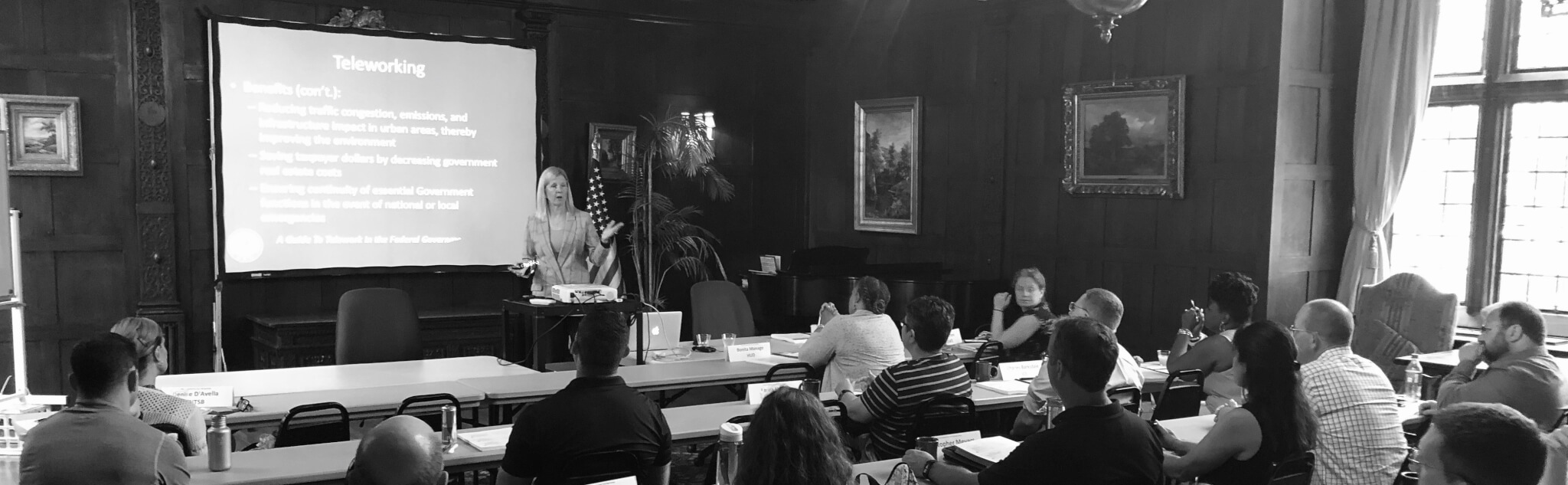
In-person training all but disappeared during the pandemic. Thankfully, technology enabled us to adjust through virtual training. As in-person training has started creeping back and I’ve ventured back out on the road, I’ve paid attention to the differences in virtual and in-person training.

The materials are the same. The instructors are the same. There is one major difference, though. The greatest benefit I observe during in-person training is how the participants learn from each other. You all, the participants, are the hidden benefit of in-person training.

Let’s reflect a bit, shall we?

It’s hard to believe how things have changed since the beginning of 2020. From January to mid-March, I taught FELTG courses in Sacramento, Calif.; Washington, D.C.; Fort Collins, Colo.; Raleigh, N.C.; Natchitoches, La.; Springfield, Ill.; and Phoenix, Ariz. I taught the occasional virtual webinar, but our typical training sessions were in person. And then the pandemic hit ….

Initially, agencies postponed classes “until the pandemic ended” – you know, for a few weeks. Yeah, that didn’t happen. Weeks turned into months, months into years.

I’m sure you all, like me, remember hearing medical professionals opine that the pandemic and its associated isolation and masking requirements would continue at least until 2022. We did not think that could possibly happen. How would we survive?

Well, we did. We adapted. The world turned virtual. Workplaces changed. Training changed.

What didn’t change was the need for FELTG training. Management still had to deal with unions, poor performers, misconduct, investigations, and EEO complaints. Virtual training worked. It still does.

Virtual training has the chat function. Participants can share anecdotes. They can ask questions. They can even un-mute and address the group. In my experience, however, the virtual world does not lend itself to the kind of sharing that occurs during in-person training.

Not only do participants learn from each other – sometimes things as basic as who to contact about a performance issue or reasonable accommodation request – but I often learn from the participants. People are more comfortable sharing in person than virtually. Even the hourly breaks (which may run longer than 10 minutes during in-person training because people enjoy chatting and connecting) provide an opportunity for brainstorming, questioning, and sharing.

More and more private sector CEOs are seeking to bring people back in the workplace to enhance idea sharing and collaboration. Workers are reluctant because they like the convenience of remote work.

Remote and hybrid work are beneficial, and they are here to stay. However, when it comes to training, agencies should give serious consideration to more in-person training. It really benefits the participants. During a recent virtual training, some participants commented, “Gee, it would be nice to have this training in person.”

Don’t get me wrong. There is great value to virtual training. How lucky we are that Zoom, Teams, and WebEx exist. But in-person training allows the participants to learn not just from the instructor, but from each other.

So, there you have it. Something to think about in 2023. You are the secret benefit of in-person training. It’s an option again. And that’s Good News! [email protected]


By Deborah J. Hopkins, January 17, 2023

If your agency has an employee who, as a reasonable accommodation (RA), teleworks three days a week, and reports to the office one day a week, you might think the agency has the right to choose which day the employee reports to the office. And, depending on the scenario, you might be right. But you might not.

Each RA case requires an individualized analysis. Failure to follow the process could result in a finding against the agency – plus potential exacerbation of the employee’s medical conditions.

In a recent EEOC decision, the complainant, who had fibromyalgia, fibromyoma, chronic pain, cancer in remission, and arthritis, received the below accommodations:

  • A maxiflex work schedule;
  • Three days of telework per week (Monday, Tuesday, and Wednesday);
  • A requirement to report to the office on Thursdays; and
  • Fridays off.

On Nov. 21, 2019, the complainant’s supervisor met with her and with the Reasonable Accommodation Coordinator (RAC) about revising the existing RA to:

  • A compressed work schedule (10-hour days Monday – Thursday);
  • Three days of telework per week (Monday, Tuesday, and Thursday);
  • A requirement to report to the office on Wednesdays; and
  • Fridays off.

The complainant objected, explaining the change in schedule was not compatible with her medical limitations. The RAC sought additional medical documentation to support the complainant’s claim that a Thursday “in-office” day was part of her medical treatment plan.

According to the case, “The RAC’s questions included: ‘Is [Complainant] capable of reporting to the office on Wednesdays? If not, provide the specific medical need (with an explanation) that does not allow her to report to the office on this day.’”

The complainant’s physician responded on Dec. 5, 2019, informing the agency the complainant’s medical treatment plan included telework three days a week with Thursday, specifically, as her weekly “in-office” day:

The letter explained why a Thursday “in-office” day benefitted complainant in terms of managing the symptoms of her disabilities and explained how a change to her “in-office day would negatively impact her medi[c]al treatment plan.” The RAC deemed the reference to a medical treatment plan to be too vague, so around Dec. 26, 2019, the RAC sent the complainant’s physician another information request to include a “specific medical reason/need (i.e. include the specific type of medical treatment in your medical plan) that prevents [Complainant] from reporting to the office on Wednesdays.”

On Jan. 20, 2020, the complainant’s physician again responded, informing the agency the treatment plan included medication, therapy, and mandatory extended continuous periods of rest on Fridays, Saturdays, and Sundays, in order to mitigate the complainant’s symptoms.

The documentation further stated the change to Wednesdays “is not advisable” and “would be detrimental to [Complainant’s] treatment and health” because if the schedule changed the complainant would:

  • Experience medical challenges managing the symptom[s] and side effects of her medication;
  • Not [be] able to have the extended period of rest without missing work;
  • Encounter negative impacts managing her pain;
  • Experience intensification in her sleep disturbance, fatigue; and
  • See increases in additional side effects from her medication.

The RAC still deemed the physician’s response insufficient, so she again sent the Dec. 26 request for information about the specific type of treatment that would prevent the complainant from reporting on Wednesdays; neither the physician nor the complainant provided further documentation.

On Mar. 9, 2020, the complainant received a notice from her supervisor, informing her that her existing RA had been modified and that her in-office day would be Wednesdays beginning Mar. 16. The complainant requested the agency reconsider but was denied, so she appealed to the EEOC.

On appeal, the EEOC found that the Dec. 5, 2019, response from the physician “was sufficient to support Complainant maintaining Thursday as her ‘in office’ day” because the physician provided specific rationale, stating the existing treatment plan “has decreased the severity of [Complainant’s] symptoms, stabilized her condition and delayed progression of her medical condition,” and warned that a change in schedule would be “detrimental to her condition, mobility and treatment.”

The Commission also disagreed with the supervisor and RAC’s assessment that the medical documentation supported that the complainant could change her “in-office” day to Wednesday.

While the agency is permitted to ultimately choose an employee’s accommodation, the RA must be effective.

In this case, the Commission said that management’s insistence on moving the in-office day to Wednesday, which resulted in the complainant having to work the next day rather than rest, rendered her reasonable accommodation “far less effective.” In addition, when the supervisor and RAC changed the complainant’s work schedule from maxiflex to compressed, it became impossible for the complainant to “adjust her lunch break to use it in conjunction with her leave for medical appointments or adjust her start or end time to accommodate medical appointments,” which also rendered the accommodation less effective.

The Commission closed by stating, “By modifying Complainant’s long-held accommodations to make them less effective, we conclude the Agency violated its accommodation duties under the Rehabilitation Act.” Cheryl L. v. Treasury, EEOC Appeal No. 2021001710 (Sept. 26, 2022).

For more on this topic, join FELTG on Feb. 16 for the two-hour virtual training Reasonable Accommodation: Meeting Post-pandemic Challenges in Your Agency. [email protected]

By Dan Gephart, January 3, 2022

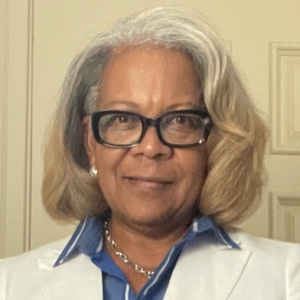
Regina Stephens was named EEOC’s Chief Administrative Judge in October 2022. It’s a full circle return. Her path to becoming Chief AJ began in Washington, DC, where she worked as an appellate attorney in the Office of Review and Appeals, now the Office of Federal Operations.

Looking back, Stephens (pictured, at right), can’t imagine a better way to start her Federal sector career.

“It was certainly helpful to begin from an appellate perspective – examining the work of federal agency investigations, the EEOC administrative judge and the federal agency’s final action – my introduction to this work presented various party perspectives from the start,” Stephens said. “I am grateful for such an introduction to employment law. In many ways, it shaped my career as an administrative judge.”

After several years in DC, Stephens moved to North Carolina where she became an administrative judge.

“The federal sector community was, essentially, my coworkers from other agencies,” she said. “The administrative process was created for all of us (federal government employees) to enjoy a model workplace free of discrimination. These roles, as well as other private sector roles, with their challenges and successes, have provided me with the tools to be an effective leader.”

We caught up with Stephens late last year.

DG: You mentioned model workplaces. Where do agencies need to improve most in order to reach that goal?

RS: Retaliation continues to plague both our private sector companies as well as the federal government. It remains prevalent because of lack of understanding and tolerance. This form of discrimination is an area where agencies should provide and mandate training. In addition, we must hold wrongdoers accountable for their actions and allow room for positive change in our work communities.

DG: What will your top priority be as Chief Administrative Judge?

RS: It is my forever top priority to continue to improve every aspect of this administrative process for our federal sector community. Careful attention has been made to continuous legal education for our staff as well as our stakeholders. Many of our administrative judges participate in outreach activities in this regard. In addition, we continue to adjust our case management systems in order to provide effective and efficient service to our federal employees and applicants.

DG: What needs to be done to ensure consistency in procedure and decision-making among the agency’s administrative judges? 

RS: For several years, the EEOC has worked diligently to require consistency with respect to procedure and processing with training and quality reviews. These efforts are apparent with our current staff and in our resolution of thousands of cases every year.

DG: What are the most common mistakes you see agencies or complainants make when presenting a case? 

RS: It is essential for a party to understand their own case. Oftentimes, an individual believes that simply recounting what happened to them is sufficient to prevail. This is a frequent misstep. Individuals should be clear in their communications on what happened, but they must prove that event is discriminatory. To satisfy this proof, one must understand what is required. Resources are available on EEOC’s website. If the public has more questions or looking for more information, they can write us.

DG: Is it an effective tool to require offenders receive EEO training as part of a decision?

RS:  EEO training can be an effective tool if properly executed. Agencies should carefully review decisions and understand the behavior they are trying to correct. Secondly, staff should be trained by experienced and knowledgeable personnel.

[Editor’s note: FELTG provides EEO-ordered training, as well as numerous off-the-shelf training courses on Federal sector EEO topics. Email [email protected] or check out the FELTG website for more information.] [email protected]

December 14, 2022

OPM’s new regulations on 5 CFR parts 432 and 752, which went into effect Dec. 12, 2022, removed the 2020 regulations’ prohibition on clean record agreements. Agencies are once again free to use clean record settlements. This was probably the most contested portion of the 2020 regulations, which had incorporated President Trump’s E.O. 13839 prohibitions on clean record settlements.

OPM explains that clean record agreements “should be an option for agencies to resolve informal and formal complaints when the agency deems it is in the best interests of effective and efficient management to achieve the agency’s mission,” and that clean record agreements provide agencies with an important tool and flexibility, consistent with the policies of President Biden’s E.O. 14003, Protecting the Federal Workforce.

OPM identified some of the disadvantages to prohibiting clean record agreements:

  • Reduced likelihood of parties reaching a mutually agreeable resolution of informal or formal complaints
  • Increase of costly litigation and arbitration
  • Crowding of the dockets of third-party investigators, mediators, and adjudicators
  • Cases languishing impact the agency’s credibility, supervisor morale, and efficient execution of the agency’s mission

OPM’s rescission does not take a position on whether any particular case should be settled, as it acknowledges that settlements, which through lessening a penalty or permitting resignation, may in certain circumstances:

  • Lessen the risk of outright reversal with its high costs without benefit, or
  • May adversely affect governmental interests.

Agencies are still required to be truthful to Federal investigators in connection with background investigations, and may not agree to withhold information about an individual’s departure from the agency. In addition, the requirement for agencies to be truthful applies also to suitability determinations and other inquiries related to vetting for personnel security.

The rescission of clean record restrictions applies to

  • 432.108 (performance-based actions)
  • 752.104 (discipline for whistleblower retaliation)
  • 752.203 (short suspensions)
  • 752.407 (appealable actions)
  • 752.607 (SES adverse actions)

If you missed our recent webinar Implementing New OPM Regs for More Effective Disciplinary and Performance Actions, the recording is available in the FELTG store. [email protected]

Have a question? Ask FELTG.

The information presented here is for informational purposes only and not for the purpose of providing legal advice. Contacting FELTG in any way/format does not create the existence of an attorney-client relationship. If you need legal advice, you should contact an attorney.

By Dan Gephart, December 13, 2022

Happy Holidays FELTG Nation! Welcome to the fourth annual year-end News Flash, where we unveil the most popular FELTG newsletter stories (based on the number of reads and forwards) of the previous 12 months.

The 2021 Year in Review was strewn with stories on vaccine mandates and other pandemic challenges. Even with my subpar math skills, I can figure out how many stories on those topics made it into this year’s top story list.

Zero.

That’s right. Pandemic-related issues haven’t disappeared. And our COVID-19 stories and guidance continued to receive a lot of eyeballs in recent months. However, pandemic-related stories were not among the top two most read and forwarded articles in any specific month this year. What were people reading then?

Considering this is the first time we’ve compiled the top story roundup with a full MSPB in place, it’s not surprising that a majority of the most-read stories involved new MSPB decisions. Since the MPSB returned to deciding cases, FELTG has been at the forefront of reading and interpreting them for Federal practitioners.

We continue to hold up our end of this bargain. Join FELTG President Deborah Hopkins on Feb. 14 for latest session of Back On Board: Keeping Up With the New MSPB, our quarterly two-hour review of the newest and most critical Board decisions.

Beyond new MSPB guidance, people read articles on harassment, union meetings, and much more. Let’s take a look back month by month.

January

If you’ve ever been in a class taught by FELTG Instructor Ann Boehm, you’ve heard her refer to the Office of Folklore, or as it’s better known – OOF! OK, so it’s not a real office. Ann uses OOF to explain how bad information gets circulated as the truth. It happens a lot more than you’d think (or hope).

Here’s a specific example. We hear from many professionals who use the following equation to distinguish between performance and conduct cases: Can’t = performance and won’t = conduct. Ann tackles this federal employment law version of fake news in our most-read article of January. As Ann conveyed so clearly: Instead of can’t versus won’t, rely on the performance plan’s critical elements when deciding between a performance or misconduct action.

Speaking of performance, if your agency’s performance year coincides with the calendar year, you are likely working on performance narratives now. If that’s the case, FELTG Senior Instructor Barbara Haga has a clear message for you: It’s Time to Do Better. That message clearly resonated with readers.

February

According to a very unscientific poll (that means it’s my guess), February generated more shrieks of “WTF” in FELTG Nation than any other month.

People read about the ambulance company that failed to respond properly to a harassment allegation. Quick recap: An EMT was fired fewer than 24 hours after she received an unwelcome picture of a sexual nature from a coworker. Although it’s an older case that doesn’t involve a Federal agency, the story offers a lesson to Feds about the importance of investigations.

Meanwhile, Barbara’s tale of a staffing specialist hired AFTER recently facing a suspension AND being the subject of a sexual harassment investigation at his previous agency was the second most-read article.

March

So, you wonder: How did that staffing specialist get hired? It turns out, he lied on his SF-85Ps. You think that’s ridiculous? In Barbara’s March follow-up column, we find out why he lied. Meanwhile, Ann Boehm provided some Good News for agencies when she answered the question: Does the union get to attend every meeting between me and an individual bargaining unit employee? Ann answers: “It depends, probably not as often as bargaining unit employees think.” She laid out specific guidance on when the union does have that right, per Weingarten meetings. No wonder it was most read story of the month.

April

It’s difficult to capture in writing the excitement at FELTG Headquarters in April. It wasn’t the
beginning of the baseball season or the arrival of spring. We had MSPB cases once again!

In this most-read article of April, Deb shared three lessons learned from the new MSPB’s decisions. Ann’s Good News: The Union Doesn’t Get to Attend Every Meeting, this time with the focus on formal meetings, was a close second.

May
If there is any theme running through this year’s top stories so far, it’s that 1) Barbara Haga writes a lot of stories about poor-performing or misbehaving officials who should really know better; and 2) you all love to read about them. You met the lying staff specialist in February and March and, in May, Barbara introduced you to a Chief Operating Officer who was removed for conduct unbecoming – the most-read story of May. [Hornsby v. FHFA is an important decision. Read Deb’s takeaways.]

On the flip side, we don’t hear much about supervisors being harassed by employees. Have you ever thought about filing an EEO complaint against an employee? Can you? In May’s second most popular story, Deb confirms that supervisors can file an EEO complaint. But it’s much quicker and more effective to handle the harassment as a conduct issue. In the particular case discussed in Deb’s story, a supervisor was harassed because of his sexual orientation.

June

Longtime residents of FELTG Nation are well aware of the trio of 2010 Board decisions on comparator employees that we dubbed the “Terrible Trilogy.” We preached again and again that these misguided decisions put too large of a burden on agencies to be consistent with agency-wide discipline. Twelve years later, the MSPB came around to the FELTG way with a decision that offered clear, specific, and reasoned guidance on who counts as a comparator employee in an adverse action under Douglas factor 6. Deb’s story on this important new case was our most-read article in June.

Not all cases can be groundbreaking, precedential decisions. But even relatively unremarkable, non-precedential MSPB decisions can teach or reaffirm best practices everyone should know, as FELTG Past President Bill Wiley discussed.

July

When it comes to whistleblowing cases, the MSPB has tended to interpret “covered personnel action” quite broadly. Not so anymore. Ann Boehm shares the Good News about a recent Board decision, reminding us that the employee has the burden to show a “significant change” in duties, responsibilities, or working conditions. It was the most-read story of July.

Meanwhile, Deb addressed the workplace struggle (for some) with pronouns – an important piece of the gender identity equation. Refusal to use an employee’s preferred pronoun, or name, has been problematic for agencies in recent years, not just from a liability perspective, but because of the impact of the harassment on the complainants.

August

Longtime Board observer Bill Wiley has been very impressed with the work of the new MSPB. Granted, like most practitioners, Bill was glad to see anything coming out of MSPB HQ after a five-year drought of decisions. Still, the occasionally cantankerous FELTG founder called the Board’s legal analyses “well-based and consistent with common sense, upholding much and modifying where necessary.”

But …

(You knew a but was coming.)

Bill found issue with one MSPB decision involving an employee initially removed for conduct unbecoming. The case gets much more complicated than that, and it involves a discussion of who gets to determine whether an employee is probationary. The most-read story of August definitely deserves another look.

As most of you know, FELTG not only offers open enrollment training, but we can come to your agency (onsite or virtually) to provide training for your team.

[I’m interrupting myself here to let you know: If you’re interested in this kind of training, contact me at [email protected].]

We received a lot of inquiries for agency-specific training last year on the topic of harassment. But we received an interesting request along with many of those inquiries: Can you please also cover what is not harassment, especially when it comes to supervisory actions?

We’re talking setting deadlines. Creating a telework schedule. Enforcing a dress code. Providing performance feedback. As long as these supervisory actions are taken reasonably, they are not harassment. Can a supervisor cross the line from effectively supervising employees to creating a hostile work environment? Yes, it’s possible. Deb provides the clear distinction for what is and isn’t harassment.

September

Sleeping on the job. Conducting personal business while at work. Work remotely even though you’re required the employee to return to the physical workplace. Let me spell it out for you: A-W-O-L. Yes, it is possible to be Absent Without Leave even if you’re at work. And that includes working at a remote site.

Many of you worried when employees told you that they did not want to return to the physical workplace. It was a big enough concern to make this our top-read story of September.

Also in September, Deb shared an ugly case of harassment based on disability. A high-level supervisor mimicked an employee with a visible disability in a meeting with all of his coworkers. Here’s the takeaway for all agencies: Take prompt, corrective, and effective action against harassment.

October

During a training session, an attendee told Ann that her agency attorneys suggest “we always advise employees of their Weingarten right.” Ann was aghast. So, she wrote a Good News column explaining to readers the statutory language makes it crystal clear that the agency representative does not have any such obligation.

FELTG has been around for more than 20 years now. Since the beginning, we’ve told agency reps and supervisors that if you’re charging misconduct that begins with an F word (no, not F%@! for F%@! sake – we’re talking falsification, fraud, false ____, etc.), you better make sure you have evidence that the employee intentionally provided false information. There are numerous case law examples out there, and Deb shared a new case example from the MSPB in her popular October article.

November

Agencies have a right to expect a higher standard of conduct from officials who occupy positions of trust and responsibility. You know, supervisors, agency leaders, law enforcement officers, Senior Executive Service members. They should all know better, right? Well, you can add another category to that list — HR professionals.

In our top story of November, Deb wrote about an MSPB precedential decision involving a GS-9 supervisory specialist, who engaged in conduct, such as:

  • Calling subordinates “sexy” and “beautiful.”
  • Commenting on what a subordinate was wearing, including “you look nice,” and you “should wear dresses more often because [she] has nice legs.”
  • Leering.
  • Staring at a subordinate’s rear end.
  • Continuing to make comments even after the subordinates told him he had crossed a line.

An accident occurs at work, and the employee seeks workers’ compensation. But you (and others) think the employee was high or drunk when the accident occurred. An easy call, right – order a drug test, then decline the workers’ comp? Not so fast, guest columnist Frank Ferreri warns in our second most-read story of the month. Frank’s article is filled with case examples that provide a lot of insight.

December

When an agency loses a case, it’s more likely to be because of due process errors – and not the evidence. No wonder readers flocked to Deb’s story this month that offered due process lessons from three recent MSPB decisions.

FELTG Senior Instructor Barbara Haga has taught a lot of training sessions on the topic of reference checks, with a focus on making sure those doing the hiring have all the information they need from the applicants and previous employers. So, you can probably guess Barbara’s opinion on OPM’s newly released guidelines allowing agencies to use clean record agreements again. As Barbara said, you can use clean record agreements. But should you?

I’m not much of a prognosticator, but I’m sure MSPB decisions will make up a nice chunk of 2023’s Year in Review. But there will also be other issues that we can’t foresee. Regardless of the issue, we can guarantee that FELTG will be there to help you steer through any employment law challenges with the most up-to-date and engaging guidance – whether via web stories or in training classrooms.

Happy holidays and best wishes for a great 2023. [email protected]

By Deborah Hopkins, December 6, 2022

As we continue MSPB Law Week, I thought I’d share a few of the new Board’s decisions on appellant allegations of due process violations. From my read, the Board seems to be closely following four decades of precedent in its decisions.

Lesson 1: A refusal to extend the response period is not a due process violation.

In proposed removals and other appealable actions, appellants are entitled to a statutory minimum of 7 calendar days to respond to the deciding official (DO) under 5 U.S.C. § 7513(b)(1). In a recent case, the agency’s notice of proposed removal gave the appellant a full 14 days to submit any written or oral responses to the DO. The appellant requested an extension on this 14-day timeline, which the agency denied.

Nevertheless, the appellant sent a written response that the DO received after the 14-day window. According to the case, the DO had already decided that the removal action was warranted, yet she still considered the appellant’s late-filed response. However, it did not change her decision. At that point, because the 14 days has passed, she was under no obligation to consider the appellant’s response. However, having done so, she effectively negated his due process argument. Jones v. VA, CH-0752-15-0286-I-1 (Jul. 21, 2022)(NP).

Lesson 2: Providing fewer than 7 days to respond is not automatically a due process violation.

In this case, the agency proposed a 14-day suspension based on two charges and provided the appellant with 7 days to respond. A few days later, the agency amended the proposal notice to add a third charge and gave the appellant an additional 4 days to respond. Although the 4-day response period was fewer than the 7 days required by statute, “it was not unreasonably short.” Moreover, the DO considered the supplemental written response the appellant provided the day after the 4-day deadline. Because the appellant received notice of the action against her, an explanation of the reasons for the action, and an opportunity to present her response, there was no due process violation.

Another interesting takeaway from this case: The agency did not schedule an oral reply, and the appellant raised a harmful error affirmative defense. The Board held that appellant did not show the lack of scheduling an oral reply constituted harmful procedural error because the appellant was still provided the opportunity to present her side of the case in writing.

For those astute readers wondering how a 14-day suspension ended up before the Board in the first place, the agency split the suspension into two portions to fit around the employee’s 90-day detail to another office and, due to administrative error, the two periods of suspension combined for a total of 15 calendar days, thus constituting an appealable action. Cargile v. Army, CH-0752-14-0056-I-2, CH-752S-13-2680-I-2 (Oct. 3, 2022)(NP).

Lesson 3: Credibility matters in allegations of due process violations.

In this case, the appellant claimed her due process rights were violated on the day she received the notice of proposed removal. On that day, the DO spoke to the appellant’s former coworker and indicated that the agency had terminated the appellant. The appellant claimed the alleged conversation demonstrated that “her subsequent response to the proposed removal was meaningless, rather than meaningful.”

The agency disputed the nature of the conversation and due process claim. According to a sworn statement, the DO spoke with three individuals on the day the appellant received the proposed removal. The DO spoke to a Human Resources point of contact, the appellant’s former Engineering Division Chief, and a former subordinate of the DO who was also friends with the appellant. The DO indicated he spoke to HR about the disciplinary process and the DO’s specific responsibilities, “including those related to the appellant’s due process rights.”

A conflict arose in descriptions of the other two conversations:

  • “According to that former Engineering Division Chief, he specifically remembered asking if the appellant was fired, and the deciding official responding in the negative, instead indicating that the appellant was being given the opportunity to present her case.”
  • “According to that former subordinate of the deciding official and friend of the appellant, the deciding official called him, indicating that the appellant had been terminated earlier that day.”

After weighing the AJ’s credibility determinations, the Board agreed with the AJ that the DO’s version of events was more credible. It denied the appellant’s due process claim. Conde v. DHS, DC-0752-15-1059-I-1 (Nov. 10, 2022)(NP). [email protected]


By Dan Gephart, December 6, 2022

As she nears completion of the first six months of her tenure as a Federal Labor Relations Authority member, Susan Tsui Grundmann is very optimistic about the agency. We caught up with Member Grundmann a couple of times over the past several weeks, and she was eager to discuss the issues that have her enthused about the FLRA’s direction.

  1. Formalization of a relationship with FLRA’s internal union.
  2. Re-establishment of the Collaboration and Alternative Dispute Resolution Office (CADRO).
  3. FLRA’s return to the top 10 of the Best Small Agencies to Work list.

The FLRA union

“We meet on a regular basis,” Grundmann said about the agency and its union. “We have to lead by example. The people on the ground have great ideas. Look to the people who do the work as well as those who do it through other people. Give everyone a voice at the table.”

The agency and the union are working closely on returning employees to the physical workplace. They agreed to a return after 14 straight days with a reduction in transmission rates recorded in all regions followed by a 30-day notice provision. During our conversation with FLRA Chairman Ernest DuBester back in April, the hope was for a mid-May return. Months later, the virus still has different plans.

CADRO
Speaking of Chair DuBester, one of his first acts was to reinstate CADRO, which once again is led by Michael Wolf.

“CADRO is back,” Grundmann said. “They have an astonishing resolution rate of nearly 100 percent in negotiability appeals. Now when you file a ULP, you have an opportunity to go to CADRO.”

During the 18-month period since CADRO was restored in 2021, it has fully resolved 35 negotiability petitions containing 414 language disputes, according to Wolf. A 36th case was partially resolved.

As of Oct. 31, CADRO has handled 127 ULP cases. So far, per Wolf, only three cases required a hearing and 11 were resolved on motions for summary judgment. The rest of the 113 cases were fully resolved through the settlement conference process.  That’s a success rate just under 90 percent.

A best place to work

In 2020, the agency ranked 23rd among small-size agencies with a score of 64.6. The scores are calculated based on three questions in the Federal Employee Viewpoint Survey (FEVS):

  • I recommend my organization as a good place to work.
  • Considering everything, how satisfied are you with your job?
  • Considering everything, how satisfied are you with your organization?

In 2021, that score jumped to 78.4, vaulting the agency into 7th place in the list just behind the Farm Credit Administration. Why the sudden jump?

“Our employees have always had a strong sense of purpose towards the agency mission, which is to protect rights and facilitate stable relationships among Federal agencies, labor organizations, and employees while advancing an effective and efficient government through the administration of the Federal Service Labor-Management Relations Statute,” Grundmann said.  “Because we didn’t have a General Counsel for several years, ULP complaints couldn’t be issued and regional employees couldn’t do a significant part of their jobs.  I think the President’s appointment of Charlotte Dye as Acting General Counsel, which enabled this important work to start up again, likely had a positive effect on employees’ morale.

“Additionally, as an agency, we recommitted to our mission by redeveloping a robust training and education program and restoring CADRO.  We also demonstrated to our employees that we will engage with them by once again recognizing their exclusive representative and re-establishing our own labor-management forum.”

Grundmann thinks it’s important not just for FLRA employees, but for all Federal employees, that FLRA is viewed as a good place to work.

“If we are in the business of addressing issues between agencies, its unions, and its employees, we should be viewed by our own employees as embodying the core principles that the employee viewpoint survey measures: employee engagement and satisfaction,” she said.

[email protected]