By Dan Gephart, April 18, 2022
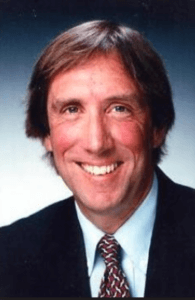
Ernest DuBester holds the Federal Labor-Management Relations statute close to his heart.

Literally.

During our recent conversation, the FLRA chairman pulled a mini printed version of the statute from the left breast pocket of his shirt several times to emphasize the points he was making. Those close to the chairman know he likes to carry that Pocket Statute with him everywhere he goes.

As Chairman DuBester’s nomination for another FLRA term remained stuck in committee, he took time to discuss the FLRA’s plans for returning to the workplace, the status of the Authority union, the legal issues that he’s most looking forward to addressing, and more.

[Editor’s note: Join FELTG for FLRA Law Week May 9-13 to get up to date on all things federal labor relations. Sessions will run from 12-4 pm each day. Early bird pricing ends this Friday, so register now.]

DG: What has been the biggest challenge the agency has faced during the pandemic? And what did you learn from it?

ED: The pandemic has had a huge effect on our society. And it has certainly had a big effect on the FLRA. From Day One, and it continues today, my focus has been on employee well-being, employee health and safety, but also combined with what I call the appropriate and requisite ability to run an agency that fulfills its mission. That has been the hard thing.

There were a lot of things that were not only my preference to do in person, but that I think are actually done better in person. (When the pandemic hit), they had to be done virtually or remotely. Converting to mostly an all-virtual workplace is huge.

For example: One of our responsibilities, which stopped for over three years during the Trump Administration, is that we handle unfair labor practice cases, and we have hearings. Those are run by our Regional Offices and Office of General Counsel personnel. We haven’t been able to do those in person.

Similarly, and related to that, our administrative law judges have the responsibility then with respect to unfair labor practices. They hold ULP hearings at a later stage. Those decisions may come up to me and my colleagues, the other members, on what I’ll call appeal.

The administrative law judges have had to move to virtual hearings. And that’s a big thing, not only practically and logistically. It really has a huge bearing on the way you relate, interact, and share information.

I’m all about effective communication. To me, it’s the secret of everything. It’s certainly the secret to effective management-labor relations, which are based on relationships and human behavior, in particular. There’s no doubt, and I’ll say this emphatically: The ability to communicate and solve problems and hopefully to address and resolve disputes more effectively requires effective communication. And you can’t do it as well on a computer, or telephone or email.

Our employees are dedicated employees. They have gotten, in some respects, accustomed to working remotely, and to some extent enjoy the benefits. We’re all human. We don’t like to commute to work. So, we’re going to have to practically work through how best to harmonize those kind of work/life issues for individuals, and that’s not just employees, but it’s managers and supervisors, too. And it’s leaders, too. What I call the practical dimensions of the job is about labor-management relations, and it requires human interaction to be most effective.

DG: What is the status of the union of Authority employees?

ED: When I was made Chair over a year ago, the first thing I did on Day One was to restore recognition of our in-house union. As you may know, the FLRA had recognized that union since the first year of its existence in 1979, through Republican and Democratic administrations alike, until the end of 2018.

We went through nearly 40 years having recognized the union, and then that was ended in 2018.

Just for context. That recognition initially back in 1979 had been done after seeking an opinion from the Department of Justice whether we could do that. Under our own statute, we’re one of the agencies exempt from coverage. We’re not covered by our own law, for practical reasons. But then the question is: Could we voluntarily recognize a union in-house? The answer came back in a very thoughtful and thorough memo from Justice that said, yes you could, with a couple caveats. For example, our employees couldn’t be represented by a union that had business before us.

Last year, I restored recognition. It was very important to our employees. Morale had already plummeted. From Day One, we’ve been in negotiation with our union, and discussing with them several aspects that involve the pandemic, wrapping up three different agreements:

1.    Telework.

2.    Remote work.

3.    And then have begun to consider the future and a re-entry plan as directed by OMB and OPM. We’ve been negotiating a re-entry plan which we’re about to finalize.

[Editor’s note: The FLRA’s telework Memorandum of Understanding allows employees in appropriate circumstances to work from somewhere other than their assigned FLRA office for up to 8 days per pay period. The remote work MOU allows employees, in appropriate circumstances, to work from somewhere other than their assigned FLRA office more than 8 days per pay period, and generally does not require them to come into their assigned FLRA office on a regular basis. This agreement is moving forward as a 24-month pilot program. The parties will evaluate the pilot and decide whether to continue it past 24 months.]

So that restoration of the union has led to the negotiation of these three agreements that are offshoots of the pandemic, giving our employees a voice. I anticipate that we’ll be returning to the office in a different way than existed the last two years, and in different ways than existed before the pandemic hit.

DG: When do you expect to return employees to the physical office?

ED: We agreed we wanted to see 14 straight days with a reduction in transmission rates recorded. We still have a couple regional offices located in areas where we haven’t nailed that down yet. Then we have a 30-day notice provision before we transition back. I guess somewhere around mid-May, we’ll be getting ready to transition.

DG: What are the most important legal areas you will look to reexamine if given the opportunity?

ED: If you followed us closely, we got into areas over my objections that were based on what are characterized as requests for policy guidance. It wasn’t a specific case or controversy between parties, it was just some entity requesting policy guidance in certain areas. Those entitles were varied, some were parties before us, but eventually some of them weren’t.

In my view, it’s somewhat analogous to rulemaking. It’s my view that those kinds of serious matters should be addressed and resolved by cases. But many were over my dissent, and I dissented substantively as well.

I think it’s important to say this to set the table. And I think it’s historically factual.

Three Federal agencies oversee three collective bargaining laws – the NLRB, the National Mediation Board, and we have the FLRA, which, as you know, has jurisdiction over approximately 2 million Federal employees. I’ve worked at all three agencies. Throughout its history, at the NLRB, you’ve seen a lot more political swings in their case law and decisions. It does change. Sometimes, it changes by administration. Certainly, long-standing precedents are overturned at certain points in time.

That hadn’t been true of the FLRA in the same way. With a couple of exceptions – and only a couple — we’d had a lot of long-standing precedents that have been in existence for decades. Then, in the last 5 years, while I’ve been in the minority, there has been a unique noteworthy change in our history. I don’t think you can deny, there’s been a very purposeful objective of overturning long-standing precedents that had continued through Republican and Democratic Administrations. To me, with all due respect because people are entitled to their opinion here, they also reflect an undermining of what I consider to be some of the key policy underpinnings that are reflected in this statute.

When this statute was enacted, it was discussed in the context of what is unique to the Federal sector, not just the public sector. Everybody says (the statute) was modeled on the National Labor Relations Act. It was, in some respects, but that is really misleading. It’s a much different statute in many ways, based on policy considerations in the Federal sector, and those have been violated in my opinion.

Here’s one good example: It’s important to every workplace in every sector, but there’s a unique importance of grievance arbitration in federal labor management relations. Why is that so? Because of a lot of other decisions that were made.

Number one is (Federal unions) don’t have the right to economic weapons. They don’t have the right to strike under our law. So, you need mechanisms to resolve disputes.

Grievance arbitration was made paramount. Every agreement must have a grievance arbitration provision. The definition of grievance is very broad in here. What I would say: The language of our statute makes clear and other decisions also made clear that arbitrators doing Federal sector work should be accorded the same deference we accord them when doing private sector work.

One of the FLRA’s most important responsibilities is we sit as the surrogate for the Federal courts in handling appeals or exceptions for grievance arbitration awards in the federal sector.

Arbitrators should be given that deference. Now I will say that that’s my very strong view, but like on everything, don’t take my word for it. I will tell you that the DC Circuit has come up, in a number of decisions, and overturned my colleagues, tracking my dissent.

In 2020, the DC Circuit overturned my colleagues and said, as I said to you today and throughout my professional life, the FLRA is required to apply the deferential standard of review used by the Federal courts in the private sector. That principle needs to be enshrined and re-established. It’s so central to the day-to-day workings of labor management relations at any agency over which we have jurisdiction.

If you look at the decisions that have discarded longstanding precedent. and they fall into different areas, the common theme there is that they’re restricting access to the rights provided here, or they’re limiting the scope of collective bargaining, one of the purposes of this law.

To me, it doesn’t just reflect what I would call a different view on policy, it reflects a disagreement with the law. One of the unique attributes of this statute and a striking contrast to the law in the private sector under NLRB is the narrow scope of bargaining. It’s already very narrow. You don’t bargain over anything under which there is a Federal law, like wages, salaries, fringe benefits. They are essential to most bargaining anywhere else.

And (the statute) is pro-management. To try to whittle it away, little by little, to me, is basically saying we don’t believe in the statute, so that’s my concern.

Beyond what I mentioned, it’s important to focus and highlight the underlying policy around grievance arbitration. So many areas need to be addressed. Just look where precedent has been overturned … Just speaking generally, and without prejudging how I would rule in any particular case, I think the precedent was probably for the most part well-founded and needs to be restored.

[email protected]

By Deborah Hopkins, April 11, 2022

My morning routine has changed significantly in the last few weeks. Now, along with my coffee, instead of reading the news, I’ve been eagerly checking the MSPB website for new cases (a decision on a PFR is officially called Opinion & Order, or O & O) issued by the Board. They’ve issued a few dozen decisions so far. Ann Boehm will touch on some of these cases in her Federal Employment Law Update: Significant Cases and Developments session during Emerging Issues in Federal Employment Law later this month.

Until then, here are three takeaways from our first read of the cases.

1 – The Board is keeping non-precedential (NP) decisions, though not all are lengthy. FELTG has long advocated that the Board do away with NP decisions, since they don’t add anything significant to the body of MSPB case law (5 CFR 1201.117), but alas, we don’t always get what we wish for. In fact, in our recent interview with Acting Chair/Vice Chair Raymond Limon, he informed us that NP decisions were here to stay.

That said, most of the NP cases the Board has issued are only a page or two. And of the longer ones that contain a more detailed discussion of the merits, we’ve seen some interesting things, including:

  • This Board’s interpretation of how many specifications must be proven to uphold a charge,
  • What it plans to do with Lucia challenges,
  • Appropriate (and inappropriate) methods of notifying a probationer of their separation, and
  • What types of evidence in response to alleged whistleblower reprisal actually rise to the level of “clear and convincing.”

2 – Whistleblowers are a priority. Speaking of whistleblowers, we estimate that somewhere between 700-800 of the 3,600+ petitions for review in the backlog contain allegations of whistleblower reprisal, and the Board has already issued decisions on several of these cases. Both members have spoken publicly about how important it is to protect whistleblowers from unlawful retaliation, so it’s no surprise that these cases are already coming out.

3 – Back pay is already adding up. A lack of quorum for half a decade did no favors to anyone, and the back pay for employees who were wrongfully removed or demoted is going to cost agencies (and taxpayers) a lot of money. Two of the new cases have ordered corrective action going back over a dozen years. Add interest and attorney fees to back pay and the cost is easily over a million dollars (or more) in these cases. In addition, while we anticipate agency actions will be upheld in a significant majority of these cases, there are employees who have been wronged who have been waiting years for a Board decision. We’ll never be able to know the true cost of the lack of quorum – but thankfully we have one now.

Is anyone else as excited as we are that we finally have new cases? We’ll keep you posted in this space, and with updated events on our virtual training and webinar training pages – and in our return to the classroom this summer. [email protected]

By Ann Boehm, April 11, 2022

This is final of my two articles on union attendance at meetings. Last month, I covered the Weingarten right. This month, it’s formal discussions.

The statutory guidance on both types of meetings is in 5 U.S.C. § 7114(a)(2). The formal discussion language is in subpart (A):An exclusive representative of an appropriate unit in an agency shall be given the opportunity to be represented at … any formal discussion between one or more representatives of the agency and one or more employees in the unit or their representatives concerning any grievance or any personnel policy or practices or other general condition of employment.”

Let me be honest. I could write a long article discussing all the intricate aspects of what is and is not a formal discussion. Fortunately, I do not have to do so. Here’s my public service announcement: In 2015, the FLRA Office of the General Counsel published “Guidance on Meetings.” It’s a must-read for anyone in Federal sector labor relations. The guidance summarizes key case law and highlights the important aspects of both formal discussions and Weingarten meetings. It’s also 43 pages long.

The goal of this article is not to regurgitate all the details in that guidance, but instead to give you my own highlights regarding formal discussions, including some key practical advice.

Why does the union have this right?

In evaluating the union’s right to be present at a formal discussion, you need to understand why they have the right in the first place. The right exists “to provide the union with an opportunity to safeguard its interests and the interests of employees in the bargaining unit–viewed in the context of a union’s full range of responsibilities under the Statute.” Dep’t of Justice, Bureau of Prisons, FCI Ray Brook, 29 FLRA 584, 589 (1987), aff’d, AFGE v. FLRA, 865 F.2d 1283 (D.C. Cir. 1989). The biggest takeaway from the “why” is to realize that the union’s right to be present at a formal discussion is to represent the entire bargaining unit, not any individual employee!

Why did Congress use the word “formal”?

The above-mentioned FLRA guidance explains this very nicely. Let me highlight the key information from that guidance (at page 5, emphasis added):

Where a meeting is brief, spontaneous or deals with a performance issue particular to the bargaining unit employee, the Authority is less likely to find that it meets the “formality” requirement. In reaching this conclusion, the Authority has noted that the word “formal” was inserted as an amendment to the Civil Service Reform Act of 1978 “‘to make clear that this subsection does not require that an exclusive representative be present during highly personal, informal meetings such as counseling sessions regarding performance.’” (citing F.E. Warren AFB, Cheyenne, Wyo., 52 FLRA 149, 156 (1996) (Warren AFB).

Isn’t that great to know!

So, what exactly is formal?

The FLRA highlighted the factors to consider to determine formality in Department of Energy, Rocky Flats Field Office, 57 FLRA 754, 755 (2002): “1) the status of the individual who held the discussions; (2) whether any other management representatives attended; (3) the site of the discussions; (4) how the meetings for the discussions were called; (5) how long the discussions lasted; (6) whether a formal agenda was established for the discussions; and (7) the manner in which the discussions were conducted.” There is another potential factor — whether attendance was mandatory. DVA, Central Ark Veterans Healthcare System, 63 FLRA 169, 172 (2009).

It gets a bit tricky, though. The FLRA lists out these factors, but also has said they are “illustrative, and other factors may be identified and applied as appropriate.” VAMC, Richmond, Va., 63 FLRA 440, 443 (2009). Oh gee. That’s helpful.

If it is a formal discussion, then what?

Prior to conducting a formal discussion with unit members, management must 1) notify the union, 2) within a reasonable time in advance of the meeting, 3) allow the union representative to be present, and 4) participate. Simple enough, right?

Practically speaking, Ann Boehm of 2022 has this advice for you: If it’s not clear whether a meeting is a formal discussion or not, invite the union.

What? Ann, are you crazy?

Let me explain. Early in my career, my goal (as directed by management) was to try keep the union out of every meeting. Over time, however, I mellowed. I mean, why would you not invite the union to a meeting between management and bargaining unit employees?

Let’s face it, if a bargaining unit employee is in the meeting, it is likely that the union will hear about it. If the union attends, and management does something the bargaining unit members don’t like, the managers can always say, “Well, the union was present at the meeting.”

And let me tell you the biggest thing I learned over a fairly long labor relations career. If you invite the union, you have satisfied your obligation. If they do not attend, that’s on them. In case you hadn’t noticed, federal employees meet a lot. If you invite the union regularly, you may find that they opt not to attend.

Here’s another bit of practical advice. If you don’t invite the union, and they think it was a formal discussion, the union can file an unfair labor practice — a “gotcha.” They get to say, “Bad management, you violated the Statute when you failed to invite us to this meeting.” If you invite the union, you avoid the “gotcha.” It’s not as fun for the union.

What if the employees don’t want the union there?

Believe it or not, bargaining unit employees do not always want the union to attend their meeting with management. But as I mentioned initially, the union’s formal discussion right is intended to enable the union to represent the best interests of the entire bargaining unit. It is not the employee’s right.

Where this gets a bit bizarre is on the grievance aspect of the formal discussion rights. For example, the FLRA considers EEO complaints and MSPB appeals to be grievances, so settlement discussions in such cases can be formal discussions. In practice, a bargaining employee may have private counsel for their EEO or MSPB case, and yet the union will have a right to attend a settlement discussion between management and the employee. You will find that bargaining unit employees are often concerned about the union attending their EEO settlement meeting. If that occurs, it’s not management’s problem. The agency is obligated to notify the union, and the union has a right to attend. If the employee has a concern, they should raise it internally with the union.

Conclusion

I hope these two articles have helped you know when the union has a right to be present at management meetings. Just because the union wants to attend a meeting does not mean they get to attend. And that’s Good News. [email protected]

[Editor’s note: For more guidance on all things Labor Relations, join Ann and Joseph Schimansky for FLRA Week May 9-13. Register now.]

By Barbara Haga, April 11, 2022

Excessive absence seems so basic we shouldn’t need to address it anymore. However, questions do still arise about what works and what doesn’t. Occasionally, someone asks a question about something new, as happened recently when a FELTG customer inquired about excessive absence and COVID-related leave. First, let’s trace how we got here.

Back in the olden days of excessive absence cases when I was a Navy HR practitioner, the interpretation of when excessive absence worked was that the employee had to exhaust available paid leave, both sick and annual, and then go on leave without pay for a significant period for the agency to be able to proceed. That left management in a tough spot when the employee had done the right thing and accumulated potentially thousands of hours of sick leave. Board decisions added further confusion over the years regarding whether you really had to wait for the employee to use up the paid leave.

In 1993, the FMLA created another leave category that was guaranteed each 12-month period. However, it could not be included in an excessive absence charge.

The Board resolved the first issue about what counted in the excessive absence charge in McCauley v. Interior, 116 MSPR 484 (2011). In this decision, the Board overruled prior interpretations about what leave could be counted. Here is the key ruling:

There appears to be some inconsistency in Board precedent regarding what leave can be used to support an adverse action based on excessive leave use. See, e.g., Curtis v. U.S. Postal Service, 111 M.S.P.R. 626, ¶¶ 9-11 (2009) (holding that an agency cannot discipline an individual for his use of approved sick leave but can discipline an employee for his use of unscheduled LWOP); Allen v. Department of the Army, 76 M.S.P.R. 564, 570 (1997) (holding that an agency can bring an action against an employee for excessive absence even if the absence is excused on grounds of poor health); Webb v. U.S. Postal Service, 10 M.S.P.R. 536, 543 (1982) (holding that an adverse action taken by an agency against an employee based on periods of approved leave does not promote the efficiency of the service). Because the efficiency of the service may suffer in the absence of an employee’s services, regardless of the type of leave used, we hold that whether the leave is sick leave, annual leave, LWOP, or AWOL will not be dispositive to a charge of excessive absences. To the extent that the Board has held or implied otherwise in cases such as Curtis, 111 M.S.P.R. 626, Ryan v. Department of the Air Force, 107 M.S.P.R. 71 (2007), Scorcia v. U.S. Postal Service, 78 M.S.P.R. 588 (1998), Holderness v. Defense Commissary Agency, 75 M.S.P.R. 401 (1997), Clark v. Department of the Navy, 12 M.S.P.R. 428 (1982), and Webb, 10 M.S.P.R. 536, those cases are expressly overruled. (italics added)

The next paragraph reiterated that FMLA hours could not be included in the charge:

“Because Congress’s clear intent when enacting FMLA was to provide job security for individuals who needed to be temporarily absent due to a serious medical condition (whether their own or that of a family member addressed by the FMLA legislation) and the law unambiguously promises this job security, use of FMLA in any calculation to remove an employee is inappropriate. Therefore, it is improper to consider FMLA absences as a part of the equation when evaluating if an employee has taken excessive leave.”

A footnote states:

“When enacting FMLA, Congress found that there was a “lack of employment policies to accommodate working parents [that could] force individuals to choose between job security and parenting” and there was “inadequate job security for employees who have serious health conditions that prevent them from working for temporary periods.” H.R. Rep. No. 103-8(I) at 1 (1993).” (italics added)

Excessive Absence and Savage

In Savage v. Army, 122 MSPR 612 (2015), the Board revised the interpretation in McCauley that AWOL hours could be included in excessive absence charges, since an excessive absence charge by its nature is a charge regarding approved absences and AWOL is unapproved. Thus, since 2015, AWOL must be cited separately in its own charge.

A reader asked whether Emergency Paid Leave (EPL) could be counted in an excessive absence charge. We won’t know for sure until such a case is ruled on by the Board, but here is the conclusion I reached and the basis for it.

EPSLA and EPL

 We have two different laws implementing COVID-related leave. In 2020, the leave was implemented by the Families First Coronavirus Response Act (FFCRA), which established two paid leave benefits, but only the Emergency Paid Sick Leave (EPSLA) applied to most Federal employees.

The EPSLA regulations issued by the Department of Labor begin with the following statement: “The Department of Labor published in the Federal Register on April 6, 2020, a temporary rule to implement public health emergency leave under Title I of the Family and Medical Leave Act (FMLA), and emergency paid sick leave to assist working families facing public health emergencies arising out of the Coronavirus Disease 2019 (COVID-19) global pandemic.” (italics added)

EPSLA included a section on prohibited actions which stated, “It shall be unlawful for any employer to discharge, discipline, or in any other manner discriminate against any employee who — (1) takes leave in accordance with this Act; and (2) has filed any complaint or instituted or caused to be instituted any proceeding under or related to this Act (including a proceeding that seeks enforcement of this Act), or has testified or is about to testify in any such proceeding.” Thus, it’s clear that the 2020 type of COVID-related leave could not have been used in an excessive absence case.

EPL was created by President Biden’s American Rescue Plan, which was signed in March 2021.  There is no preamble in the Act itself or anything in Sec. 4001 which created the EPL benefit for Federal employees that describes Congress’ intent in providing the leave. But it is important to remember that EPL was designed to give a much greater amount of leave tied to the same public health emergency that FFCRA had dealt with. It should also be noted that the Treasury provided funds for agencies to receive reimbursement for the Emergency Paid Leave specifically to limit the impact on agencies.

Conclusion

I see significant parallels between the language regarding implementation of FMLA, which was specifically enacted to protect workers because of temporary absence due to a serious medical condition, and the language that is used where Congress has responded to COVID-related absences. The 2020 bill specifically indicated there could be no disciplinary penalty for its use. My gut reaction is that the MSPB will say an employee should not be penalized for using the EPL provided in 2021 specifically because of the pandemic.

By Deborah Hopkins, April 11, 2022

Last fall, in the first filing of its kind, the EEOC filed a lawsuit against a private sector company for COVID-related harassment. According to EEOC’s press release, “the pharmacy discriminated against a pharmacy technician with asthma who asked to wear a face mask at work as an accommodation of his disability immediately following the COVID-19 outbreak to help protect him from the virus. The employee was harassed because he requested this accommodation and was sent home twice when he asked to wear a mask, and then taunted and humiliated for questioning management’s policy prohibiting masks, leading him to quit…”

Mask mandates are being lifted all around the country, and COVID cases continue to drop. However, your agency needs to be aware that the potential for discrimination, harassment, and reprisal related to COVID is far from over. Your agency’s job is to prevent that from happening in the first place, or to take immediate, effective corrective action if it discovers such mistreatment has occurred.

It’s probable that every theory of discrimination has been implicated since this pandemic began more than two years ago. Here are a few examples of areas where there could be potential liability if the agency or its employees do not respond according to the law:

  • Employee requests telework as an accommodation because he is at high risk for severe symptoms of a COVID infection
  • Employee chooses to wear a mask or to continue to socially distance after mask mandates are lifted because she has underlying medical conditions that rise to the level of a disability
  • Employee reveals to supervisor he could not be vaccinated against COVID-19 for medical reasons, and the supervisor refuses to consider a promotion for that employee
  • Employee reveals to coworkers she could not be vaccinated against COVID-19 for religious reasons, and coworkers begin to ostracize the employee
  • Reprisal or harassment against employees who requested exemptions from the vaccine mandate as an accommodation, including verbal comments, disparate treatment, and more
  • Agency refuses to consider telework as an accommodation for employees who have been teleworking throughout the pandemic, and are now ordered to return to the worksite
  • Supervisor doesn’t allow an employee to return to the physical workplace because the employee has a known disability the supervisor believes makes the employee susceptible to more severe COVID, even though the employee is willing and able to work within their medical restrictions
  • Asian American and Pacific Islander (AAPI) employees are harassed or discriminated against over the origin of the virus
  • Harassment in a virtual or telework environment

There’s a lot to consider as we start to discover what the Federal workplace will look like in the near future. Join FELTG for the 60-minute webinar The Changing Nature of Hostile Work Environment Claims on May 19 and learn how handle these new types of harassment to ensure a safe and productive work environment for your employees.

Or, let us know if you’d like us to present a training session to your agency attorneys, LR/ER specialists, EEO professionals, supervisors or employees. We’re happy to help. [email protected]

By Dan Gephart, April 11, 2022

Those who thought coming out of a pandemic would be all butterflies and moonbeams are instead finding it to be more giant spiders and snow squalls.

Perhaps the best example of the nation’s mood at this time may be the one everyone is tired of talking about — actor Will Smith marching onto stage at the Oscars and slapping presenter Chris Rock across the face. The act was shocking, aggressive, unexpected, and triggering for many.

Unfortunately, this head-scratching behavior has become all too common, and it’s an unwelcome addition to many workplaces. Just ask your Federal colleagues who work at airports or friends or family who work in retail and restaurants.

Oh, and if that’s not enough, there’s inflation, a rise in violent crime, a war playing out daily on TV, and a more-than-we’re-all-comfortable-with allotment of news articles about nuclear weapons. Recent polling by the American Psychological Association shows that as Americans are trying to come to grips with the strain of the prolonged pandemic, the number and types of serious stressors continues to increase, leading to more stress.

And by the way, this is the general mood at the exact moment that you’re wrapping up plans or, in some cases, actually implementing those plans, to bring employees back to the physical workplace for the first time since early 2020.

Shana Palmieri, LCSW will present the two-hour virtual training Navigating the Realities of Employee Stress, Anxiety and PTSD in the Post-pandemic Workplace on April 13, and I can’t think of a more timely and necessary training. If you’re reading this the morning the FELTG newsletter is sent out, here’s what you need to know: It starts at 1 pm ET today, so hurry and register. If you’re reading this later, email me ([email protected]) and find out how to bring this virtual event directly to supervisors at your agency.

Obviously, you need to be concerned about how all this stress will manifest itself in the workplace, and, believe me, it will. It could be something as minor as an employee being rude to a customer or coworker, or it could lead to harassment, bullying, or even violence. More often, as Shana Palmieri will point out, you’ll find employees who are:

  • Irritable
  • Fatigued
  • Feeling helpless
  • Struggling with self-esteem
  • Nervous
  • Having trouble concentrating

Here are a few tips for how to manage a stressed-out workplace:

Recognize what’s causing stress. We’ve pointed out some of the outside-of-work stressors, but the workplace has its share, too. Look up from your computer and watch your employees. Talk with them and, more importantly, listen. Once you identify possible stressors, determine what you can do to limit them.

Move quickly to provide accommodation. What you see as stress, could be anxiety, depression, or PTSD. You’re not your employee’s doctor, so you shouldn’t be diagnosing your employees. However, if an employee asks for simple work adjustments (a quiet space, flexible schedule, etc.), make those adjustments quickly and efficiently.

[Editor’s note: By most accounts, you are going to be inundated with reasonable accommodation requests for telework in the next few months. Be sure your accommodation procedures are well-oiled, and the supervisors know what to do. For guidance, join Ricky Rowe as he presents Telework as a Reasonable Accommodation When Employees Return to the Workplace, one of eleven sessions taking place April 26-29 during FELTG’s annual Emerging Issues in Federal Law.]

Identify clear goals. Failure to provide well-defined expectations could lead to more stress for many employees. Schedule regular meetings to discuss those expectations and the employee’s progress in reaching them.

Maintain a hostility- and discrimination-free workplace. This goes without saying. Workplace harassment has been on the rise, even though employees have been working at home. Put a stop to any discriminatory or harassing behavior as soon as you’re aware of it and be clear that it won’t be tolerated. This includes retaliation, or more specifically, COVID-related reprisal. FELTG President Deborah Hopkins will cover the Widening Net of Reprisal during FELTG’s Emerging Issues in Federal Employment Law event, and on May 4, during the first of a three-part webinar series Navigating the Return to the Post-pandemic Workplace.

Learn how to handle conflict. It’s inevitable. Yet so few supervisors are skilled or confident enough to truly manage conflict. FELTG’s simulation-based training Jumping In: Be Confident When Managing Conflict will help your supervisors to develop one of the most important managerial tools. Contact me for more information about how to bring this course to your agency.

Lead by example. Manage your own stress. Eat right, get sleep, breathe deeply, and exercise – all things you know should do. [email protected]

By Deborah Hopkins, March 28, 2022

Last month, the MSPB issued its annual report from FY 2021, and just like the reports from the several years preceding, there were ZERO decisions on Petitions for Review, because there were ZERO members on the MSPB.

Well, that’s all changed because as of March 4, 2022, we now have a quorum. That’s right, after 1,882 days without a quorum, the Senate confirmed Vice Chair and Acting Chair Raymond Limon, and Member Tristan Leavitt. As a result, the backlog of 3,600-plus cases is starting to move. That means the FY 2022 report will contain something other than zeroes at the Board level for the first time since FY 2017.

In the years without a quorum, the Board was still operating on the lower levels, and I’ve highlighted some statistics in the 2021 report you might also find interesting:

  • 4,649: The number of appeals received (of those, 1,881 were adverse actions; 173 were performance-based actions; and 453 were Individual Right of Action).
  • 3,082: The number of appeals dismissed
  • 1,567: The number of appeals not dismissed
  • 724: The number of appeals settled (a 46% settlement rate)
  • 843: The number of appeals adjudicated on the merits

Of those appeals that were adjudicated on the merits:

  • AJs upheld agency actions 80 percent of the time
  • AJs overturned agency actions, or ordered corrective action, 16 percent of the time
  • AJs mitigated agency actions 2 percent of the time

Allow us to do the important math for you: Out of 4,649 appeals filed, only 157 of those actions were overturned or mitigated, which equals 3.38 percent. So, agency actions stood as taken in 96.62 percent of cases last year.

The agencies that had the top 5 highest number of appeals, unsurprising given the size of these agencies:

  • Department of Veterans Affairs
  • Department of the Army
  • United States Postal Service
  • Department of the Navy
  • Department of Homeland Security

Because of the continued lack of quorum, MSPB was unable to issue any formal reports to the President and Congress in FY 2021. But according to the report, “MSPB published three editions of its [Issues of Merit] newsletter, which included articles on various topics such as pay equity, recruitment and hiring, telework, online training, disability retirement, performance management, and supportive work environments.” MSPB also published five research briefs which are linked in the report.

With all that’s happening, and more about to happen, it’s a perfect time to register for the webinar Getting Back on Board: An MSPB Case Law Update, planned for April 20, where we’ll be covering the first cases coming out of the brand new MSPB. Finally! [email protected]

By Dan Gephart, March 21, 2022

It’s just four words, but we are so thankful that we won’t have to include them in any more presentations or articles about the Merit Systems Protection Board. I’m talking about, of course, “lack of a quorum.”

On March 1, the Senate confirmed Raymond Limon and Tristan Leavitt as members of the MSPB. And then on March 4, they were sworn in, officially ending the five-year-and-two-month stretch in which the Board did not have enough members to vote on any Petitions for Review (PFRs), among other stalled functions.

Member Leavitt had been serving as MSPB’s General Counsel since late 2018. In the absence of any Senate-confirmed Board members, he served as the agency’s acting chief executive and administrative officer starting in March 2019.

Vice Chair (and current Acting Chair) Limon is new to the Board, but he comes with a resume that seems particularly fitting for this position. He had an extensive career as a human resources professional, including stints as Deputy Assistant Secretary for Human Capital and Diversity and Chief Human Capital Officer at the Department of the Interior, as well as similar roles for the State Department and Corporation for National and Community Service. He also served as an attorney in the Office of Personnel Management’s Office of General Counsel.

Vice Chair Limon very graciously took some time to answer our questions last week and offered a glimpse into the Board’s approach to that huge backlog of PFRs.

DG: Tell us how you think your experience, particularly in HR at DOI, will help you as you transition to this new position?

RL: Thank you for this opportunity to share my excitement and acknowledge the deep appreciation I have in helping to lead this amazing agency. I am honored for this privilege and plan to contribute the best way I can to the Board’s mission. With that said, I do feel the numerous HR experiences gained over those years have prepared me for this position.

I have over 25 years as a federal career civil servant and 22 years as an executive promoting and defending the merit system principles through my management, policy and legal experiences at various title 5 and non-title 5 Executive branch agencies, while serving in small and large agencies. After practicing law in the private sector, I joined OPM’s Office of General Counsel where I litigated before the MSPB, EEOC, and FLRA and coordinated with OSC and DOJ, along with dozens of federal agency partners.

After enjoying success as a litigator, I accepted an executive position to lead OPM’s Office of Administrative Law Judges (OALJ). While managing OALJ, I oversaw the ALJ personnel system that involved the application, examination, selection, compensation, classification, movement, and oversight for all ALJ positions serving in over 30 agencies. After OPM went through a significant realignment in 2003 and the functions of OALJ were divided among three new OPM divisions, I became OPM’s Director of Compliance and led its merit system compliance reviews for all federal agencies across the nation.

In 2005 and based in part on my earlier experiences as a U.S. Peace Corps Volunteer serving in Honduras, I joined the Corporation for National and Community Service (CNCS). CNCS manages domestic national service portfolio that included AmeriCorps, VISTA, Senior Corps, and the National Civilian Community Corps (NCCC).

In this position, I became the first-ever Chief Human Capital Officer (CHCO) for CNCS and developed and implemented an HR system outside of Title V. While in that position, I was selected by the 100-plus small agency council members to lead the Small Agency HR Council, and in 2006, I represented all small agencies on the CHCO Council. In 2012, I left CNCS to join the State Department and continued serving on the CHCO Council as the Director, Office of the Civil Service HR Management. I had the privilege to work among dedicated civil and foreign service professionals and I was the executive sponsor that rolled out a first-ever developmental program that allowed civil and foreign service employees to go on short-term rotations between their respective personnel systems to close skills gaps, enhance mission knowledge and meet work surge demands. In 2015, I was offered the Deputy, CHCO position at the U.S. Department of the Interior and by 2017, I became the Deputy Assistant Secretary for Human Capital and Diversity and CHCO. Interior has an amazing workforce and operates in over 2,400 locations and almost every occupation covered under the federal inventory of positions (approximately 350) are also found within Interior.

In all these roles, I maintained a constant and valuable connection to the CHCO Council and have had the privilege to work on many issues facing the federal workforce over these years. Over these many years, I participated in a wide variety of partnership functions with the Board, whether attending training or conference panels with its representatives, participating in its surveys, or providing feedback on future studies and evaluations. I bring a wide variety of strategic, tactical, legal, and policy-setting experiences and executive leadership perspectives that will support me well as the Board’s Vice Chair and have developed a deep appreciation for its mission and the professionals that serve there.

DG: You are walking into an an unprecedented situation with more than 3,600 Petitions for Review waiting for you. Do you have a process to address those PFRs? What kind of cases are you prioritizing? Are you considering short-form opinions?

RL: The good news is that of those approximately 3,600 cases, career staff have drafted recommended decisions for about 3,400 of them. This includes updating recommended decisions, when appropriate, in cases in which statutes, regulations, and court precedent may have changed during the lack of quorum.

That said, there are various ways we as a Board could choose to approach the backlog. For example, we could implement a “first-in, first-out” approach, or we could prioritize certain categories of cases, such as precedential decisions, cases involving back pay, whistleblower appeals, or more straightforward cases such as settlements and withdrawals. We’re very cognizant that there’s no right answer here given what we’re facing with the backlog and the fact that the parties have been waiting a long time for a decision from the Board on their PFRs. However, during the lack of quorum, our legal offices collaborated to try and determine which cases were priorities from all perspectives, and so we’re initially taking a hybrid approach to incorporate various types of cases, and we’re prepared to adjust our approach as we move forward.

Similar to the most recent Board quorum, we are planning to issue both precedential and nonprecedential decisions, but the latter will be more tailored to a length that’s appropriate for the issues presented in each PFR, meaning that some nonprecedential decisions will be a few paragraphs while others could be several pages. Additionally, during the lack of quorum period, MSPB staff deployed enhancements to our current case processing systems to provide more flexible and efficient options for the Board as it tackles the backlog.

DG: Have you had an opportunity to address MSPB employees? What is your message to them?

RL: Yes, Member Tristan Leavitt and I had the opportunity to virtually address the entire agency during our swearing in. We both conveyed appreciation to the workforce and acknowledged the challenges and opportunities facing the Board today. I came to this position with high regard and respect for what the Board is tasked with and how it serves our nation by protecting our federal workforce. After my first week of briefings and personally meeting so many of the Board’s professionals, that respect has deepened immensely.

DG: Everyone focuses on the PFR backlog. What other functions are particularly challenging now due to the fact the Board lacked a quorum for so long?

RL: During the lack of a quorum, MSPB could not issue our traditional, fulsome studies with policy recommendations for the President and Congress. [Editor’s note: We discussed those reports with Jim Read, then-director of the agency’s Policy and Evaluation Office back in 2019.] We are looking to move out on that. Similarly, the quorum must also approve a new research agenda that has been prepared.

Notwithstanding the lack of a quorum, administrative judges and support staff continued the mission of the agency and acted with distinction during the pandemic to adjudicate thousands of cases. Similarly, the Offices of the Clerk, Appeals Counsel, and General Counsel made significant contributions to address the increasing backlog and expertly prepared the incoming Board members to take on this challenge. Over the months to come, we are looking to leverage technology to improve the user experience and improve our case management functions and continue to receive input from our stakeholders.

Our legal offices have also been working on updates to our regulations to account for changes in statute and case law, as well as our shift toward more electronic case processing. Updates to the regulations could not be issued while the Board lacked a quorum, but they will be among the new Board’s priorities. The appropriate notices will be posted to the Federal Register in the coming months.

[Editor’s note: With a new quorum now in place, it’s an important time to sharpen your MSPB skills and knowledge. Join us for MSPB Law Week Virtual Training March 28- April 1 or the Getting Back on Board: An MSPB Case Law Update webinar on April 20.]

[email protected]


By Ann Boehm, March 15, 2022

One of the most frequent labor relations questions I get from supervisors is, “Does the union get to attend meetings between me and an individual bargaining unit employee?”

The answer to that question is, “It depends.” And I would add, “Probably not as often as bargaining unit employees think.”

Many union stewards, bargaining unit employees, and supervisors do not understand when a union representative may be present for a meeting between management and bargaining unit employees. The statutory guidance on meetings is in 5 U.S.C. § 7114(a)(2). There are two different types of meetings that the union may attend – formal discussions (§ 7114(a)(2)(A)), and Weingarten meetings (§ 7114(a)(2)(B)).

This article focuses on the Weingarten right. In my experience, people tend to believe the Weingarten right to representation arises more often than it does. Let me try to explain when the right does arise.

To trigger the Weingarten right, there has to be an investigation by the agency. That typically means a misconduct investigation. If there’s no investigation occurring, you can pretty much stop there — no right to a union representative.

If there is an investigation, the next consideration is whether the representative of the agency is examining a bargaining unit employee, or to put it another way, asking questions. No questions, no right to representation.

But wait, there’s more. If there is an investigation, and there is an examination of a bargaining unit employee by an agency representative, the employee still has to “reasonably believe” that disciplinary action against the employee could result from the examination in order for the employee to have a right to union representation in that meeting. (You still with me??) If the employee is the subject of the investigation, it is highly likely that “reasonable belief” requirement will be met. However, if the employee being questioned is just one of many witnesses, the requirement will not be met. No reasonable fear of disciplinary action, no right to union representation.

And that’s not all. The employee has to request a union representative (unless the collective bargaining agreement specifies that the agency representative has to inform the employee of their right to representation). The union cannot assert the Weingarten right for the employee. It’s up to the employee to seek the representation. No request for representation, no right to representation.

I’m not done yet. If those are the triggers for the Weingarten right, what types of meetings are NOT going to trigger the right?

Our friends at the FLRA highlight a few specific types of non-Weingarten meetings in the Office of the General Counsel’s Guidance on Meetings (Sept. 1, 2015).

The Authority has routinely held that performance counseling sessions and other meetings intended to convey concerns over the quality or timeliness of an employee’s work performance do not constitute “examinations” within the meaning of section 7114(a)(2)(B) where they are not designed to elicit information from the employee, but rather to inform and counsel the employee regarding performance deficiencies. It has reached the same conclusion regarding meetings to announce disciplinary actions, as well as meetings conducted for the purpose of giving the employee an assignment or a test or as part of a non-disciplinary classification desk audit.

So, there you have it. I hope this helps you understand the parameters of the Weingarten right. The union doesn’t get to attend every meeting. That’s Good News! (Stay tuned. Next month I’ll cover formal discussions.) [email protected]

By Deborah J. Hopkins, March 15, 2022

As we eagerly await the first decisions from the newly seated MSPB quorum, we have also just passed the one-year anniversary of the Federal Circuit decision Santos v. NASA, that made us rethink everything we thought we knew about implementing the employee performance demonstration period, what we at FELTG call a DP, or as many of your agencies might call it, the PIP.

Over the past year, we’ve received numerous questions about PIPs. Below are a few questions with our FELTG answers.

Q: A supervisor is noticing a lot of performance issues with an employee. Our agency is in the performance documentation period right now and our performance cycle ends on 8/31. Is the performance rating in September a good time to rate as Unacceptable and announce the PIP, or should it be done before then? 

A: The supervisor should implement a PIP now, and not wait until annual rating time. There’s no requirement that the agency wait until a pre-determined rating time to implement a PIP; as soon as the supervisor can document substantial evidence of the unacceptable performance, then OPM regulations say it’s PIP time.

At any time during the performance appraisal cycle that an employee’s performance is determined to be unacceptable in one or more critical elements, the agency shall notify the employee of the critical element(s) for which performance is unacceptable.

5 CFR § 432.104

Waiting until the end of the appraisal period does nobody any favors, and a Level 1 rating is not required before an agency may implement a PIP. According to Santos, the agency need only document unacceptable performance that caused the supervisor to implement the PIP.

Q: How concrete do performance standards have to be, as well as expectations communicated on a PIP, in order to support any final decision to remove?

A: The agency has to have substantial evidence the employee performed unacceptably before, and during, the PIP, on the critical element in question. The expectations communicated depend on the employee’s job level and type; the higher the grade level, the less objective the standards and expectations need to be. See, e.g., Graham v. Air Force, 46 MSPR 227 (1990).

Q: While Santos sets out the requirement that agencies have substantial evidence of unacceptable performance before implementing a PIP, OPM’s proposed regulations disagree with that assessment. What happens next?

A: Well, a couple of things. First, OPM’s regs were proposed and not final, so we’ll wait to see what the final rule says. Second, the MSPB members will probably have a few things to say about Santos. Until we get their take, we won’t speculate – but we’ll keep you posted as soon as we know anything.

For more on employee performance challenges, join us for the virtual MSPB Law Week March 28-April 1, or check out the upcoming webinar The Roller Coaster Employee: Managing Up-and-Down Performance on May 10, or join us in person in Norfolk for Advanced Employee Relations August 2-4. [email protected]