By Ann Boehm, July 18, 2022
The new, fully constituted three-member MSPB (HOORAY!) sure surprised the heck out of me with its recent decision in Skarada v. Department of Veterans Affairs, 2022 MSPB 17 (2022). Skarada filed an Individual Right of Action appeal claiming whistleblower retaliation, and he lost the appeal. Although he made a protected disclosure, he did not demonstrate by good ol’ “preponderant evidence” that he suffered a “covered personnel action.”
The MSPB tends to interpret “covered personnel action” quite broadly, but not in this case. In the decision, the MSPB reminds us that the employee has the burden to show a “significant change” in duties, responsibilities, or working conditions. Id. “[O]nly agency actions that, individually or collectively, have practical and significant effects on the overall nature and quality of an employee’s working conditions, duties, or responsibilities, and are likely to have a chilling effect on whistleblowing . . . will be found to constitute a covered personnel action.” Id.
So, what, pray tell, did Skarada think was reprisal? He said his chain of command removed some of his previous duties and responsibilities. He was told to stop attending certain meetings and was excluded from the interview and hiring process for two new hires – not enough to be a significant change in his duties or responsibilities, according to the MSPB.
He also claimed his chain of command subjected him to a hostile work environment. (We see that allegation a whole heck of a lot!) The alleged offenses: “his supervisor avoided him or walked away from him on multiple occasions, often responded to his questions by stating he did not know the answer and failed to provide him adequate guidance.” Id.
In addition, he claimed his chain of command treated him in a “hostile manner.” His supervisor “yelled” at him that he needed to fix something. His supervisor “’grabbed [his] arm to pull [him] into a room’” and “yelled” at him about reporting improper patient care; and the Chief of Staff “yelled at him, accused him of ‘making up our service data,’ and told him to ‘shut up’ during a meeting. Id. Lots of “yelling,” eh?
He claimed the meeting exclusions were also part of the hostile work environment. Plus, apparently the agency “convened investigations against him.” Id.
But was any of this harassment? Not according to the MSPB. Skarada failed to show that the agency’s actions “constituted harassment to such a degree that his working conditions were significantly and practically impacted.” Id.
In my humble opinion, the way the MSPB explains these allegedly harassing working conditions is good for the Republic: “[h]is chain of command may have been unresponsive to his requests or untimely in providing guidance, but such deficiencies do not amount to harassment.” Id. (emphasis added). Also, three incidents of “yelling” were “spread out over the course of a year and, while unprofessional, were not sufficiently severe or pervasive to significantly impact the appellant’s working conditions.” Id. (emphasis added).
The investigations were only “inconvenient” and did not result in any action against Skarada. The “remaining allegations represent mere disagreements over workplace policy.” Id. (emphasis added). Even though the MSPB acknowledged that he may have had an “unpleasant and unsupportive work environment,” he did not demonstrate a “significant change in his working conditions” under the Whistleblower Protection Act.
There you have it, my friends. Being unhappy at work does not equate to a hostile work environment. I don’t recommend supervisors yell at and grab their employees, but this case shows that a hostile work environment, at least in the whistleblower context, is much more than an unpleasant work environment. And that’s Good News. [email protected]
Editor’s Note: Register now for the 60-minute webinar The Why, When, and How of Whistleblower Law Under the New MSPB on September 8.
 There are many polarizing topics (abortion, gun control, COVID-19 vaccines, political affiliation) in this country. We’re going to address another topic that generates feelings almost as strongly in certain circles: pronoun use and gender identity.
 Most Federal employment law practitioners remember the day last year when the Federal Circuit issued
  Regardless of its level of transmissibility, the BA.5 variant is poised to hamper efforts at bringing employees back to physical offices, endanger those who already work in those offices, and diminish agency productivity. Serious repercussions of BA.5 could happen in the next couple weeks. Or picture this: A COVID wave running through your agency as you and your colleagues are trying to put a wrap on the fiscal year. What can you do?
 A FELTG reader shared the following hypothetical scenario:
 There are reports in the media about a new facial hair/shaving requirement for members of the military, and how this requirement will impact individuals with certain skin conditions. Did you know that few years ago the EEOC issued a decision on a DOD civilian-side case with very similar facts? See below for the original article.
 In a recent, relatively unremarkable, non-precedential decision from the Merit Systems Protection Board, I ran across this line:
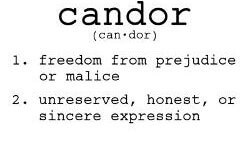 In a misconduct case involving an employee providing false information, don’t charge “falsification” even if it’s for improperly filed time cards. I know — it isn’t logical but trust me on this one. In the office, you can call it “falsification of time cards,” but don’t use that terminology if you discipline the employee, and I wouldn’t even use it in an email. Use the kinder and gentler charge that we use in government speak – “lack of candor.” Don’t believe me? A recent MSPB case makes this crystal clear.